
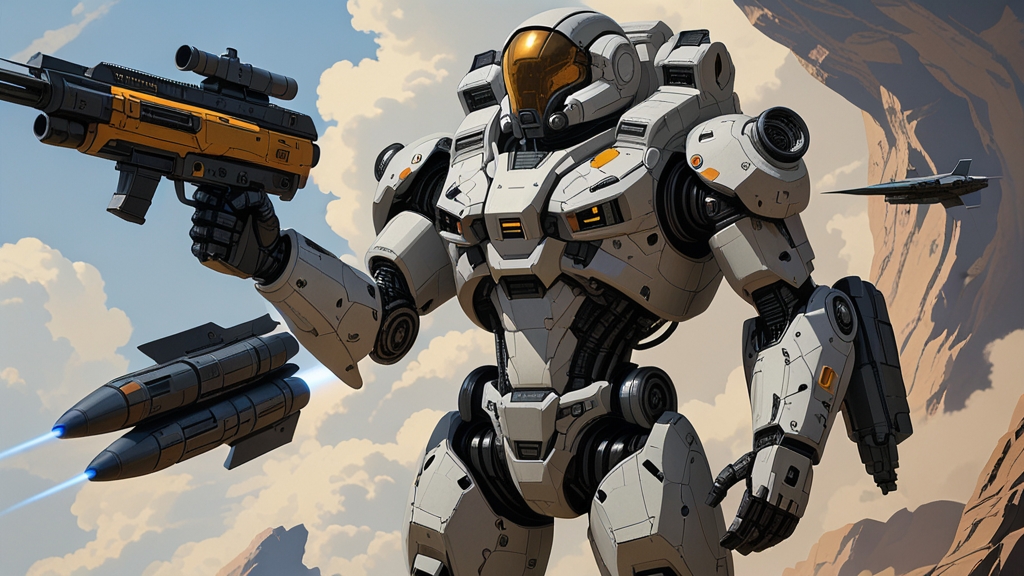
What Are Crisis Battlesuits?
Crisis Battlesuits are the backbone of the T’au Empire’s military. These versatile, jet-pack equipped battlesuits are piloted by veteran Fire caste warriors and carry a wide range of weapon systems, making them one of the most adaptable units in the game.
On the tabletop, Crisis Battlesuits are mobile, multi-wound shooting units that can arrive from reserves and are built around their loadouts. In the current T’au codex, Crisis suits are split into separate datasheets by loadout (the Crisis Sunforge, Starscythe and Fireknife Battlesuits), each focused on a different job. Unit sizes, wargear options and points are set by the current datasheets and the Munitorum Field Manual, so check those before building a list.
Crisis Battlesuit Lore
The XV8 Crisis Battlesuit represents the pinnacle of T’au military technology available to standard Fire caste warriors. Only experienced Fire Warriors who have proven themselves in combat earn the right to pilot one, and it marks a warrior’s rise to the ranks of the veterans.
Each Crisis Battlesuit stands roughly twice the height of a Fire Warrior and is equipped with a jet pack that allows it to make bounding leaps across the battlefield. Its targeting systems and modular hardpoints let the pilot engage anything from massed infantry to heavy armour.
In T’au military doctrine, Crisis Battlesuits are the classic tool of Mont’ka (the Killing Blow): striking at the critical moment to eliminate high-value targets before pulling back. This hit-and-run philosophy runs through the suit’s design.
The most famous Crisis pilot is Commander Farsight, whose aggressive use of battlesuit teams made his name long before he broke away from the Empire. Many other T’au Commanders also fight from modified Crisis suits.
Datasheet Overview
[Note: Always verify current stats against your codex or the official Warhammer app, as datasheets are updated regularly.]
Crisis Battlesuits are a tough, mobile shooting platform. Key characteristics include:
- Movement: Jet packs and the Fly keyword let them move over terrain and models.
- Durability: Multi-wound models with solid Toughness, resilient against small arms fire.
- Save: A good armour save, with a shield generator option for an invulnerable save.
- Deep Strike: Crisis suits have Deep Strike, so they can start in reserves and, in 11th Edition, be set up anywhere on the battlefield more than 8″ horizontally from all enemy units when they arrive. See our Deep Strike guide.
- Weapons: Each datasheet has its own weapon options, which are the unit’s greatest strength.
Best Weapon Loadouts
The loadout you choose should match the role you need the unit to perform. These are the classic configurations:
Anti-Infantry Loadout
Burst Cannons and Flamers
For clearing lightly armoured infantry, burst cannons and flamers are the classic pairing. Burst cannons put out a high volume of shots, while flamers hit automatically, which makes them excellent against units that rely on numbers. This loadout is strong against Orks, Tyranid swarms, Guardsmen and other horde armies.
Arrive from reserves in the midfield where you can reach several enemy infantry units. Flamers are especially valuable after arriving, since they don’t need to roll to hit.
Anti-Tank Loadout
Fusion Blasters
For hunting vehicles, monsters and heavy targets, fusion blasters are the go-to choice. These high-strength, high-AP melta weapons deal extra damage at close range.
This loadout benefits enormously from arriving from reserves: land close to an enemy vehicle, unload fusion blasters at short range, and cripple or destroy it in a single Shooting phase.
Balanced Loadout
Plasma Rifles and Missile Pods
If you want a unit that can handle most targets, plasma rifles and missile pods offer versatility. Plasma rifles deal with elite infantry, while missile pods add longer-range punch against both infantry and light vehicles.
This is the safest choice when you are unsure what you will face. It performs well in most matchups without excelling against any particular target type.
Specialised Builds
- Triple Burst Cannon: Maximum shots for overwhelming light infantry. Quantity over quality.
- Triple Fusion Blaster: Maximum anti-armour punch.
- Cyclic Ion Blaster: A fan-favourite all-round weapon, but it’s a Commander option rather than something standard Crisis suits take.
Deep Strike Tactics
Arriving from reserves is one of the most powerful tools Crisis Battlesuits have. Here is how to use it under the 11th Edition rules:
When to Deep Strike
- Usually deep strike fusion teams. Fusion blasters need close range to get their damage bonus, and arriving from reserves puts you exactly where you need to be.
- Consider starting on the board with flamer teams. Reserves can’t arrive until battle round 2, so starting on the table lets flamer suits move up and be useful earlier.
- Deep strike against gunline armies. If your opponent has powerful long-range shooting, keeping Crisis Suits off the board protects them during the opening turn.
- Don’t wait too long. Any unit still in reserves at the end of battle round 3 is destroyed, and all your reserves together can’t exceed half your points limit.
Where to Deep Strike
- Behind the enemy line. Landing behind your opponent’s army forces them to turn and deal with you, disrupting their plan.
- On flanks. Arriving on a flank lets you threaten objectives while staying away from the enemy’s main fighting force.
- Near objectives. Crisis Battlesuits are tough enough to contest objectives. Arriving in an objective terrain area mid- or late-game can score critical points.
Deep Strike Screening
Experienced opponents will screen their backfield with cheap units, since you must arrive more than 8″ from every enemy unit. Before committing to a deep strike plan, consider whether screens will be in place, and use other units to clear them first if needed.
Support Systems
Support systems enhance the capabilities of your Crisis Battlesuits. Which systems are available, and exactly what they do, depends on the current datasheet, as these rules have been rewritten across editions.
- Shield Generator: Provides an invulnerable save, making the suit much more survivable against high-AP weapons. Consider it on expensive loadouts where losing a suit hurts.
- Other systems: Targeting and support systems that improve accuracy or reliability vary by datasheet. Read their current effects rather than relying on older names and rules.
The general rule is: if you have points to spare, protect your investment. If not, focus on weapons, because a dead enemy can’t shoot back.
Commander Crisis Suit
T’au Commanders can pilot enhanced Crisis Battlesuits, and a Commander in Crisis Battlesuit is one of the most popular characters in the T’au army:
- Better shooting than standard Crisis suits, making every weapon more effective.
- Access to similar weapons plus Commander-only options such as the cyclic ion blaster, and more hardpoints than a standard suit.
- Leader abilities that buff the Crisis unit it joins.
In 11th Edition, Leader characters are attached in your army roster before the game, and a Leader keeps its “while leading” abilities even if the rest of the unit is destroyed. See our Leader rules guide. The most popular Commander loadout matches the role of the team it leads: a fusion Commander with a fusion team for a devastating strike, or an all-rounder Commander with a shield generator for firepower and survivability.
Tactics and Synergies
Spotting and Guided Fire
T’au shooting works best when units work together. Under the army rule in the current codex (For the Greater Good), one unit acts as a spotter and makes another unit’s shooting more effective against the same target, and spotters with markerlights add more. Line up a Pathfinder team or other spotter before your Crisis team opens fire. Check the current codex for the exact wording, as this may change when T’au receive an 11th Edition codex.
Using Stratagems
Several T’au Stratagems specifically benefit Crisis Battlesuits. Check your current codex and detachments, but look for Stratagems that improve shooting, protect the unit or let it reposition. In 11th Edition a unit can only benefit from one Stratagem per phase, and Command Re-roll counts towards that, so choose carefully.
Protecting Your Investment
Crisis Battlesuits are a significant points investment. Protect them by:
- Using terrain to block line of sight. Crisis suits are big models, so in 11th Edition they generally get cover only from intervening terrain rather than from standing in a terrain area.
- Staying out of reach of enemy melee units, since they are far better at shooting than fighting.
- Keeping them behind Devilfish or other units that can screen them from charges.
How to Build Crisis Battlesuits
The Crisis Battlesuit kit is highly modular. Here are building tips:
- Magnetise weapons. Crisis Suits change loadouts between games. Magnetising the weapon hardpoints lets you swap weapons without buying multiple kits. Small 2mm or 3mm magnets in the arm sockets work well.
- Dynamic poses. The ball-jointed limbs allow for dramatic posing. Angle the legs and torso to suggest movement. Crisis Suits should look like they are mid-leap, not standing still.
- Differentiate the Shas’vre. The squad leader (Shas’vre) should be visually distinct. Use the antenna head option, additional markings, or a unique pose.
Frequently Asked Questions
How many Crisis Battlesuits should I run?
Most T’au lists include at least one Crisis unit, often led by a Commander, and many take two or more. How many you take depends on their current points and your detachments, so check the latest Munitorum Field Manual and our T’au 1,000-point army list for a starting point.
Should Crisis Suits always deep strike?
No. If you are running flamers or need early board presence, starting them on the table can be better, since reserves can’t arrive until battle round 2. Deep strike is best for fusion teams and when facing heavy opening-turn shooting.
What is the best Crisis Battlesuit loadout?
There is no single best loadout; it depends on your opponents. In a vehicle-heavy environment, fusion blasters dominate. Against horde armies, burst cannons and flamers excel. Plasma rifles and missile pods are the safe all-rounder.
Can Crisis Battlesuits hold objectives?
Yes. They are durable enough to contest objectives, especially with shield generators, and arriving from reserves lets them steal objectives in the mid and late game.
How do Crisis Battlesuits compare to Broadsides?
Crisis Suits are mobile and flexible; Broadsides are slower and more powerful at range. Broadsides hit harder from a distance but can’t deep strike or reposition easily. Most lists benefit from having both units filling different roles.
Are Iridium Battlesuits worth it?
Iridium armour was an option in older editions and isn’t part of the current Crisis datasheets. If you want a tougher suit today, look at shield generators and at any defensive Enhancements or Stratagems in your detachment.
For a complete overview of the T’au Empire army, including how Crisis Battlesuits fit into your overall strategy, visit our T’au Empire army guide.
How many Crisis Battlesuits come in a box?
Three. The current Crisis Battlesuits kit builds three XV8 suits with a large range of weapons and support systems, plus drones. Because loadouts change between games and detachments, many players magnetise the arms and hardpoints so one box can cover several builds.
What is the difference between Mont’ka and Kauyon?
They’re the two classic T’au ways of war. Kauyon, the Patient Hunter, lures the enemy into a prepared killing zone. Mont’ka, the Killing Blow, waits for the perfect moment and then strikes hard at a key target. Crisis Battlesuits are the classic Mont’ka unit, while Commander Shadowsun is famous for Kauyon and Farsight for aggressive Mont’ka warfare.
Related Content
- How to Play Warhammer 40k — Complete Beginner’s Guide — learn the core rules of Warhammer 40K
- Winged Hive Tyrant Guide — Flyrant Loadouts & Tactics — explore another helpful guide
- All Warhammer 40k Factions Ranked — Tier List — see which factions rank highest