
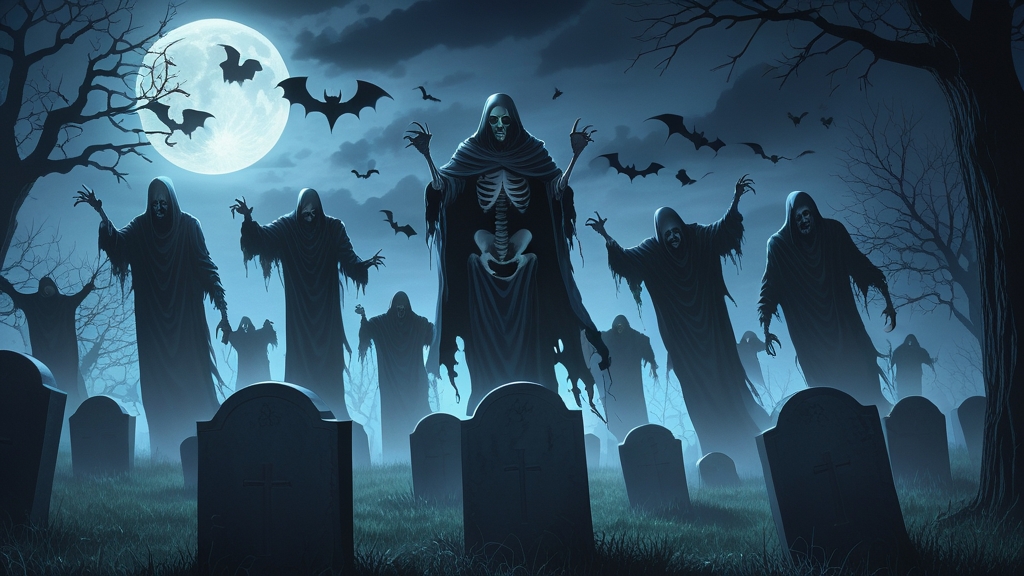
The Grand Alliance of Death
The Grand Alliance of Death gathers the undead armies of Warhammer Age of Sigmar: vampire dynasties, spectral hosts, bone-constructed legions and cannibal courts, all owing allegiance (willing or not) to Nagash, the Great Necromancer. This guide covers who they are, how the four Death factions differ, which one suits a beginner, and how to start collecting in Age of Sigmar 4th Edition.
Overview of Death
The Grand Alliance of Death is the group of Age of Sigmar factions that answer to Nagash, the Great Necromancer and god of death. Its armies are largely undead, and their goal is simple: silence the living and claim their souls. Death armies can be vast, because their necromancers and vampires can raise the fallen to fight again.
Nagash is an ancient and immensely powerful necromancer who seeks dominion over every soul in the Mortal Realms and a cold, ordered world of the dead.
Grand Alliance of Death Armies
- Flesh-eater Courts – Once-proud nobles cursed into cannibal ghouls who believe they are noble knights and courtiers.
- Nighthaunt – Wraiths bound to the realms by grief, vengeance and sorrow.
- Ossiarch Bonereapers – Nagash’s bone-constructed legions: tough, disciplined and relentless.
- Soulblight Gravelords – Vampire dynasties and their armies of skeletons, zombies and deathly beasts.
Understanding Grand Alliance: Death
Grand Alliance: Death encompasses the undead and necromantic factions of Age of Sigmar, united under the cold dominion of Nagash. Where other Grand Alliances are loose coalitions with competing agendas, Death is (at least in theory) a single hierarchy with Nagash at its apex. Every vampire lord, wight king and shambling corpse ultimately serves his vision of a Mortal Realms where all living things are silenced.
In practice, Death’s factions have their own flavours and internal tensions. The Soulblight Gravelords are aristocratic vampire dynasties who raise legions of zombies and skeletons, and many of them chafe under Nagash’s rule. The Ossiarch Bonereapers are Nagash’s own creation, disciplined constructs built from harvested bone and bound souls, more Roman legion than shambling horde. Nighthaunt are the spectral hosts: gheists, banshees and wraiths driven by grief and malice. And the Flesh-eater Courts are perhaps the most tragic, deluded ghouls who believe themselves noble knights serving benevolent kings, unaware of their own monstrous nature.
Shyish, the Realm of Death, is the heart of Nagash’s power. It is where the souls of the dead are drawn, and Nagash rules it from Nagashizzar, though Death armies campaign across every realm.
Death Playstyle
Death armies share a few thematic traits on the tabletop: resilience, attrition and the ability to grind opponents down over a long game. Many Death armies have ways to heal their units or return slain models, which means an opponent who doesn’t finish a unit off may find it back at strength later in the game.
Soulblight Gravelords lean hardest into this, with necromancers and vampires who can bolster and replenish their undead and vampire heroes who are formidable fighters in their own right. Ossiarch Bonereapers are an elite, durable army with their own faction mechanic that rewards careful planning. Nighthaunt are fast, spectral raiders with strong defensive abilities that suit hit-and-run assaults. Flesh-eater Courts combine hordes of ghouls with big monsters such as Terrorgheists and Zombie Dragons ridden by their abhorrant kings.
In 4th Edition, victory comes from holding objectives with your units’ Control characteristic and scoring battle tactics, so a Death army’s staying power is a real asset: units that refuse to die keep contesting objectives. Your heroes are usually your most valuable pieces, since they power many of your healing and replenishing abilities, so protecting them while keeping them close to the action is the central challenge. For the core rules, see Age of Sigmar rules explained.
If you enjoy the fantasy of an inexorable, ever-returning army that wears opponents down through persistence, Death is the Grand Alliance for you. Exact abilities, warscrolls and points change with each battletome and balance update, so check your faction’s current battletome and the Battle Profiles before building a list.
All Death Factions Compared
Each Death faction offers a distinct take on the undead theme:
Soulblight Gravelords: Vampire lords commanding legions of skeletons and zombies, plus Blood Knights and monstrous mounts. The quintessential undead army, with strong replenishing abilities and powerful vampiric heroes. Playstyle: attrition and hero-led, from big hordes to elite vampire-heavy forces.
Nighthaunt: An army of ghosts, spirits and spectral horrors. Fast, ethereal models with strong defensive abilities and aggressive, debuffing tactics. Playstyle: mobile, wave assaults and harassment.
Ossiarch Bonereapers: Nagash’s elite constructs, warriors built from harvested bone. A disciplined army with a lower model count. Playstyle: elite, durable and combined-arms, with strong heroes.
Flesh-eater Courts: Delusional ghouls led by abhorrant ghoul kings riding Terrorgheists and Zombie Dragons. Playstyle: aggressive and monster-heavy, backed by masses of ghouls.
Best Death Army for Beginners
There’s no single right answer, so pick the army whose models you love most. That said, two factions are especially friendly for newcomers:
Soulblight Gravelords have intuitive core ideas (raise the dead, buff them with vampire heroes, overwhelm the enemy) and plenty of flexibility, from skeleton and zombie hordes to elite vampire lords and Blood Knights. Skeletons and zombies are quick to batch paint with primer, washes and drybrushing, while the vampire heroes let you practise more advanced techniques.
Nighthaunt are among the easiest armies in the game to paint to a good standard, thanks to their ghostly look, and they are straightforward to play as a fast, aggressive force.
Whichever you choose, the faction Spearhead box is the best first purchase: it replaced the old Start Collecting and Vanguard boxes and gives you a ready-made army for the smaller Spearhead format. See our Soulblight Gravelords Spearhead, Nighthaunt Spearhead and Flesh-eater Courts Spearhead guides.
For players who want a more elite, tactical experience, Ossiarch Bonereapers have a lower model count and a distinctive feel, though their faction rules reward players with a few games under their belt.
Frequently Asked Questions
What makes Death different from the other Grand Alliances?
Death is defined by attrition, resilience and hero-led armies. Unlike Destruction’s straightforward aggression or Order’s versatility, Death armies aim to outlast opponents. Healing units and bringing slain models back is a strong theme across the Grand Alliance, and it changes how games play out.
Are Death armies expensive to collect?
It varies by faction. Nighthaunt have often featured in starter sets, which makes them affordable. Soulblight Gravelords horde builds can need several boxes of skeletons or zombies. Ossiarch Bonereapers and Flesh-eater Courts fall in the moderate range. A Spearhead box is the best-value starting point for all four.
Can I mix Death factions in one army?
Only in limited ways. In Age of Sigmar 4th Edition your army comes from a single faction, though Regiments of Renown let you add specific units from other factions. Pure faction builds generally have stronger synergies.
Which Death faction is best for painting?
Nighthaunt are widely considered the most painting-friendly Death faction. Their ghostly look can be achieved with simple techniques: a light base coat, a coloured wash or Contrast paint, and a drybrush. Flesh-eater Courts offer satisfying organic textures, and Ossiarch Bonereapers reward more detailed painting.
Are Death armies competitive in tournaments?
Yes. Death factions have a strong competitive history, and Soulblight Gravelords and Ossiarch Bonereapers in particular have had strong tournament showings. Standings shift with each battletome and balance update, so check current results before building a competitive list.
Which Mortal Realm is the home of Death?
Shyish, the Realm of Death. Nagash rules it from his fortress of Nagashizzar, and it is where the souls of the dead are drawn after they die, which feeds his power and his armies. All four Death factions have strong ties to Shyish, though their forces campaign across every realm.
Are the Tomb Kings part of Death in Age of Sigmar?
No. The Tomb Kings of Khemri belong to the old Warhammer Fantasy world and are now an army in Warhammer: The Old World, not Age of Sigmar. The Death Grand Alliance in Age of Sigmar is made up of four factions: Flesh-eater Courts, Nighthaunt, Ossiarch Bonereapers and Soulblight Gravelords.
Getting Started with Death: A Practical Roadmap
Start by choosing the type of undead that excites you most (spectral ghosts, vampire-led legions, bone constructs or delusional ghouls) and let that enthusiasm guide your first purchases. Then:
- Nighthaunt: Start with the Spearhead box. Chainrasps and Grimghast Reapers are classic core units, and a Knight of Shrouds makes a good early hero to add.
- Soulblight Gravelords: Start with the Spearhead box, or a vampire hero plus a unit of Deathrattle Skeletons or Deadwalker Zombies. The army is hero-led, so a good hero roster matters more than a massive horde early on.
- Ossiarch Bonereapers: Their moderate model count makes them quick to build. A Mortisan or Liege-Kavalos hero with a unit of Mortek Guard is a sensible core. Learn their faction mechanic in small games first.
- Flesh-eater Courts: Start with the Spearhead box, then add a monster-riding hero such as an Abhorrant on a Terrorgheist or Zombie Dragon as your centrepiece.
Spearhead is a great way to learn before moving up to 1,000- or 2,000-point games. When you do, our Age of Sigmar army lists show how armies are built with regiments in 4th Edition.
Death Painting Guide
Death models offer some of the most rewarding painting in Age of Sigmar, with techniques that suit beginners and experienced painters alike.
Nighthaunt: Possibly the easiest models to paint to a high standard. Prime white, apply a coloured Contrast paint or shade over the whole model (Nighthaunt Gloom is made for exactly this), then drybrush with white or a pale colour. The result is a striking ethereal glow, and a unit can be painted in an evening.
Soulblight Gravelords: Skeletons are forgiving: a bone base coat, a brown wash and an ivory drybrush look great. Vampires reward more detailed work on their ornate armour and dramatic cloaks, and the contrast between decayed minions and regal vampire lords makes for a striking army.
Ossiarch Bonereapers: Their geometric bone-construct look suits a clean, precise style. The bone benefits from careful layering and highlighting, while the spirit-glow effects in joints and eye sockets add a supernatural touch.
Flesh-eater Courts: Ghoul skin is great practice for organic textures. A pale flesh base coat, a purple or red wash in the recesses and pinkish skin highlights produce horrifying, emaciated creatures. Terrorgheists and Zombie Dragons are spectacular centrepiece projects.