
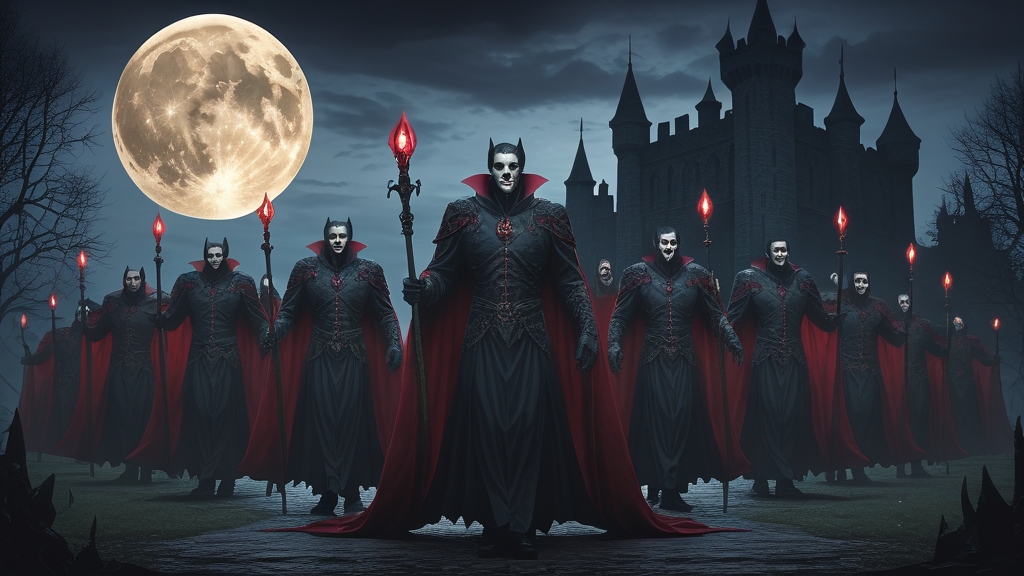
The Soulblight Gravelords are the vampire faction of Death in Warhammer Age of Sigmar: immortal aristocrats who rule over legions of skeletons, zombies and monstrous undead. This guide covers who they are, how the army plays in Age of Sigmar 4th Edition, which models to start with, and how to paint them.
Who Are the Soulblight Gravelords?
The Soulblight Gravelords are the undead legions of the vampires and their thralls. Once mortal nobles, the vampires are cursed with undeath and driven by a thirst for blood and power. Vampire lords lead a mix of units, from skeletal warriors and shambling zombies to Blood Knights and huge undead monsters.
They owe allegiance to Nagash, the Supreme Lord of the Undead, but most vampires pursue their own ambitions as well. The army mixes magic, elite melee heroes and expendable hordes, and it has a classic gothic-horror look.
What Are the Soulblight Gravelords Army Strengths?
The army’s identity is attrition. Its vampire and necromancer heroes can restore slain models to nearby undead units and, in some cases, bring destroyed units back, so the opponent has to keep killing the same objective-holders again and again. Units like Blood Knights and Grave Guard supply the punch, while Vampire Lords and Necromancers add spellcasting and recursion.
The weaknesses are the flip side of that design. The basic undead are individually weak, and much of the army’s staying power runs through its heroes. If the opponent can pick off your vampires and necromancers early, the hordes stop coming back. Good positioning of your heroes matters more than almost anything else.
Where Should Beginners Start?
If you’re starting a Soulblight Gravelords collection, these models give you a solid core:
- Vampire Lord: A versatile leader who fights well and supports the army around him.
- Grave Guard: Elite skeleton infantry that give your battle line some real melee threat.
- Blood Knights: Heavily armoured vampire cavalry that hit hard on the charge.
- Deathrattle Skeletons: Cheap, numerous infantry for holding objectives, kept topped up by your heroes.
Exact abilities, points and unit sizes change with each battletome and balance update, so check the current Soulblight Gravelords battletome and the latest Battle Profiles before you build a list.
Soulblight Gravelords Lore and History
The Soulblight Gravelords are the vampiric aristocracy of Death: ancient, powerful and endlessly ambitious. Descended from the original Soulblight curse that created the first vampires, they command vast legions of undead thralls while pursuing their own dark agendas. They serve Nagash, though many harbour secret ambitions to overthrow or surpass him.
The Soulblight bloodlines trace their lineage back to the world-that-was. The great dynasties — the regal Legion of Blood, the bestial Vyrkos, the martial Kastelai, the monstrous Avengorii and the shadowy Legion of Night — each carved out domains of terror in the Mortal Realms. In 4th Edition they no longer have separate subfaction rules, but they remain central to the lore and are a popular way to theme and paint an army.
Vengorian Lords take monstrous bat-like forms, Blood Knights are among the finest heavy cavalry in the Mortal Realms, and Vampire Lords combine martial prowess with dark sorcery. Beneath these aristocrats march endless ranks of Deathrattle skeletons and Deadwalker zombies, raised from graves and battlefields by their masters’ necromantic power.
The tension between loyalty to Nagash and the vampires’ own ambition drives much of the faction’s story. Mannfred von Carstein, a scheming, treacherous vampire whose plots have shaped history across two settings, is the clearest example.
Soulblight Gravelords in the Current Meta
For current rankings and analysis, check our Age of Sigmar faction tier list, which we update based on tournament results and community feedback.
The Soulblight Gravelords are a versatile Death faction that combines powerful vampire heroes with large numbers of expendable undead. Their ability to restore and return units creates a war of attrition that can exhaust opponents, especially in objective games where controlling ground matters more than wiping out the enemy.
Lists generally pair a durable, recurring core of undead infantry with a hard-hitting element such as Blood Knights or a monstrous vampire. The faction rewards players who enjoy managing an army with several moving parts: hero positioning, horde management and well-timed vampire strikes.
Playing Soulblight Gravelords in 4th Edition
A few principles hold regardless of the current points:
- Protect your heroes. Your vampires and necromancers drive the army’s recursion. Keep them behind screens of skeletons or zombies and out of easy reach of enemy shooting and charges.
- Use the hordes on objectives. In 4th Edition, objectives are held by the Control characteristic of the models contesting them, so a big block of cheap undead that keeps coming back is a strong objective-holder.
- Pick your hammer moments. Blood Knights and monsters are your damage. Commit them where they can break a key enemy unit, not into a fight you can’t win.
- Watch the bookkeeping. Recursion, healing and command points add up to a lot to track. Practise your turn sequence so you don’t miss abilities against a clock.
Against shooting-heavy armies, screen your heroes and close the distance quickly. Against hard-charging melee armies, absorb the first wave with expendable infantry and counter-charge with your elite units.
Collecting Soulblight Gravelords
The easiest entry point is the Soulblight Gravelords Spearhead box — see our Soulblight Gravelords Spearhead guide for what’s inside and how to use it. Spearhead is also a good way to learn the faction before committing to a full 2,000-point army.
When expanding, focus on the units that define the faction’s playstyle. Deathrattle Skeletons and Deadwalker Zombies provide the expendable base, Blood Knights serve as elite cavalry, a Vampire Lord or Vengorian Lord makes a strong leader, and a Zombie Dragon or other monster gives you a centrepiece. A Necromancer is a cheap, useful support hero.
Second-hand models and trades are a good way to build up affordable infantry, and the faction has been popular long enough that used Soulblight kits are easy to find. Check our Age of Sigmar faction tier list to see which units are performing well before buying expensive kits.
Painting Soulblight Gravelords
The Soulblight Gravelords span a wide aesthetic range, from the pale, aristocratic flesh of vampire lords to the rotting green-grey of zombie hordes. Vampire models reward careful attention to pale skin tones (Rakarth Flesh highlighted with Pallid Wych Flesh), rich red fabrics, and ornate gold or silver armour that conveys their regal nature.
Skeletons and zombies can be batch-painted efficiently: Skeleton Horde Contrast paint over Wraithbone primer gives quick results on bone, and a dark wash such as Nuln Oil brings out recesses in armour and cloth. Drybrushing works well on bones and armour, and edge highlighting sharpens up weapons and armour plates. Blood Knights deserve more attention, with deep red armour and ornate detailing. The contrast between the refined vampires and their shambling servants is a big part of the army’s look.
Check our guide on painting Soulblight Gravelords for dynasty-specific colour schemes.
Related Armies
If you enjoy Soulblight Gravelords, you might also like these armies:
- Flesh Eater Courts — Both Death factions feature vampiric leaders commanding hordes of lesser undead.
- Nighthaunt — Nighthaunt spirits complement the Soulblight Gravelords’ corporeal undead perfectly.
- Ossiarch Bonereapers — Fellow Death faction serving Nagash with a different approach to undead warfare.
Everything Soulblight Gravelords on Warhammer Guild
Frequently Asked Questions
Who are the Soulblight Gravelords?
The Soulblight Gravelords are the vampire lords of Age of Sigmar, commanding legions of undead minions. Led by powerful vampires from different bloodlines — Legion of Blood, Legion of Night, Vyrkos, Avengorii and Kastelai — they raise the dead to serve their aristocratic ambitions.
Are Soulblight Gravelords good for beginners?
Yes. The army is fairly forgiving because your heroes can restore and return your Skeleton and Zombie units, so early mistakes are less punishing. Their vampire heroes are powerful, and the army supports both horde and elite playstyles.
What are the strengths of Soulblight Gravelords?
Soulblight Gravelords can restore slain models and bring back destroyed undead units, field powerful vampire heroes who fight well in melee, and swamp objectives with expendable hordes. Blood Knights are among the most feared cavalry in the game. Check the current battletome for exactly how the army’s recursion rules work.
What are the weaknesses of Soulblight Gravelords?
Soulblight Gravelords’ basic undead units (Zombies, Skeletons) are individually very weak. The army relies heavily on its heroes for recursion, and losing key vampire characters can cause the army to crumble rapidly.
What are the Soulblight bloodlines?
The best-known vampire bloodlines are Legion of Blood (political schemers), Legion of Night (ambushers), Vyrkos Dynasty (wolf-themed bestial vampires), Avengorii Dynasty (monstrous vampires) and Kastelai Dynasty (martial Blood Knights). In 4th Edition they are part of the lore and army theming rather than separate subfaction rules.
Who leads the Soulblight Gravelords?
Nagash, the Supreme Lord of the Undead, is the overlord of the Soulblight Gravelords, though the vampires have their own leaders. The best known are Neferata, Mortarch of Blood and Queen of the Legion of Blood; Mannfred von Carstein, Mortarch of Night; Lauka Vai, the Mother of Nightmares; and Radukar the Wolf, who leads the Vyrkos Dynasty.
Where did the Soulblight vampires come from?
The Soulblight curse goes back to the World-That-Was, where Neferata of Lahmia created the first vampires using an elixir based on Nagash’s dark work. The bloodlines that spread from her court survived the end of that world and were reborn in the Mortal Realms, where Nagash claimed the vampires as his servants.
Related Content
- Soulblight Gravelords Spearhead — Box Review & Guide — Spearhead guide for this faction
- All Age of Sigmar Factions Ranked — Tier List — tier rankings of all Age of Sigmar factions
- How to Paint Soulblight Gravelords — Colour Schemes Guide — painting guide for this faction
- Soulblight Gravelords Army List — 1,000 and 2,000-point lists for AoS 4th Edition