
Age of Sigmar Beginners Guide
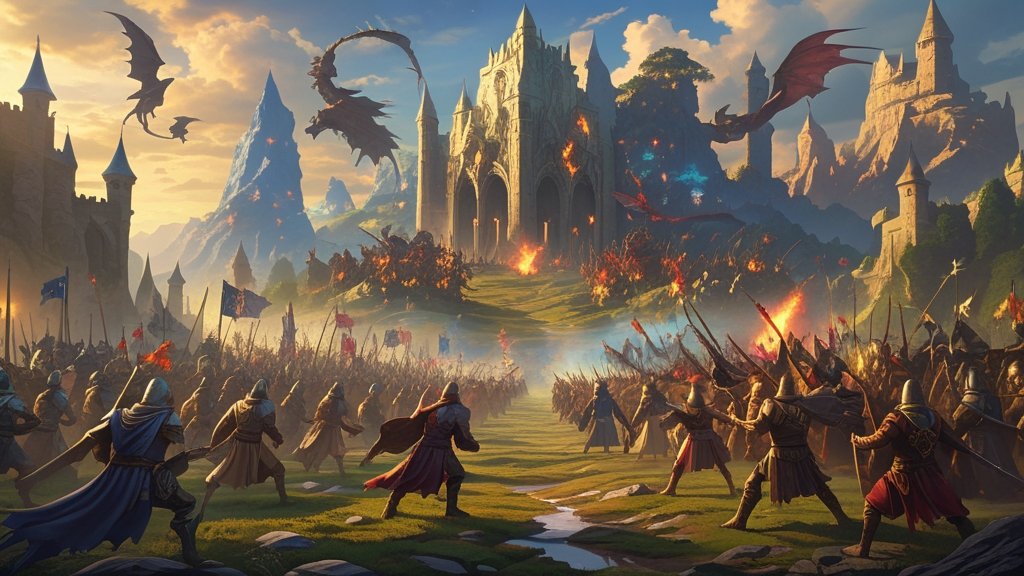
Warhammer Age of Sigmar is a tabletop game made by Games Workshop, like Warhammer 40,000. The difference is the setting: Age of Sigmar is fantasy, set in the Mortal Realms, a world of gods, ancient magic, heroes and monsters. The game is currently on its 4th Edition, which launched in 2024.
Age of Sigmar Overview
Each player brings an army from one faction, made up of assembled (and ideally painted) miniatures.
An army is made up of units, ranging from a single hero or monster to large regiments of infantry. In 4th Edition, armies are organised into regiments, each led by a Hero with a handful of supporting units.
The core rules are free, so getting started is easy. A small Spearhead game takes around an hour, while a full 2,000-point matched play game usually takes two to three hours, so set aside enough time to finish.
You’ll need a decent-sized area to play. A standard 4th Edition matched play battlefield is 60 by 44 inches, while Spearhead uses a smaller board.
The best way to learn is to read the free core rules, dip into the lore and find more experienced players to show you the ropes. But really, just get started and get stuck in.
Age of Sigmar Army Types & Factions
Every faction belongs to one of four Grand Alliances:
- Chaos
- Death
- Destruction
- Gloomspite Gitz
- Ogor Mawtribes
- Orruks: Ironjawz and Kruleboyz (formerly grouped as Orruk Warclans, now two separate factions)
- Sons of Behemat
- Order
That’s a lot of choice. We have beginner guides on each of these factions covering the basics of the army plus painting schemes and tips, which should be enough to help you narrow it down.
Warhammer Painting Guide for Beginners
We put together a basic painting guide for beginners to help get new players started. Check it out and let us know if there is anything to add: Painting Guide for Beginners
Your First 30 Days in Age of Sigmar
Here is a simple week-by-week plan for your first month in the Mortal Realms.
Week 1: Explore the Mortal Realms and choose a faction
Spend your first week discovering the factions and setting. Look at every Grand Alliance (Order, Chaos, Death and Destruction), watch a few introductory battle reports on YouTube, and read our faction overviews. By the end of the week, narrow your options to two or three factions whose models and themes excite you most, then pick one.
Week 2: Buy and build
Buy the Spearhead box for your chosen faction, or one of the 4th Edition starter sets. Spearhead is the smallest official game format and its boxes give you everything you need for your first games. Add plastic glue, flush cutters, a spray primer and a basic paint set. Assemble your models carefully and take time to clean mould lines.
Week 3: Paint your first units
Prime your models: Wraithbone or Grey Seer work well if you plan to use Contrast paints, while Chaos Black suits traditional painting. Paint one test model fully before starting the rest so you can refine your colour scheme, then batch paint the rest of the unit (five to ten models at a time is more efficient than one at a time). Base coats plus washes or Contrast paints will get a unit to a good tabletop standard quickly.
Week 4: Roll your first dice
Play your first game. The core rules are free from Warhammer Community. A Spearhead game uses smaller forces and a smaller board, which makes it perfect for learning the turn sequence, movement, combat, commands and objective control. Play with whatever you have built, even if it isn’t fully painted. If you can’t find a local opponent, Warhammer stores run regular introductory games and are happy to teach newcomers.
Essential Purchases for New AoS Players
Age of Sigmar is easier on the wallet if you prioritise your purchases. Here is what to buy and in what order.
First purchase: A Spearhead box for your chosen faction, or a 4th Edition starter set. Either gives you a complete, playable force and saves money compared to buying kits individually. You don’t need the battletome to start, as warscrolls are available through the official app.
Second purchase: Hobby essentials: a starter paint set, plastic glue, flush cutters and a spray primer. A pot of Agrax Earthshade or a shade that suits your faction is also very useful.
Third purchase: Your faction’s battletome, when you’re ready for the full army rules, enhancements and lore. This can wait until you’ve played several games and are committed to the faction.
Ongoing: Additional units to expand your army toward 1,000 and eventually 2,000 points. Buy what you enjoy rather than chasing the meta. Game balance changes, but your enjoyment of specific models and playstyles lasts.
The AoS Community
The Age of Sigmar community is one of the most welcoming and creative in tabletop gaming. AoS players tend to be passionate about painting, converting and narrative play alongside competitive gaming.
Online resources: The official Warhammer Age of Sigmar app gives you warscrolls, rules and army-building tools. Reddit’s r/ageofsigmar is an active hub for rules questions, army showcases and finding local players, and most factions have dedicated Discord servers or Facebook groups for list-building help. Warhammer TV’s YouTube channel covers AoS models regularly, and community channels and podcasts cover everything from lore to competitive analysis.
Local play: Warhammer stores, independent game stores and gaming clubs host regular AoS nights where you can find pick-up games. The AoS tournament scene is known for a friendly, sportsmanship-focused culture.
Narrative and campaign play: AoS has particularly strong support for narrative gaming. The Path to Glory campaign system lets you start with a small force and grow it over a series of linked games, with your heroes gaining experience as you go. It’s an excellent way to learn the rules and expand your collection at the same time.
Understanding AoS Game Mechanics
Age of Sigmar uses a streamlined rules framework that is easy to learn but offers real tactical depth. Here are the key mechanics every new player should understand.
The turn structure: A matched play game lasts five battle rounds, and in each round both players take a turn. From the second round onwards, players roll off for priority and the winner chooses who goes first. That creates the possibility of a double turn, the same player acting in consecutive turns, which is one of AoS’s most distinctive mechanics. A turn runs through the hero, movement, shooting, charge and combat phases, then objective control is checked at the end of the turn.
Command points and commands: Each player gets 4 command points at the start of every battle round, and the player who is behind on victory points (the underdog) gets 1 more. You spend them on universal commands such as Rally, Redeploy, At the Double, Counter-charge, Forward to Victory, All-out Attack and All-out Defence. Each unit can use only one command per phase, and each command can only be used once per phase by your army. Unspent CP are lost at the end of the round.
Magic and prayers: Wizards cast spells on 2D6 against a casting value, and enemy Wizards within range can try to unbind them. Priests chant prayers on a D6 against a chanting value and can bank ritual points to help with harder prayers later. Prayers don’t automatically succeed, but they can’t be unbound.
Objectives and control: Most games are won by holding objectives. Each model has a Control characteristic, and the side with the higher total Control among models contesting an objective takes it. There is no battleshock or Bravery in 4th Edition, so the challenge is keeping enough Control on objectives, not stopping units from fleeing.
Coherency and unit positioning: Models in a unit must stay in coherency, each within ½” of another model in the unit (or of two others if the unit has 7 or more models). This affects how you fit units onto objectives, how you engage in combat and how you remove casualties.
Common Mistakes New AoS Players Make
Every new player makes mistakes, and that’s part of learning. Knowing the most common pitfalls can save you some frustration.
Underestimating hero importance: Age of Sigmar is a hero-driven game. Heroes lead your regiments, cast spells, chant prayers and often anchor your whole plan. Make sure you have the heroes your army’s key mechanics rely on, such as vampire lords for Soulblight Gravelords or Lord-Imperatants for Stormcast Eternals.
Ignoring objective play: AoS games are won by scoring victory points from objectives and battle tactics, not by tabling your opponent. Keep enough units with good Control to hold ground, and prioritise objectives over flashy but strategically irrelevant kills.
Forgetting your commands: Commands are powerful tools that new players often forget in the heat of battle. Keep a list of the core commands handy and remember that several, like All-out Defence and Redeploy, are used in your opponent’s turn, so don’t spend all your CP in your own turn.
Playing from old-edition rules: Battleshock, Bravery, Inspiring Presence, allegiance abilities and grand strategies all belong to older editions. If a guide or video mentions them, it was written for 3rd Edition or earlier.
Overcommitting to a single flank: Because of the double turn, committing your entire army to one side of the battlefield can leave you exposed if your opponent gets two turns in a row and swings round your flank. Keep a balanced deployment that can respond to threats from multiple directions.
Frequently Asked Questions
How is AoS different from 40k?
Age of Sigmar is set in a fantasy universe rather than a sci-fi one, with gods, magic and mythical creatures in place of space marines and aliens. The two games share some core ideas but differ in important ways: AoS uses a simpler profile, puts a stronger emphasis on hero-led armies, and has the priority roll and double turn, which create dramatic swings. AoS armies often have fewer models, and games can be slightly faster.
Is AoS as popular as 40k?
Warhammer 40,000 has a larger global player base, but Age of Sigmar’s community has grown a lot since launch and is thriving. In some areas, particularly parts of the UK and continental Europe, AoS has a very strong local scene. You should be able to find opponents and events in most areas.
Do I need terrain to play?
Terrain makes for a much better game, but you don’t need to buy dedicated terrain to start. Household items like books and boxes work for your first few games, and Warhammer stores and clubs provide terrain for in-store play. When you’re ready to invest, starter terrain sets are available from Games Workshop and third-party manufacturers.
Can I use old Warhammer Fantasy models?
Some older Warhammer Fantasy Battle models still have warscrolls in Age of Sigmar, either in current battletomes or as Legends. Check the Warhammer app before rebasing an old collection, as some models have current rules and others don’t.
Where should I start with Age of Sigmar?
Start by picking a faction whose models and lore you like, then buy its Spearhead box or a starter set. Spearhead is the smallest official format and gives you a complete, playable force in one box. Download the free core rules from Warhammer Community, build and prime your models, and play a small first game before expanding toward 1,000 points.
What is the best Age of Sigmar beginner set?
For most beginners, the 4th Edition starter sets (Introductory, Starter and Ultimate Starter) are the best value, pitting Stormcast Eternals against Skaven with rules, dice and a small rulebook included. If you already know which army you want, that faction’s Spearhead box is the better buy, as it gives you a ready-made force for the Spearhead format.
What edition of Age of Sigmar is current?
Age of Sigmar is on its 4th Edition, which launched in 2024. It streamlined the rules, removed battleshock and Bravery, introduced Spearhead as the entry-level format and reissued battletomes for every faction. Any guide or rule source written for 3rd Edition, including old command abilities and allegiance abilities, should be checked against the current rules before you rely on it.
What missions does Age of Sigmar use?
Matched play games use battleplans from the current General’s Handbook, which set deployment zones, objective layouts and how victory points are scored each turn. The core rules include introductory battleplans for first games, and Spearhead has its own deck of battleplans and twist cards. Narrative players use Path to Glory campaign missions instead.
What does Strike-first mean in AoS?
Strike-first means a unit fights at the start of the combat phase, before units without that ability get to pick fights. In 4th Edition, units that strike first fight before the normal back-and-forth alternation of fights begins. If a unit has both Strike-first and Strike-last, the two effects cancel out and it fights normally.
Is there a skirmish version of Age of Sigmar?
Yes. Warcry is Games Workshop’s dedicated skirmish game set in the Mortal Realms, using small warbands of around 5 to 15 models. Within Age of Sigmar itself, Spearhead is the smallest official format, using a fixed box-sized force on a smaller board, which makes it the closest thing to a quick skirmish-scale AoS game.