
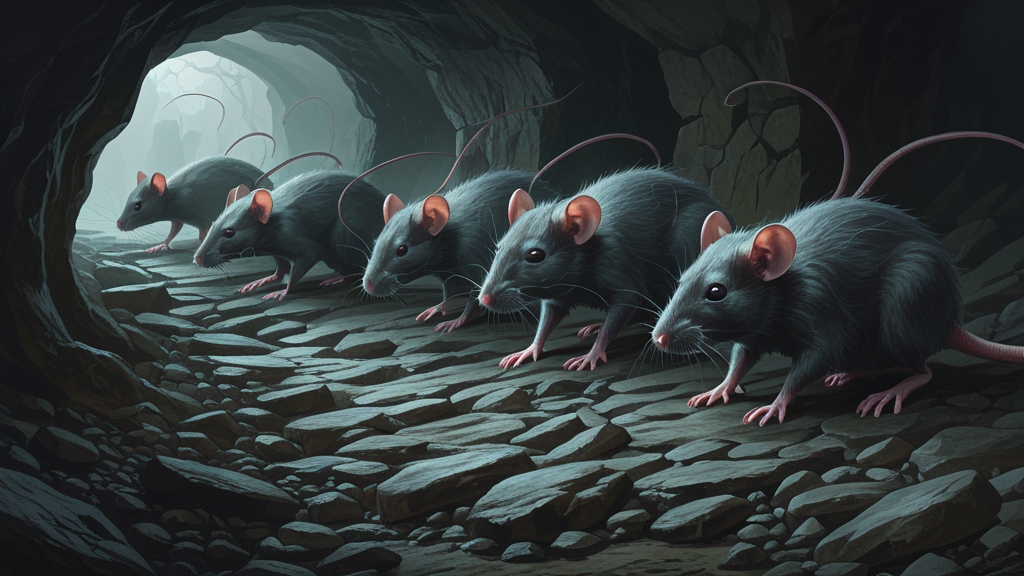
The Skaven are the ratmen of the Under-Empire: a teeming, treacherous Chaos faction that wins through numbers, ambushes from below and warpstone-powered war machines that are as dangerous to their crews as to the enemy. This guide covers who they are, how they play in Age of Sigmar 4th Edition, which kits to start with, and how to paint them.
Who Are the Skaven?
The Skaven are a race of malevolent ratmen, the Children of the Horned Rat, who infest a sprawling Under-Empire beneath the Mortal Realms. They are constantly plotting to expand their dominion, and just as constantly plotting against each other.
Skaven society is disorganised and vicious. Only the cruellest, most cunning and best at surviving rise to the top. Their shared dream is the Great Ascendancy, when the ratmen will rise up and claim the realms for themselves. All the in-fighting makes that unlikely, but there are an awful lot of them.
What Are the Skaven Army’s Strengths?
Skaven are a fun army to play and a frustrating one to face. They don’t dominate any single area, but they are decent at most things, and they reward a player who thinks a turn or two ahead.
Their strengths are bodies, tricks and ranged firepower. Cheap infantry hold ground and screen, Clan Skryre weapons deal the damage, and the faction’s tunnelling rules let units pop up where the opponent least wants them. Ratmen are replaceable, so you can sacrifice units, bring more in and keep grinding.
How Skaven Play in Age of Sigmar 4th Edition
The Skaven were one of the two armies in Skaventide, the 4th Edition launch box, and their battletome is built around mobility and ambush rather than standing in one place.
- Tunnels and Gnawholes. Skaven can set units up in the tunnels below the battlefield and bring them back in later through Gnawholes, their faction terrain. This forces your opponent to guard objectives and backfield units they would normally ignore.
- Slippery in combat. Skaven infantry and cavalry are very good at getting out of fights they don’t want. Retreating normally costs a unit D3 mortal damage in 4th Edition, and the Skaven battle traits let many of their units avoid that.
- Repositioning in the enemy turn. The battle traits also give Skaven ways to move units outside their own turn, so they can dodge threats or slip onto objectives.
- Risky warpstone weapons. Clan Skryre guns and engines hit very hard but are unpredictable, so fielding several of them and focusing fire is more reliable than relying on one.
Rules wording, battle formations and points change with each battletome update and Battle Profiles release, so check the current Skaven battletome and the latest Battle Profiles for exact values. The 4th Edition battle formations each lean into one Great Clan: Claw-horde (Verminus), Warpcog Convocation (Skryre), Virulent Procession (Pestilens) and Fleshmeld Menagerie (Moulder). Thanquol’s Mutated Menagerie is an Army of Renown built around Thanquol and monsters.
In a matched play game you win by holding objectives with your Control characteristic, not by tabling the enemy, which suits a horde army. If you are new to 4th Edition, read our Skaven Spearhead guide to learn the faction at a smaller scale first, and see our Skaven army lists for current 1,000 and 2,000-point builds.
Where Should Beginners Start?
If you’re starting a Skaven collection, these kits cover the core of the army:
- Clanrats: The backbone of most Skaven armies. Cheap, numerous and expendable, they hold objectives, screen your valuable units and soak up the enemy’s charge.
- Stormvermin: Clan Verminus elites. Tougher and better armed than Clanrats, they act as bodyguards for your heroes and hold key ground.
- Warplock Jezzails: Long-range Skryre marksmen, useful for picking off enemy heroes and support pieces from a distance.
- Grey Seer: The Horned Rat’s sorcerer-priests and a staple Wizard for most lists. Fragile, so keep them behind your Clanrats.
- Doomwheel: A warpstone-powered rolling death machine that adds speed and punch, with a typically Skaven level of reliability.
- Ratling Guns: Skryre weapon teams that pour out a huge volume of shots at close range.
Best Skaven Units
Stormfiends
Massive rat-ogors grafted with warpstone technology. They can carry warpfire projectors, ratling cannons, grinderfists and other weapon options, and they are among the hardest-hitting units in the army.
Warp Lightning Cannon
Clan Skryre’s signature artillery piece. Its damage output swings wildly from turn to turn, which is why many players run more than one.
Grey Seer and Grey Seer on Screaming Bell
Grey Seers are the Skaven’s key Wizards. The Screaming Bell version is a mobile centrepiece that supports nearby units and makes a great focal point for your army.
Clanrats
Big units of Clanrats are surprisingly resilient through sheer body count and add a lot of Control on objectives. They exist to hold ground, screen and die so your valuable units don’t have to.
Verminlords
The greater daemons of the Great Horned Rat. The Verminlord Warpseer combines combat power, magic and army support in one model, while the Corruptor, Deceiver and Warbringer each reflect a different Great Clan.
Plague Monks and Hell Pit Abominations
Plague Monks are fanatical, hard-hitting Pestilens infantry that overwhelm enemies with a weight of attacks. The Hell Pit Abomination is a durable Moulder monster that can anchor a flank or push into enemy lines.
Skaven Lore and History
The Skaven are a vast, teeming race of rat-men who infest the underbelly of the Mortal Realms. They worship the Great Horned Rat, the newest and most despised of the Chaos Gods, and they are defined by boundless ambition, treachery and overwhelming numbers. Their civilisation stretches through a network of gnawholes and under-tunnels that connects the realms, making them a constant, insidious threat.
In the world-that-was, the Skaven played a major part in the End Times that destroyed the old world. When the Mortal Realms formed, the ratmen quickly spread their influence, gnawing at the foundations of reality itself.
The Great Horned Rat and Skaven Worship
At the heart of Skaven civilisation lies the worship of the Great Horned Rat, who rose to become one of the major Chaos Gods during the cataclysmic events of the world-that-was. He embodies vermin, decay, paranoia and the relentless hunger for power that drives his children. His horned symbol is carved into tunnel walls throughout every warren.
The Great Horned Rat feeds on the scheming, betrayal and ruthless ambition that run through every level of Skaven society. Every backstabbing plot and every moment of craven self-preservation is, in its way, a prayer to him. The whole Under-Empire is a temple to their god: a sprawling network of tunnels, warrens and breeding pits.
Grey Seers serve as the Horned Rat’s priesthood, wielding sorcery drawn from their god’s power. These pale-furred, horned ratmen are born marked by the Horned Rat himself. They are feared and respected by all the clans, yet trusted by none.
The Under-Empire Beneath the Mortal Realms
The Under-Empire stretches beneath the surface of the realms, connecting Skaven holdings across reality. Countless Skaven inhabit these subterranean domains, their numbers constantly swelling despite the endless internal warfare that culls them.
Gnawholes are the Under-Empire’s critical infrastructure: tunnels gnawed through reality that connect distant warrens. They let Skaven armies appear seemingly from nowhere and erupt from beneath the ground. On the tabletop, this is exactly what the faction’s tunnel and Gnawhole rules represent.
Blight City, the greatest of the Skaven cities, exists partly in the Mortal Realms and partly in the Realm of Chaos. Its impossible architecture defies natural law, and its streets glow with sickly warpstone light.
The Great Clans of the Skaven
Skaven society is divided into Great Clans, each specialising in a different kind of warfare. They shape both the lore and how you build your army. For how the Skaven compare with every other faction, see our Age of Sigmar Factions Ranked guide.
Clan Pestilens — The Plague Monks
Clan Pestilens is devoted to spreading disease and corruption in the Horned Rat’s name. Its Plague Monks fight with a fanatical fervour unmatched by other Skaven, hurling themselves into combat while chanting prayers. They breed plagues in their monastery-warrens and unleash them on enemies and rival clans alike.
Clan Verminus — The Warrior Hordes
Clan Verminus forms the military backbone of the Skaven race. Its Clanrats and Stormvermin make up the bulk of most Skaven armies. Stormvermin are the elite of the clan: larger, stronger and better equipped, they guard Skaven warlords and lead major offensives.
Clan Skryre — The Warlock Engineers
Clan Skryre combines Skaven ingenuity with warpstone-fuelled technology. Its Warlock Engineers build weapons of devastating but unreliable power: warpfire throwers, Ratling Guns, Jezzails and the infamous Warp Lightning Cannon, all with a very real chance of catastrophic malfunction.
Clan Moulder — The Flesh-Shapers
Clan Moulder are the master breeders and flesh-shapers of the Skaven. Their Packmasters create hideous war-beasts by mutating living creatures with warpstone. Rat Ogors, Hell Pit Abominations and Giant Rats are all products of Moulder’s twisted experiments.
Clan Eshin — The Shadow Killers
Clan Eshin provides the Skaven with assassins, spies and saboteurs. Gutter Runners slip through enemy lines to strike at vulnerable targets, and Deathmaster assassins are among the most feared individual killers in Skaven society.
Key Characters and Leaders
Thanquol is the most famous Skaven of all: a Grey Seer of tremendous magical power whose boundless ambition is matched only by his capacity for failure. Accompanied by his frequently replaced Boneripper, Thanquol has survived countless disasters through raw magical talent, shameless cowardice and blind luck.
Verminlords are the greater daemons of the Great Horned Rat, towering rat-fiends that embody different aspects of Skaven society. The Warpseer is a schemer and seer, the Corruptor spreads Pestilens plagues, the Deceiver strikes from the shadows like a titanic Eshin assassin, and the Warbringer is a war-leader.
Skaven Society and the Art of Backstabbing
Skaven society is a nightmarish meritocracy built on treachery, paranoia and self-interest. Every Skaven, from the lowest Clanrat to the mightiest Verminlord, is plotting to climb higher while guarding against betrayal from below.
The Council of Thirteen sits at the top of Skaven society. Its members, the Lords of Decay, scheme constantly against each other, and the thirteenth seat is reserved for the Great Horned Rat himself.
Warpstone is the lifeblood of Skaven technology and society: solidified raw Chaos that the Skaven mine, refine and consume in staggering quantities. It powers Clan Skryre’s weapons, fuels Pestilens plagues and Moulder mutations, and gives Grey Seers extra magical potency. It is also horribly toxic, which the Skaven consider an acceptable cost. For tips on painting the iconic warpstone glow, visit our Skaven painting guide.
The Skaven way of war reflects all this. They favour overwhelming numbers, ambushes and unreliable war machines over fair fights, and a Skaven general will happily spend thousands of Clanrats to win a single objective. For more on the dark god behind it all, read our Great Horned Rat lore guide.
Collecting Skaven
The Skaven Spearhead box is the easiest entry point. Our Skaven Spearhead guide breaks down what you get and how to use it, and Spearhead is a good way to learn the faction before building a full 2,000-point army.
When you expand, focus on the units that define the army’s playstyle. Clanrats give you the horde every Skaven army needs, while Stormvermin and the Great Clan specialists add hitting power. A Grey Seer on Screaming Bell or a Verminlord makes an excellent centrepiece. Check our Age of Sigmar faction tier list for how the army is currently performing before buying expensive kits.
How to Paint Skaven
Skaven are a great army to paint, mixing dingy browns and greys with sickly greens and glowing warpstone. A few scheme ideas:
- Classic ratmen: Brown or grey fur, with Skavenblight Dinge or Gorthor Brown as a base and lighter drybrushes on top. Use Leadbelcher or a brass for rusty armour and weapons, and add a red or green accent colour for cloth and banners.
- Warpstone glow: Paint the warpstone and warp-tech with Warpstone Glow, then Moot Green, and push the brightest points towards a pale yellow-green. Dark armour and fur make the glow stand out.
- Rusty engines: For Doomwheels and Warp Lightning Cannons, start with a dark brown or copper base, add orange rust effects, and finish with glowing green warpstone.
Skaven armies have high model counts, so batch painting is essential. Prime grey or brown, use Contrast paints for fur and cloth, drybrush fur and armour to pick out texture, and save your detail work for characters and warpstone. Agrax Earthshade ties the grimy look together, and Nuln Oil works well on metal. Our guide on painting Skaven has full colour recipes.
Related Armies
If you enjoy Skaven, you might also like these armies:
- Slaves to Darkness — Both serve the forces of Chaos with vast hordes of expendable warriors and dark sorcery.
- Gloomspite Gitz — Fellow horde army with a mischievous, chaotic energy and strength in overwhelming numbers.
- Flesh Eater Courts — Both factions bring a horror-tinged aesthetic with swarms of terrifying creatures.
Everything Skaven on Warhammer Guild
Frequently Asked Questions
Who are the Skaven?
The Skaven are a vast civilisation of ratmen who inhabit a sprawling Under-Empire beneath the Mortal Realms in Age of Sigmar. They worship the Great Horned Rat, the newest Chaos God, and combine overwhelming numbers with unstable but devastating warpstone-powered technology.
Are Skaven good for beginners?
Skaven are moderately beginner-friendly. Their basic Clanrats are cheap and expendable, which makes the army forgiving. However, managing large numbers of models, unpredictable weapons and tunnel deployment takes some practice.
What are the strengths of Skaven?
Skaven can swamp objectives with cheap infantry, strike from the tunnels through Gnawholes and back it up with powerful but unreliable warpstone weapons such as Warp Lightning Cannons. Grey Seers and Verminlords add strong magic and support.
What are the weaknesses of Skaven?
Individual Skaven are fragile, and their warpstone technology is unreliable, so a bad run of dice can hurt. Large model counts also make the army expensive to collect and slow to paint.
Who is the Great Horned Rat?
The Great Horned Rat is the Chaos God of the Skaven, the youngest of the major Chaos deities. He rose to take Slaanesh’s place among the great powers when Slaanesh was captured by the aelven gods. He embodies pestilence, scheming and the relentless multiplication of the Skaven race.
Are Skaven part of Chaos in Age of Sigmar?
Yes. Skaven are a Chaos faction in Age of Sigmar, because they worship the Great Horned Rat, one of the Chaos Gods. They fight alongside or against other Chaos armies like Slaves to Darkness depending on the story, and in practice they usually serve their own clans’ schemes first.
What is warpstone?
Warpstone is solidified raw Chaos, a glowing green mineral that the Skaven mine, trade and eat. It powers Clan Skryre’s war machines, such as Warp Lightning Cannons and warpfire throwers, and fuels Grey Seer magic. It’s also highly unstable, which is why Skaven weapons can be devastating one turn and explode the next.
Do Skaven have a new Age of Sigmar 4th Edition range?
Yes. The Skaven were one of the two armies in Skaventide, the Age of Sigmar 4th Edition launch box in 2024. They got a large wave of new models and an updated battletome. Many older kits, such as Clanrats, Stormvermin and Warp Lightning Cannons, are still in the range alongside the new ones.
Related Content
- Skaven Spearhead — Box Review & Guide — Spearhead guide for this faction
- All Age of Sigmar Factions Ranked — Tier List — tier rankings of all Age of Sigmar factions
- How to Paint Skaven — Colour Schemes Guide — painting guide for this faction