
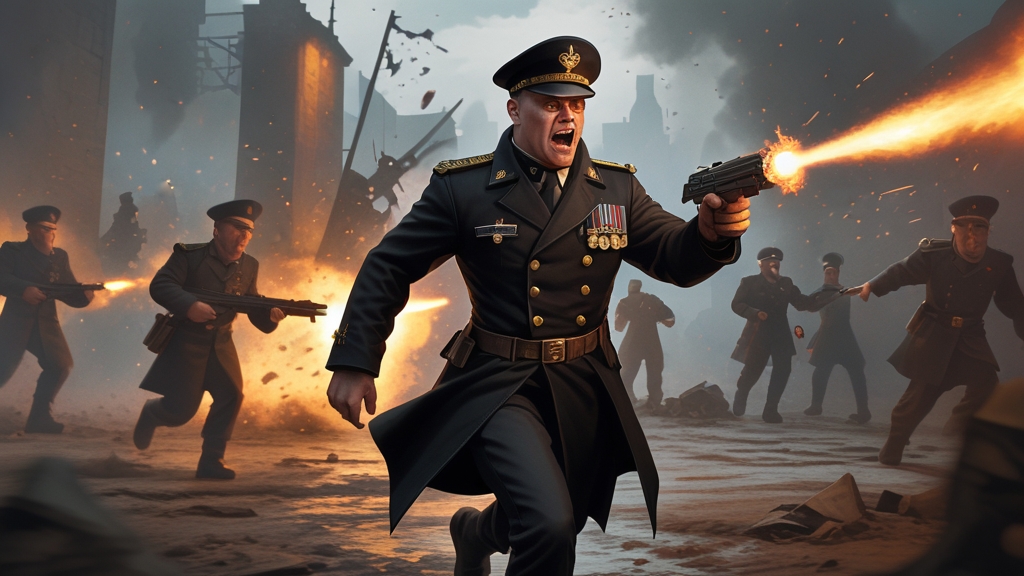
Ciaphas Cain is a Commissar of the Astra Militarum who portrays himself as a cowardly, self-serving fraud — yet consistently performs incredible acts of heroism through a combination of accident, luck, genuine competence he refuses to acknowledge, and an uncanny survival instinct that keeps placing him exactly where heroes are needed. His novels, written by Sandy Mitchell, are Warhammer 40,000’s most humorous series and among the best-loved books in the entire Black Library catalogue.
The Ciaphas Cain series is unique in Warhammer 40,000 fiction because it approaches the grimdark setting with wit, irony, and genuine affection. While the setting remains as dangerous as ever — Cain faces Tyranids, Chaos, Orks, Necrons, and Genestealers across his career — the tone is lighter, drawing on the tradition of Flashman, Blackadder, and other comedic heroes who succeed despite (or because of) their cowardice.
What Is a Commissar?
Commissars are political officers attached to Astra Militarum regiments, responsible for maintaining morale and discipline. They have the authority to summarily execute any soldier — from private to general — for cowardice, dereliction of duty, or heresy. In the grim darkness of the 41st Millennium, commissars are feared by the soldiers they serve alongside, their presence a reminder that the Imperium considers retreat as criminal as treason.
Most commissars are grim, fanatical figures who lead through terror. Cain is the opposite — at least in his own account. He maintains that his reputation as a hero is entirely undeserved, that every act of apparent courage was actually an attempt to run away from danger that happened to take him toward more danger, and that his real talent lies in making cowardice look like bravery.
Whether Cain is telling the truth about his own motivations or is an unreliable narrator who undervalues his genuine courage is one of the series’ most enduring debates among fans.
What Are the Ciaphas Cain Novels About?
The Cain novels are presented as Cain’s personal memoirs — private records in which he admits his true motivations (or claims to). These memoirs are annotated by Inquisitor Amberley Vail, who adds footnotes providing context, corrections, and occasionally exasperated commentary. This dual-narrator structure adds richness to the storytelling, as the reader must weigh Cain’s self-deprecating account against Vail’s more objective observations.
The novels follow Cain’s career from his early days as a newly assigned commissar with the Valhallan 597th — a combined regiment formed from two previously all-male and all-female units — through decades of service that see him face virtually every major enemy species in the galaxy.
In “For the Emperor,” Cain discovers a Genestealer cult infiltrating a world and must defeat it while maintaining his carefully cultivated reputation. In “Caves of Ice,” he faces Necrons awakening beneath a mine while dealing with an Ork invasion above ground. “The Traitor’s Hand” pits him against Chaos Slaaneshi cultists. Each novel presents a new threat while advancing Cain’s character and relationships.
A typical Cain adventure follows a pattern: Cain attempts to secure himself a comfortable, safe posting. Through no fault of his own (he claims), he stumbles into a dangerous situation. His attempts to escape the danger lead him deeper into it. He ultimately resolves the crisis through a combination of combat skill, quick thinking, and absurd luck — and emerges with his heroic reputation enhanced, much to his private dismay.
What Makes Cain a Compelling Character?
Cain works as a character because of the tension between what he says he is and what he actually does. He claims to be a coward, yet he repeatedly charges into danger to save his soldiers. He insists he only helps people to maintain his reputation, yet he shows genuine compassion and loyalty that pure self-interest cannot explain. He dismisses his combat skills as mediocre, yet he defeats enemies that should be far beyond a single commissar’s capability.
The question of whether Cain is truly a coward who keeps accidentally being heroic, or a genuine hero who cannot admit his own courage, is never definitively answered. The evidence supports both interpretations, and different readers come away with different conclusions. This ambiguity gives Cain a psychological depth unusual in Warhammer 40,000 fiction.
Cain is also notable for being one of the few Warhammer 40,000 protagonists who treats common soldiers as human beings. He learns his soldiers’ names, cares about their welfare (even if he claims it’s just to prevent them from fragging him), and earns genuine loyalty through leadership rather than fear. His approach — being the commissar soldiers want to fight for rather than the one they fear — is presented as both self-servingly practical and genuinely more effective.
Who Are the Key Characters in the Series?
Jurgen is Cain’s personal aide — a smelly, socially awkward, unattractive man who happens to be a Blank (psychic null) and an unerringly loyal companion. Jurgen’s Blank nature makes him immune to psychic attacks and disrupts Warp energy in his vicinity — a trait that has saved Cain’s life numerous times against Chaos and psychic enemies. Despite his unprepossessing appearance, Jurgen is one of the most capable soldiers in the series, and his partnership with Cain is the emotional heart of the novels.
Inquisitor Amberley Vail is Cain’s sometime lover and the editor of his memoirs. A competent, pragmatic Inquisitor of the Ordo Xenos, Vail provides a counterpoint to Cain’s self-deprecation and offers the reader glimpses of how Cain is perceived by others — as a genuinely remarkable individual whose heroism is far more real than he admits.
Colonel Regina Kasteen and Major Ruput Broklaw command the Valhallan 597th — the regiment Cain serves with for most of his recorded career. Kasteen is a competent, occasionally exasperated officer who trusts Cain implicitly (much to his discomfort), while Broklaw handles the regiment’s day-to-day operations with bluff efficiency.
What Threats Does Cain Face?
Over the course of the series, Cain faces nearly every major threat in the Warhammer 40,000 setting. He fights Tyranid Genestealers and their cults, Ork warbands, Chaos cultists and traitor Marines, awakening Necrons, Dark Eldar raiders, and T’au forces. Each novel typically features one primary enemy, with Cain’s unique perspective providing fresh insight into how these threats affect ordinary Imperial soldiers.
Cain’s encounters with Genestealers are particularly notable — he has an almost supernatural talent for stumbling upon Genestealer cult infiltrations, making him one of the Imperium’s most effective (if unwilling) Genestealer hunters. His reputation for routing these insidious alien infiltrators is one of the main reasons Inquisitor Vail maintains such a close professional (and personal) relationship with him.
The series also explores lesser-known threats — planetary politics, inter-regimental rivalries, supply chain problems, and the mundane challenges of Imperial military life. These smaller-scale conflicts add texture and realism to a setting that can otherwise feel dominated by universe-ending catastrophes.
Why Is the Cain Series Good for New Readers?
The Ciaphas Cain series is one of the best entry points for readers who are intimidated by Warhammer 40,000’s grimdark reputation. The humorous tone makes the setting accessible without diminishing its dangers — the threats are real, the stakes are genuine, and people die. But Cain’s sardonic narration and the series’ wit prevent the darkness from becoming oppressive.
The footnote structure — with Amberley Vail explaining background concepts as she edits Cain’s memoirs — also serves as an elegant way to introduce new readers to the setting’s lore without breaking the narrative flow. When Cain mentions the Schola Progenium, Vail’s footnote explains what it is. When he references the Munitorum, she provides context. The reader learns the setting organically.
For tabletop players, the Cain series is valuable because it shows the Warhammer 40,000 universe from the ground level — the perspective of the soldiers who fight and die in the wars that players recreate on the tabletop. It humanises the setting and makes the armies on the table feel like real people rather than game pieces.
Frequently Asked Questions
Is Ciaphas Cain really a coward?
This is the series’ central question, and it has no definitive answer. Cain claims to be a coward motivated purely by self-preservation, but his actions consistently demonstrate courage, compassion, and tactical brilliance that pure cowardice cannot explain. Most readers conclude he is somewhere in between — a genuinely cautious man who nonetheless has real heroic instincts he refuses to acknowledge.
What order should I read the Cain novels?
Publication order is recommended: “For the Emperor,” “Caves of Ice,” “The Traitor’s Hand,” “Death or Glory,” “Duty Calls,” “Cain’s Last Stand,” “The Emperor’s Finest,” “The Last Ditch,” “The Greater Good,” “Choose Your Enemies” and “Vainglorious.” The novels are relatively self-contained but share continuity and character development.
Is the Cain series canon?
Yes. The Ciaphas Cain series is fully canon within the Warhammer 40,000 setting. Cain is referenced in other Black Library publications and has an official miniature. His lighter tone does not diminish his canonical status — the Imperium is vast enough to contain both the grimness of the Horus Heresy and the dark humour of Cain’s adventures.
Does Cain have a tabletop model?
Yes. Ciaphas Cain has received an official Games Workshop miniature, depicting him in his iconic commissar uniform with chainsword and laspistol. Jurgen has also received a miniature, typically shown carrying his trademark melta gun.
What is a Blank and why is Jurgen important?
A Blank (also called a Pariah or psychic null) is an extremely rare individual who has no presence in the Warp and actively disrupts psychic energy in their vicinity. Jurgen’s Blank nature makes him immune to psychic attacks, mind control, and daemonic influence — and extends that protection to anyone near him, particularly Cain. This has saved Cain from Chaos sorcerers, Genestealer psychic commands, and other Warp-based threats throughout the series.
Does Ciaphas Cain survive to retirement?
Yes. Cain lives to old age, and his memoirs are written after he retires to teach at a Schola Progenium. That’s why Amberley Vail can edit and annotate them. Knowing he survives doesn’t spoil the books, because the fun is seeing how he gets out of each disaster.
Are there Ciaphas Cain omnibus editions?
Yes. The novels have been collected into omnibuses: Hero of the Imperium, Defender of the Imperium and Saviour of the Imperium, each with three novels plus short stories. They’re the cheapest way to read the early series in order, starting with Hero of the Imperium, which opens with For the Emperor.
Related Content
- The Horus Heresy Explained — Complete Timeline & Guide — understand the pivotal Horus Heresy era
- Best Warhammer Books to Read — Fiction Guide — find great Warhammer novels to read
- Warhammer Etiquette Guide — Sportsmanship & Table Manners — explore more Warhammer content
Book review: Ciaphas Cain: For the Emperor Review — our review of the cowardly Commissar’s first outing.