
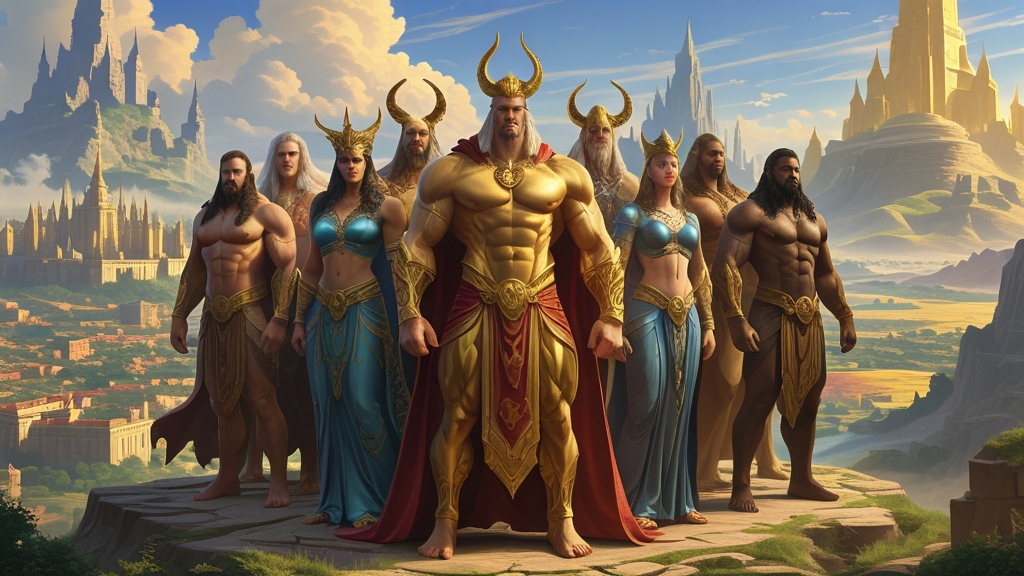
The Age of Myth was the first great era of the Mortal Realms — a time of peace, prosperity, and cooperation between the gods when Sigmar united a divine pantheon that included Nagash, Gorkamorka, Grimnir, Grungni, Alarielle, Tyrion, Teclis, and Malerion before the forces of Chaos shattered the alliance and plunged the realms into war. This golden era established the civilisations, alliances, and rivalries that define the Age of Sigmar setting today.
Understanding the Age of Myth is essential for any Age of Sigmar enthusiast because it explains why the Mortal Realms are the way they are — why Sigmar fights, why Nagash betrayed the pantheon, why the Chaos Gods gained such a foothold, and why the Stormcast Eternals were forged. Every conflict in the current era traces its roots back to the golden age and the catastrophic way it ended.
How Did the Mortal Realms Come to Be?
The Mortal Realms were created from the destruction of the World-That-Was — the original Warhammer Fantasy setting destroyed during the End Times. When the old world was consumed by Chaos, its magical energies crystallised into eight distinct realms, each aligned with one of the eight Winds of Magic: Azyr (Heavens), Ghyran (Life), Aqshy (Fire), Ghur (Beasts), Shyish (Death), Hysh (Light), Ulgu (Shadow), and Chamon (Metal).
These realms were not planets but vast, potentially infinite planes of existence, each shaped by their dominant magical wind. Ghyran teemed with wild, uncontrollable life. Aqshy burned with passionate fire. Shyish was a realm of endings and death. Each realm had its own geography, its own ecosystems, and its own peoples — many descended from the souls of the World-That-Was.
Sigmar — the God-King of Azyr, formerly a mortal barbarian king who had ascended to godhood in the old world — was the first to explore the Mortal Realms. He discovered them by riding the great celestial drake Dracothion through the void between realms, and immediately began working to civilise them.
Who Were the Gods of the Pantheon?
Sigmar’s great achievement during the Age of Myth was assembling a pantheon of gods — divine beings who would work together to build civilisation across all eight realms. Each god brought unique powers, knowledge, and followers to the alliance.
Nagash, the Great Necromancer and God of Death, claimed dominion over Shyish. He was an uneasy ally at best — arrogant, power-hungry, and resentful of Sigmar’s authority — but his control over the dead and his vast magical knowledge made him indispensable. His price for cooperation was simple: all souls that died in the Mortal Realms belonged to him.
Gorkamorka — the dual-natured God of Destruction, simultaneously Gork (brutal but cunning) and Mork (cunning but brutal) — joined the pantheon because Sigmar offered good fights and worthy enemies. The Orruk (Ork) god’s commitment to civilisation was always tenuous, but his raw power was unmatched among the pantheon.
Grimnir, the Duardin (Dwarf) god of war, and Grungni, the Duardin god of craft, both served the pantheon loyally. Grimnir’s greatest deed was fighting the godbeast Vulcatrix — a battle that destroyed both combatants and scattered fragments of Grimnir’s divine essence across the realms (these fragments would later be discovered by the Fyreslayers). Grungni worked tirelessly to forge weapons, armour, and artefacts for the pantheon’s forces.
Alarielle, the Everqueen and Goddess of Life, ruled Ghyran. Tyrion and Teclis, the twin Aelven gods of Light, commanded Hysh. Malerion, the dark Aelven god (formerly Malekith of the World-That-Was), claimed Ulgu. Each god established civilisations in their realm, and the resulting network of divine cooperation produced an age of unprecedented peace and prosperity.
What Was Life Like During the Age of Myth?
The Age of Myth was the Mortal Realms’ golden age — a time when the gods cooperated, civilisations flourished, and the forces of Chaos were held at bay. Cities grew across all eight realms, trade routes connected distant lands through magical portals called Realmgates, and the mortal peoples prospered under divine protection.
Knowledge expanded rapidly. The gods shared their wisdom with mortal peoples, teaching them magic, craftsmanship, agriculture, and warfare. Grungni’s forge-temples produced wonders of engineering. Teclis taught the arts of magic to mortal wizards. Alarielle’s blessing made Ghyran a paradise of boundless fertility. Even Nagash, for all his ambitions, maintained the cycle of death and rebirth that kept the realms in balance.
The Mortal Realms during this era were not without conflict — monsters, beasts, and natural disasters still threatened mortal civilisations — but these were manageable threats dealt with by the gods and their champions. The existential threats of Chaos, which would later consume the realms, were distant shadows barely remembered from the World-That-Was.
This golden age lasted for an unspecified but seemingly vast period — long enough for entire civilisations to rise, mature, and reach heights of achievement that would never be matched in later, darker ages.
What Went Wrong?
The Age of Myth ended because the pantheon collapsed — destroyed by internal tensions, divine ambitions, and the patient corruption of Chaos. The Chaos Gods had never stopped watching the Mortal Realms, and they exploited every crack in the divine alliance.
Nagash was the first to betray the pantheon. His demand that all souls in the Mortal Realms belonged to him conflicted with the other gods’ followers, who had their own afterlife traditions. Nagash’s increasingly aggressive attempts to claim every soul — including those of the living — alienated his allies and provoked open conflict.
Gorkamorka grew bored with peace. The God of Destruction was fundamentally incompatible with civilisation — he existed to fight, destroy, and conquer, and the Age of Myth’s peace frustrated his essential nature. He eventually abandoned the pantheon and went on a destructive rampage across the realms, shattering the alliance’s military unity.
With the pantheon fractured, the Chaos Gods struck. Their corruption had been spreading slowly through mortal populations — whispered promises of power, secret cults, and gradual moral erosion. When the divine alliance collapsed, Chaos erupted across all eight realms simultaneously in a wave of invasion, corruption, and war that shattered the golden age and ushered in the Age of Chaos.
How Did the Age of Myth Lead to the Age of Chaos?
The transition from the Age of Myth to the Age of Chaos was not instantaneous but a gradual collapse. As the gods withdrew — fighting each other, pursuing individual agendas, or retreating to their own realms — mortal civilisations lost their divine protection. Chaos forces that had been held in check by the pantheon’s united strength now faced only fragmented, uncoordinated resistance.
Realm after realm fell. Chaos warbands conquered cities, corrupted populations, and raised monuments to the Dark Gods. The Realmgates — the portals connecting the realms — became invasion routes for Chaos armies rather than trade routes for mortal merchants. What had been a network connecting civilisation became a network spreading destruction.
Sigmar fought longest, but eventually even he was forced to retreat. He sealed the gates of Azyr — his own realm — and shut himself away from the other seven realms, abandoning them to Chaos. For an age, the Mortal Realms burned while Sigmar prepared his counterstrike: the creation of the Stormcast Eternals, immortal warriors forged from the souls of heroes, who would be hurled into battle like living lightning bolts to reclaim the realms.
The Age of Myth’s legacy is thus a dual one: the memory of what civilisation can achieve when the gods cooperate, and the warning of how quickly it can all be destroyed when ambition, pride, and Chaos tear that cooperation apart.
Frequently Asked Questions
How long did the Age of Myth last?
The exact duration of the Age of Myth is never specified in the lore. It lasted long enough for entire civilisations to rise and flourish across all eight Mortal Realms, suggesting centuries or even millennia. The vagueness is intentional — time in the Mortal Realms does not always flow consistently.
Did the Chaos Gods exist during the Age of Myth?
Yes. The Chaos Gods existed before, during, and after the Age of Myth. However, during the golden age, the united divine pantheon was powerful enough to keep Chaos at bay. It was only when the pantheon fractured that Chaos was able to invade the Mortal Realms in force.
Are the Mortal Realms connected to the old Warhammer world?
Yes. The Mortal Realms were created from the magical energies released when the World-That-Was was destroyed during the End Times. Many of the gods — Sigmar, Nagash, Alarielle, Tyrion, Teclis, Malerion, and others — are the same beings who existed in the old world, reborn or preserved in the new realms. Some mortal souls from the old world were also reborn in the Mortal Realms.
Why did Sigmar close the gates of Azyr?
Sigmar sealed Azyr because it was the only realm he could fully protect from Chaos invasion. Rather than fighting a losing war across all eight realms, he chose to preserve one realm as a base from which to launch a future counterattack. This decision — abandoning billions of mortals to Chaos to save his strength — is one of the most morally complex acts in Age of Sigmar lore.
What happened to Grimnir?
Grimnir fought the godbeast Vulcatrix — a massive fire-serpent — in a battle so apocalyptic that both were destroyed. Grimnir’s divine essence shattered into fragments called Ur-Gold, which the Fyreslayers — his devoted followers — spend their lives hunting and collecting, embedding the fragments in their flesh to channel Grimnir’s power.
Who is Grungni in Age of Sigmar?
Grungni is the duardin god of smiths and craft, and Grimnir’s brother. During the Age of Myth he was one of Sigmar’s closest allies, and his forges produced wonders for the pantheon, including work on the armour of the Stormcast Eternals. He is revered by duardin across the realms, especially the Dispossessed and other craft-focused peoples.
What are the ages of Age of Sigmar in order?
The setting’s three great eras are the Age of Myth, the Age of Chaos and the Age of Sigmar. The Age of Myth was the golden era of the divine pantheon, the Age of Chaos followed the pantheon’s collapse and Sigmar’s sealing of Azyr, and the Age of Sigmar began when he unleashed the Stormcast Eternals to reclaim the realms.
Related Content
- The Horus Heresy Explained — Complete Timeline & Guide — understand the pivotal Horus Heresy era
- Best Warhammer Books to Read — Fiction Guide — find great Warhammer novels to read
- Warhammer Etiquette Guide — Sportsmanship & Table Manners — explore more Warhammer content