
Part of our Drukhari hub: every Drukhari guide, lore page and painting tutorial in one place.
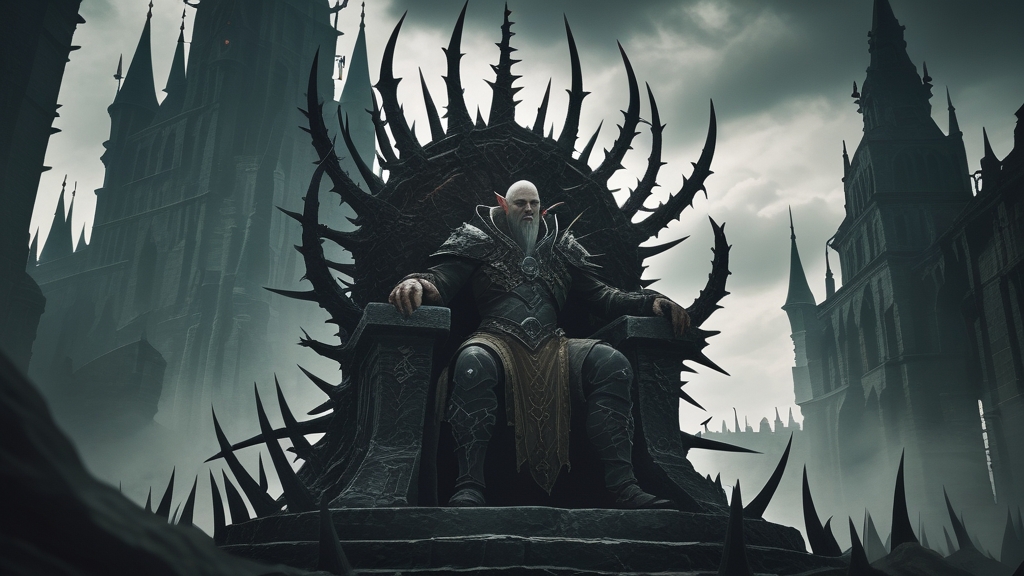
Asdrubael Vect is the supreme ruler of Commorragh and the most powerful Drukhari alive. He rose from nothing — a slave in the lowest depths — to become the undisputed master of the Dark City through millennia of manipulation, assassination, and ruthless cunning. Vect is not merely a warlord or a king; he is the architect of an entire civilisation’s power structure, having personally shaped Commorrite society into a form that ensures his absolute dominance. Every Kabal, every arena, every slave market in the Dark City exists because Vect allows it to exist — and he can destroy any of them on a whim.
The Drukhari are a race of sadistic raiders who survive by inflicting suffering on others — their souls are slowly consumed by Slaanesh, and only the pain of their victims staves off the Dark Prince’s hunger. In a society where every individual is a predator, where treachery is an art form and cruelty a way of life, Vect has remained at the apex for longer than most civilisations have existed. His longevity alone is an achievement that borders on the impossible, and it speaks to a mind of such extraordinary cunning that even the most ambitious Drukhari Archons have learned to plot their schemes around his existence rather than against it.
How Did Vect Rise to Power?
Vect’s origin story is one of the most remarkable in all of Warhammer 40k. He was born — or created, or grew — in the lowest sub-realms of Commorragh, among the wretched slave populations that exist to serve the Drukhari aristocracy. In a society that prizes noble bloodlines and ancient heritage above all else, Vect had nothing. He was nobody. He was less than nobody — he was property.
But Vect possessed something that no amount of noble blood could provide: an intellect of terrifying scope and an ambition without limits. From his earliest years, he schemed, manipulated, and killed his way upward through Commorrite society. He understood, with an instinct that bordered on prescience, that the Drukhari’s greatest weakness was their arrogance — the noble houses believed themselves untouchable, and this belief made them predictable.
Vect founded the Kabal of the Black Heart — initially little more than a gang of low-born warriors — and began his ascent. He used every tool available: assassination, political marriage, economic warfare, manufactured crises, false-flag attacks, and occasionally brute military force. Each move was calculated decades in advance, and each apparent setback was revealed, in time, to be part of a larger plan that his enemies had never suspected.
His masterstroke was the capture of an Imperial slave ship, which he deliberately allowed to be tracked back to Commorragh. When the Imperium launched a retaliatory strike into the Dark City, Vect ensured that the attack fell upon his rivals rather than his own forces. While the noble houses burned, Vect’s Kabal emerged from the chaos as the only intact power, and he used the crisis to consolidate absolute control. It was perhaps the most audacious political manoeuvre in Drukhari history — using the Imperium of Man as an unwitting weapon against his own enemies.
How Does Vect Maintain Power?
Maintaining power in Commorragh is arguably more difficult than seizing it. The Drukhari are a race of schemers, and every Archon, Succubus, and Haemonculus in the Dark City is constantly plotting to advance their own position. Vect survives — and thrives — through a combination of strategies that work together to create an unassailable position.
First, he maintains a network of informants and spies that penetrates every level of Commorrite society. Nothing happens in the Dark City without Vect knowing about it, often before it happens. His intelligence network is so comprehensive that many Drukhari have simply given up trying to keep secrets from him, reasoning that any plot against Vect has already been anticipated and countered before it begins.
Second, he keeps his potential rivals in a state of constant competition with each other. Vect understands that the greatest threat to his rule would be a unified opposition, so he ensures that the Kabals, Wych Cults, and Haemonculus Covens are always fighting among themselves. He grants favours and withdraws them, creates artificial shortages and surpluses, and occasionally engineers minor crises that force his subordinates to focus on immediate survival rather than long-term plotting.
Third, and most importantly, Vect has made himself essential to Commorragh’s continued existence. Over millennia, he has structured the Dark City’s economy, politics, and defence so that they all depend upon his continued leadership. Removing Vect would not simply create a power vacuum — it would potentially cause the collapse of the systems that keep Commorragh functional. Even his enemies recognise that killing Vect might destroy the Dark City itself, which gives them strong incentive to tolerate his rule.
What Are Vect’s Key Characteristics?
Vect is characterised by an intelligence that operates on a timescale most beings cannot comprehend. He thinks in centuries and plans in millennia. A slight delivered at a feast might not be repaid for five hundred years, but when the repayment comes, it will be devastating, precise, and impossible to trace back to Vect. He never acts impulsively, never makes decisions based on emotion, and never, ever underestimates an opponent — even one who appears completely powerless.
His cruelty is legendary even by Drukhari standards. Vect does not merely punish those who oppose him — he destroys them so completely that they serve as object lessons for generations. He has been known to keep defeated rivals alive for centuries, subjecting them to torments so exquisite that they have passed into Commorrite legend. His imagination for suffering is apparently without limit, and he approaches the infliction of pain with the same analytical precision he brings to political strategy.
Despite his cruelty, Vect is not a mindless sadist. Every act of violence serves a purpose — maintaining fear, demonstrating power, or sending a message to potential challengers. He is perfectly capable of mercy when mercy serves his interests, and he has been known to reward competence and loyalty with genuine generosity. Vect is, above all, pragmatic — he does whatever works, and what works in Commorragh happens to involve a great deal of suffering.
What Is Vect’s Relationship with the Wider Galaxy?
Vect views the wider galaxy primarily as a resource to be exploited. The Imperium, the Chaos forces, the Aeldari Craftworlds, the Orks, the Tyranids — all are potential sources of slaves, entertainment, and political advantage. He raids Imperial worlds with impunity, takes prisoners from every species, and trades in suffering on a scale that would horrify even the most hardened Imperial commander.
His relationship with the Aeldari Craftworlds is particularly complex. The Craftworld Aeldari view the Drukhari with a mixture of horror and pity — they see them as a living reminder of what the Aeldari could have become if they had not adopted the Path system. Vect, for his part, views the Craftworld Aeldari with contempt — he considers their self-imposed restrictions to be cowardice, a refusal to embrace the full potential of the Aeldari race. He has raided Craftworlds on occasion, though he does so carefully — the Craftworld Aeldari are not helpless, and antagonising them excessively could unite them against Commorragh.
The emergence of the Ynnari — the followers of the death god Ynnead — has created a new dynamic. The Ynnari’s goal of fully awakening Ynnead threatens the fundamental bargain that sustains Drukhari existence. If Slaanesh were defeated, the Drukhari would no longer need to feed on suffering to survive — but their entire civilisation is built around the harvesting of pain. Vect has responded to the Ynnari with characteristic ruthlessness, branding them as heretics and enemies of Commorragh.
Has Vect Ever Been Defeated?
Vect has suffered setbacks and apparent defeats throughout his long existence, but every one of them has ultimately served his purposes. This is the most frustrating thing about Vect from his enemies’ perspective — even when they seem to have gained an advantage, they can never be certain that the advantage was not designed by Vect himself.
On one notable occasion, Vect was apparently assassinated — his body destroyed in a spectacular attack that should have been fatal. He returned shortly afterward, having arranged his own “death” as a trap for those who moved to fill the power vacuum. The conspirators who had celebrated his demise found themselves exposed and vulnerable, and Vect eliminated them with methodical precision before resuming his throne as though nothing had happened.
This ability to turn defeat into victory, to use apparent weakness as a weapon, is Vect’s most dangerous quality. He has been playing the great game of Commorrite politics for longer than most Chapters of Space Marines have existed, and in all that time, no one has been able to permanently outmanoeuvre him. Whether this is because Vect is truly the greatest schemer in the galaxy, or because he has simply been lucky for a very long time, is a question that his rivals ponder — briefly — before Vect arranges their downfall.
Why Does Vect Not Have a Tabletop Model?
One of the most notable things about Asdrubael Vect is his absence from the Warhammer 40k tabletop game in recent editions. Despite being arguably the most significant named character in the Drukhari faction, Vect has not had an official model or rules for several editions. This absence is a source of frequent discussion among Drukhari players and Warhammer 40k fans generally.
The most commonly cited reason is that Vect’s power level makes him difficult to represent on the tabletop in a balanced way. He is supposed to be one of the most powerful individuals in the galaxy — a being who has ruled the Dark City for millennia and who commands resources beyond the imagination of most Imperial commanders. Translating that level of power into tabletop rules that are both thematic and balanced is a significant design challenge.
There is also a narrative argument for Vect’s absence — Vect does not fight his own battles. He is a schemer, not a warrior, and the idea of him personally leading a Drukhari raiding force on the tabletop conflicts with his characterisation as someone who operates through proxies, agents, and unwitting pawns. Vect’s power is exercised through manipulation, not through personal combat, and the tabletop game is fundamentally about combat.
Frequently Asked Questions
How old is Asdrubael Vect?
Vect’s exact age is unknown, but he is at least several thousand years old and possibly much older. Some sources suggest he may have been alive during the Fall of the Aeldari Empire, which would make him over ten thousand years old. His extreme age is part of what makes him so dangerous — he has been accumulating knowledge, influence, and contingency plans for longer than most civilisations have existed.
Is Vect the most powerful character in 40k?
In terms of personal political power and control over resources, Vect is one of the most powerful individuals in the galaxy. He controls Commorragh — a sub-realm of the Webway that contains billions of inhabitants and vast military resources. However, he is not the most powerful in terms of personal combat ability or psychic power. Characters like the Emperor, the Primarchs, and the Chaos Gods all exceed his raw power. Vect’s strength lies in his mind, not his body.
Could Vect defeat the Emperor?
Not in direct combat — the Emperor’s psychic power and physical abilities far exceed anything Vect could bring to bear. However, Vect would never engage in direct combat with a superior foe. His approach would be to manipulate events over centuries or millennia, creating situations where the Emperor’s own decisions and allies work against him. Whether such a strategy could succeed against a being of the Emperor’s power is debatable, but Vect would certainly never attempt a frontal approach.
Why is Vect called the Supreme Overlord?
The title “Supreme Overlord” reflects Vect’s absolute authority over Commorragh. Unlike many Drukhari titles, which carry implications of specific military or political roles, “Supreme Overlord” simply means “the one who rules everything.” Vect chose this title deliberately — it is blunt, unambiguous, and makes no attempt to disguise the nature of his power. He rules Commorragh because he can, and the title reflects that reality without pretence.
Did Asdrubael Vect ever have a model?
Yes. Games Workshop released a metal model of Asdrubael Vect riding his Dais of Destruction in the early 2000s, and he had playable rules as recently as the 2010 Dark Eldar codex. He was dropped when the Drukhari range moved on and has not had an official model or datasheet since, which is why he is absent from current 40k.
What is the Kabal of the Black Heart?
The Kabal of the Black Heart is Vect’s own Kabal and the most powerful in Commorragh. Vect founded it as a band of low-born warriors and built it into the dominant political and military force in the Dark City. Many of the most famous Drukhari forces on the tabletop are painted as Black Heart, in black armour with green or purple accents.
Is Vect still alive in 40k?
Yes. In current lore Asdrubael Vect still rules Commorragh as Supreme Overlord, having survived every assassination attempt, rebellion and apparent death thrown at him. His continued survival is part of his legend: even the Drukhari who scheme against him assume any plot has already been anticipated.
Related Content
- Drukhari Army Guide — explore the army behind the lore
- The Horus Heresy Explained — Complete Timeline & Guide — understand the pivotal era
- Best Warhammer Books to Read — Fiction Guide — find great Warhammer novels
- The Chaos Gods Explained — learn about the Dark Gods