

The best magnification for miniature painting is a headband magnifier (OptiVISOR or similar) at 2-3x magnification, or a magnifying desk lamp that combines lighting with magnification. Avoid handheld magnifiers — you need both hands free for painting. The right magnification tool can transform your painting, especially for eyes, fine detail work, and freehand designs.
As we get older, our close-up vision naturally deteriorates, but even younger painters benefit from magnification when working at miniature scale. Details that are invisible to the naked eye become clear under 2-3x magnification, allowing you to paint with precision that would otherwise be impossible. This guide covers every type of magnification available to miniature painters, from budget options to professional-grade equipment, so you can find the right tool for your needs and budget.
Our Top Picks at a Glance
Our picks are based on manufacturer specs, the listings and what painters commonly use – we explain the reasoning for each below.
| Product | Type | Magnification | Price | ||
|---|---|---|---|---|---|
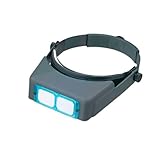 | Donegan OptiVISOR DA-5 Best Overall | Headband visor | 2.5x | $58.67 as of Nov 12, 2026 3:53 PM PST | Buy on Amazon |
 | Carson MagniVisor MV-23 Best Budget | Headband visor | 2x (3x with flip-down lens) | $23.99 as of Nov 12, 2026 3:53 PM PST | Buy on Amazon |
 | Brightech LightView Pro Best Magnifying Lamp | Clamp-on LED lamp | 2.25x | $69.99 as of Nov 12, 2026 10:02 PM PST | Buy on Amazon |
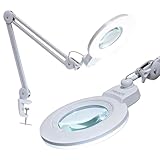 | Neatfi XL magnifying lamp (7″ lens) Largest Lens | Clamp-on LED lamp | 2.25x + 6x inset | $159.95 as of Nov 12, 2026 3:53 PM PST | Buy on Amazon |
Prices are from Amazon.com (US) at the time shown. Product prices and availability are accurate as of the date/time indicated and are subject to change. Any price and availability information displayed on Amazon.com at the time of purchase will apply to the purchase of this product. As an Amazon Associate, Warhammer Guild earns from qualifying purchases.
The Best Magnifiers for Miniature Painting (2026)
1. Donegan OptiVISOR DA-5 – Best Overall

Price details
Product prices and availability are accurate as of the date/time indicated and are subject to change. Any price and availability information displayed on Amazon.com at the time of purchase will apply to the purchase of this product.As an Amazon Associate, Warhammer Guild earns from qualifying purchases.
The OptiVISOR has been the jeweller’s and watchmaker’s go-to for decades, and it is the magnifier you will see on most serious painting desks. The DA-5 plate gives 2.5x at about 8 inches – close enough to paint eyes and freehand, far enough that your brush hand isn’t cramped.
Best for: Most painters.
| Type | Headband visor |
|---|---|
| Magnification | 2.5x |
| Lens | Glass, binocular |
| Working distance | 8″ (20 cm) |
| Fits over glasses | Yes |
Why we like it
- Ground and polished optical glass lenses – Donegan’s listing calls them prismatic, which reduces eye strain on long sessions
- 2.5x at an 8″ working distance is the sweet spot for 28–32mm miniatures
- Moves with your head, so you can turn the model naturally
- Can be worn over prescription or safety glasses
- Glass optics, clearer than acrylic budget visors
- Comfortable working distance for brush work
- Lens plates come in other strengths (e.g. DA-7 for 2.75x)
- No built-in light – you still need a good lamp
- Heavier than plastic visors; takes a session or two to get used to
2. Carson MagniVisor MV-23 – Best Budget

Price details
Product prices and availability are accurate as of the date/time indicated and are subject to change. Any price and availability information displayed on Amazon.com at the time of purchase will apply to the purchase of this product.As an Amazon Associate, Warhammer Guild earns from qualifying purchases.
If you’re not sure magnification is for you, the MagniVisor is the low-risk way to find out. It’s light, straps on with an adjustable band, and has a flip-down extra lens that takes you from 2x to 3x for eyes and tiny details.
Best for: Trying magnification cheaply.
| Type | Headband visor |
|---|---|
| Magnification | 2x (3x with flip-down lens) |
| Lens | Acrylic, dual lens |
| Fits over glasses | Yes |
Why we like it
- Very light – easy to wear for a full evening
- Flip-down lens gives a quick 3x boost for eyes, gems and script
- Works over glasses
- Cheap enough to keep as a spare at the club
- Low cost entry point
- Two magnification levels in one visor
- Lightweight strap design
- Acrylic lenses aren’t as sharp as the OptiVISOR’s glass
- Some edge distortion, especially at 3x
3. Brightech LightView Pro – Best Magnifying Lamp

Price details
Product prices and availability are accurate as of the date/time indicated and are subject to change. Any price and availability information displayed on Amazon.com at the time of purchase will apply to the purchase of this product.As an Amazon Associate, Warhammer Guild earns from qualifying purchases.
The LightView Pro combines a glass magnifying lens with an LED light on a swing arm that clamps to your desk. You paint under the lens rather than wearing anything, which many people find more comfortable over long sessions – and you get a bright, even light into the bargain.
Best for: Painters who don’t want anything on their head.
| Type | Clamp-on LED lamp |
|---|---|
| Magnification | 2.25x |
| Lens | Optical glass |
| Working distance | About 8″ |
| Mount | Desk clamp + swing arm |
| Warranty | 3 years (per Brightech) |
Why we like it
- Real glass lens, which Brightech says resists scratching and yellowing
- Light and magnification in one – fewer things cluttering the desk
- Swing arm and clamp keep it steady and out of the way when you push it aside
- 3-year limited warranty from the manufacturer
- Nothing to wear – good for glasses-wearers
- Even LED light with no heat
- Easy to swing away for basecoating
- Fixed viewing position – you move the model, not your head
- Single 2.25x lens; no high-power inset for very fine work
- Needs a desk edge to clamp to
4. Neatfi XL magnifying lamp (7″ lens) – Largest Lens
Price details
Product prices and availability are accurate as of the date/time indicated and are subject to change. Any price and availability information displayed on Amazon.com at the time of purchase will apply to the purchase of this product.As an Amazon Associate, Warhammer Guild earns from qualifying purchases.
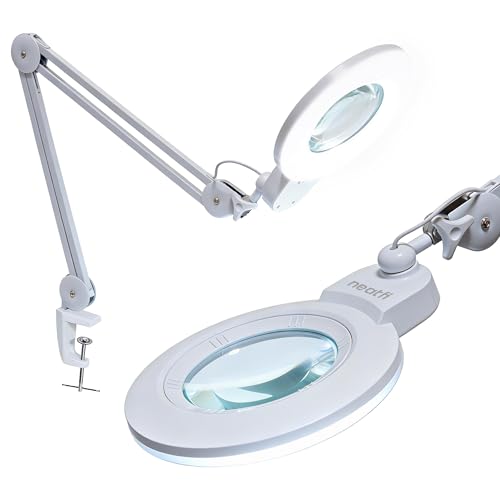
Neatfi’s big 7-inch lens gives you the widest view in this list, so you can see the whole model and your brush tip at once. A 6x inset handles inspection, and the 1,600-lumen ring light is bright enough to double as your main painting light.
Best for: A wide working area and lots of light.
| Type | Clamp-on LED lamp |
|---|---|
| Magnification | 2.25x + 6x inset |
| Lens | 7″ acrylic, bifocal |
| Light | 84 LEDs, 1,600 lumens, 4 dimming levels |
| Warranty | 3 years (per Neatfi) |
Why we like it
- 7″ lens – the large diameter matters more than raw magnification
- 2.25x main lens for painting plus a 6x inset for checking details
- Bright, dimmable LED ring (four brightness levels)
- Long 36″ arm with a desk clamp
- Widest field of view here
- Very bright – can replace a separate lamp
- Bifocal lens covers painting and inspection
- Acrylic rather than glass lens
- Big and bulky on a small desk
- 6x is for inspection only – too strong to paint under
What Types of Magnification Are Available?
Magnification options for miniature painters fall into four main categories, each with distinct advantages and trade-offs. Understanding the differences helps you choose the right tool for your situation.
Headband magnifiers (also called visor magnifiers or optivisors) are worn on the head like a visor. They position magnifying lenses directly in front of your eyes, providing a hands-free magnified view while you paint. The industry standard is the OptiVISOR, which has interchangeable lens plates at various magnification levels. Headband magnifiers offer the best optical quality and the widest field of view, making them the preferred choice of professional miniature painters and commission artists.
Magnifying desk lamps combine a magnifying lens with a built-in light source, typically an LED ring light surrounding a large circular lens. They clamp to your desk or stand on a weighted base, and you look through the lens while painting. The advantage is combining two essential tools — lighting and magnification — in one unit. The disadvantage is a fixed viewing position; you must position your work under the lens rather than moving your head naturally.
Clip-on magnifiers attach to your existing glasses or to dedicated frames, adding magnification to your normal vision. They are lightweight and relatively inexpensive, making them a good entry point for painters who want to try magnification without a significant investment. However, optical quality varies widely, and cheaper models can cause distortion at the edges of the lens.
Handheld magnifiers are the least suitable for miniature painting. They require one hand to hold, leaving you with only one free hand for painting. Some painters use them for inspection — checking their work at high magnification after putting the brush down — but they are impractical for active painting. If you already own one, use it for inspection, but invest in a hands-free option for actual painting work.
What Magnification Strength Do You Need?
For miniature painting, 2x to 3.5x magnification is the sweet spot. This range provides enough magnification to see fine details clearly without being so powerful that you lose perspective on the overall model. Higher magnification has a narrower field of view and shallower depth of field, making it harder to paint smoothly.
At 2x magnification, a 28mm miniature appears roughly the size of a 56mm figure — large enough to see individual details but not so close that you lose sight of the surrounding area. This is ideal for general painting: base coating, layering, shading, and most highlighting work. Many painters find 2x sufficient for everything except the finest detail work.
At 3x to 3.5x magnification, you can see individual bristle strokes, paint texture, and minute details like gemstones, eyes, and fine script. This is the range for precision work — painting eyes, adding tattoos or freehand designs, and achieving smooth blends that look flawless at normal viewing distance. The trade-off is a smaller working area and reduced depth of field, meaning you need to hold the miniature more precisely.
Above 4x magnification becomes counterproductive for most painting tasks. The field of view is too narrow, the depth of field too shallow, and every tiny hand movement is amplified. Reserve high magnification for inspection and very specific detail tasks like painting text or ultra-fine freehand. For regular painting sessions, stick to 2-3x.
How to Choose a Magnifier for Painting
Headband or lamp? A headband visor moves with you and gives the best optics for the money; a magnifying lamp means nothing on your head and adds light, but fixes your viewing position. If you wear glasses, both work – the OptiVISOR and MagniVisor fit over most frames, and a lamp avoids the issue entirely.
Lens size beats power. On a lamp, a large lens at 2x is far more useful than a small lens at 4x, because you need to see the area around your brush tip, not just the tip.
Glass vs acrylic. Glass lenses are sharper and resist scratches; acrylic is lighter and cheaper but can blur at the edges. For long sessions, glass is easier on the eyes.
Light quality. If a lamp is going to be your main light, look for daylight-temperature LEDs (around 5000–6500K) and a high colour rendering index (CRI 90+) so your colours look true. See our best hobby lamp guide for more.
How Do You Use Magnification Effectively?
Getting magnification is only the first step — using it effectively requires adjusting your painting technique. Here are the key principles that experienced painters follow when working under magnification.
Brace your hands. Magnification amplifies every hand tremor. What feels like a steady hand under normal vision becomes visibly shaky at 3x. Rest your wrists on the edge of the desk, brace your hands together, and hold the miniature close to the brush hand. Some painters use a painting handle or holder that gives them a stable grip on the miniature, reducing the distance between the brush tip and the support point.
Take breaks. Working under magnification for extended periods causes eye fatigue. Follow the 20-20-20 rule: every 20 minutes, look at something 20 feet away for 20 seconds. This relaxes the eye muscles that have been locked in close focus. If you start getting headaches, you are overdue for a break.
Do not paint everything under magnification. Use magnification for detail work — eyes, gems, freehand, fine edge highlights — and paint broader areas at normal vision. If you base coat, wash, and drybrush under magnification, you will obsess over details that are invisible at normal viewing distance and slow your progress dramatically. Magnification is a precision tool, not a default viewing mode.
Check your work at normal distance. Regularly remove the magnifier and look at the model from arm’s length — the distance at which most people will actually see it. Details that looked imperfect under magnification often look flawless at tabletop distance. This reality check prevents over-working areas and helps you allocate your time to the details that actually matter.
Do You Actually Need Magnification?
Not everyone needs magnification, and it is worth assessing whether you actually do before investing in equipment. If you can hold a miniature at comfortable painting distance (typically 8-12 inches from your eyes) and see the details clearly, you may not need magnification at all. Many excellent painters work without any magnification throughout their entire hobby career.
However, you probably need magnification if you are over 40 (presbyopia — the natural loss of close-focus ability — typically begins in the early 40s), if you find yourself holding miniatures further and further away to see them clearly, or if you experience eye fatigue or headaches during painting sessions. These are signs that your eyes are working harder than they should be to focus at painting distance.
Even for younger painters with perfect vision, magnification can be a useful tool for specific tasks. Painting eyes, for example, is significantly easier under 2.5x magnification because you can actually see the entire eyeball rather than guessing at a tiny dot. Fine freehand work — chapter symbols, script, tattoos — also benefits from magnification regardless of age.
The best advice is to try magnification before committing to an expensive purchase. Borrow a friend’s OptiVISOR, try a cheap clip-on magnifier, or visit an optician and try reading glasses in the +1.5 to +2.5 range (which provide roughly 1.5-2x magnification at close distance). If the experience improves your painting, invest in a quality tool. If it feels unnecessary, save your money for paint and brushes.
Frequently Asked Questions
Can I use reading glasses instead of a magnifier?
Yes, reading glasses provide low-level magnification and are an inexpensive alternative for many painters. Glasses in the +1.5 to +2.5 diopter range provide roughly 1.4x to 1.6x magnification and are available cheaply from pharmacies. They work well for general painting but do not provide enough magnification for very fine detail work. If you already wear prescription glasses, ask your optician about dedicated close-work lenses.
What magnification does the OptiVISOR DA-5 provide?
The OptiVISOR DA-5 provides 2.5x magnification at a focal length of 8 inches (20cm). This is the most popular choice for miniature painters because it provides a good balance between magnification and working distance. The DA-7 (2.75x at 6 inches) is a close second for painters who want slightly higher magnification and do not mind a shorter working distance.
Do magnifying lamps provide enough light for painting?
Magnifying desk lamps provide good general lighting, but most serious painters supplement them with an additional desk lamp to eliminate shadows. The ring light around the magnifying lens illuminates the work area evenly but may not be bright enough for detailed work on its own. A second light source from a different angle fills shadows and provides more natural lighting conditions for accurate colour judgement.
Is higher magnification always better?
No. Higher magnification means a narrower field of view, shallower depth of field, and greater amplification of hand tremors. For miniature painting, 2x to 3.5x is the practical range. Above 4x, most painters find it harder to work, not easier. Use the lowest magnification that lets you see the details you need to paint.
How much should I spend on magnification?
Not much. A budget head-worn magnifier like the Carson MagniVisor is perfectly adequate for hobby use, an OptiVISOR is a modest step up, and a good clamp-on magnifying lamp sits around the same level. You do not need to spend more than that for miniature painting. Avoid the temptation to buy expensive optical instruments designed for industrial or medical use — they are overkill for hobby painting and often have magnification levels that are too high for comfortable brush work.
What is the best magnifier for older painters?
A magnifying lamp or a 2-2.5x headband visor such as the OptiVISOR DA-5 is usually the best choice for older painters. Close-focus ability declines from the early 40s, and older eyes also need more light, so a lamp that combines magnification with bright, even LED light helps on both counts. Both visors in this guide fit over prescription glasses, and a lamp avoids wearing anything at all.
Are spectacle-style magnifying glasses good for miniature painting?
Yes, they can be. Glasses-style magnifiers are lighter and less bulky than a headband visor and feel more natural to wear for long sessions. The trade-offs are that they usually offer lower magnification, a narrower field of view, and may not fit over your own prescription glasses. If you already wear glasses, a visor, clip-on or magnifying lamp is often easier.
Is a magnifier for miniatures also good for model building and other hobbies?
Yes. The same 2-3x headband visors and magnifying lamps work for scale model building, kit assembly, drawing, jewellery and electronics. The guidance in this article still applies: keep both hands free, choose a comfortable working distance of around 8 inches, and favour a large, clear lens over high magnification. Higher powers suit close inspection better than active work.