
Understanding Warhammer’s scale system is essential for hobbyists who want to build terrain, convert models, or mix miniatures from different ranges. This guide explains what 28mm, 32mm, and heroic scale mean, how Warhammer’s proportions have evolved, and how to ensure compatibility across your collection.
What Do the Scales Mean?
What is 28mm scale?
28mm refers to the approximate height of a standard human miniature measured from the feet to the eyes (not the top of the head). This has been the traditional scale for Warhammer miniatures since the 1980s. In real-world terms, 28mm scale translates to roughly 1:56 or 1:64 ratio, meaning one inch on the model represents approximately 5 feet in reality.
What is 32mm scale?
32mm scale is the newer, slightly larger standard that Games Workshop has gradually adopted over the past decade. Modern Warhammer 40k and Age of Sigmar miniatures are closer to 32mm from foot to eye. This scale creep means newer models are noticeably taller and chunkier than older sculpts from the same faction, though Games Workshop has never officially acknowledged the shift.
What is heroic scale?
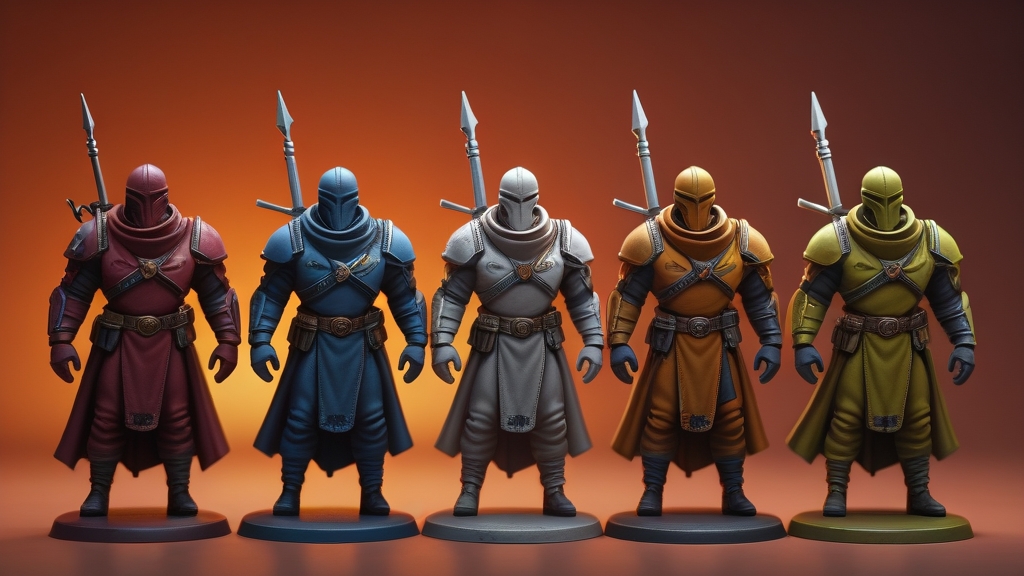
Heroic scale refers to Warhammer’s deliberate exaggeration of certain proportions — particularly hands, feet, heads, and weapons — to make details more visible and dramatic at tabletop viewing distance. A heroic-scale miniature has oversized features compared to a true-scale model. This means Warhammer miniatures look “right” on the tabletop even though they would look cartoonish if scaled up to full size.
What is true scale?
True scale (or realistic scale) means maintaining anatomically accurate proportions. A true-scale 28mm human would have smaller hands, thinner weapons, and a more realistically proportioned body compared to heroic scale. Some hobbyists convert Warhammer miniatures to true scale (especially Space Marines), but this requires significant modelling skill and custom work.
What is the difference between heroic and true scale?
The key difference is proportion. Heroic-scale miniatures have exaggerated hands (roughly 1.5x larger than realistic), oversized heads (about 1.3x), chunky weapons, and thick boots. True-scale miniatures have anatomically proportioned features that look more realistic but can appear bland at tabletop distance. Games Workshop uses heroic scale because exaggerated details read better from 3 feet away during a game.
Scale in Warhammer 40k
How tall should a Space Marine be?
Lore-accurate Space Marines stand roughly 7–7.5 feet tall (over 2 metres), which in 28mm scale should be approximately 35–38mm tall. Firstborn Space Marine miniatures were traditionally around 28–30mm — the same height as Imperial Guard, which was widely acknowledged as incorrect. Primaris Marines corrected this, standing approximately 35mm tall and properly towering over regular humans.
Are Primaris Marines true scale?
Primaris Marines are much closer to true scale than Firstborn, but they are still technically heroic scale with exaggerated shoulder pads, hands, and weapons. They are proportioned more realistically than old Marine models, with longer legs, slimmer waists, and more anatomically correct proportions. Many hobbyists consider Primaris the happy medium between heroic and true scale.
How big is a Leman Russ compared to a real tank?
A Leman Russ in 28mm scale should be equivalent to a vehicle roughly 5.5–6 metres long in reality. The actual Leman Russ model is slightly small compared to the scale of its crew — a long-standing quirk of Warhammer vehicle design. This is because vehicles at “true” 28mm scale would be enormous (and expensive) models that dominate the table. GW keeps vehicles slightly undersized for practical reasons.
Why do old models look small next to new ones?
Games Workshop has gradually increased the size of their miniatures over the past 20 years. A Tactical Marine from 2004 is noticeably shorter and thinner than a Primaris Intercessor from 2023. This “scale creep” affects every faction — compare an old Imperial Guard Cadian to the new 2023 Cadian redesign and the difference is stark. New sculpts are taller, bulkier, and more detailed.
Does scale creep affect gameplay?
Scale creep can affect gameplay because taller models are easier to see (and therefore easier to target) over terrain. Larger models on larger bases also have different coherency and spacing considerations. However, these differences are minor in practice, and no competitive events penalise players for using older, smaller models. The visual inconsistency bothers hobbyists more than it affects gameplay.
Scale in Age of Sigmar
What scale is Age of Sigmar?
Age of Sigmar uses the same approximate scale as Warhammer 40k — heroic 28–32mm. However, AoS models tend to be slightly larger on average because many factions feature larger-than-human races (Stormcast Eternals, Orruks, Ogors). A Stormcast Eternal stands roughly 35–38mm tall, comparable to a Primaris Marine, and is one of the largest “standard infantry” models in the Games Workshop range.
Are AoS models compatible with 40k for conversions?
Many AoS models convert beautifully into 40k armies and vice versa. Stormcast Eternals are frequently converted into Space Marines or Custodes. Chaos models (particularly Slaves to Darkness) work seamlessly across both systems. Aeldari and various Death factions have found creative uses in 40k conversions. The shared scale and manufacturing process makes cross-system kitbashing very popular.
Base Sizes
What base sizes does Warhammer use?
Common Warhammer base sizes include 25mm round (older infantry), 28mm round (some AoS infantry), 32mm round (standard modern infantry), 40mm round (larger infantry/characters), 50mm round (heavy infantry), 60mm round (small monsters), 80mm round (medium monsters), 90x52mm oval (cavalry), 105x70mm oval (large cavalry), and 130mm+ round for the largest models. Games Workshop provides a base size chart for models whose bases have changed over the years.
Does base size matter in games?
Yes, base size matters significantly in competitive play. Larger bases increase a model’s threat range in melee but also make it easier to be targeted. Base size affects unit coherency (how closely models must be grouped), ability ranges (measured base-to-base), and objective control (models must be within range of objectives to score). Always use the base supplied with the model or the official recommended size.
Can I rebase old models to new base sizes?
Rebasing is common and accepted in most gaming groups and events. The easiest method is to glue the old base (with model attached) onto a larger base and build up the basing material around it. Alternatively, carefully remove the model from the old base using a sharp knife or saw. Most tournament organisers prefer models on the currently recommended base size.
Scale for Terrain Building
What scale should terrain be for Warhammer?
Terrain for Warhammer should be built at 28–32mm scale. A standard doorway should be roughly 35–40mm tall (to accommodate heroic-scale models with their exaggerated proportions). Windows should start at about 15mm from the ground, and floors should be spaced approximately 40–45mm apart. Always test-fit a model during construction to ensure scale feels right.
Can I use model railway terrain for Warhammer?
OO/HO gauge railway terrain (1:76 scale) is slightly smaller than Warhammer scale (1:56) but is close enough for trees, scatter terrain, barrels, and natural features like rocks and fences. Buildings will look noticeably small — doors will not fit Warhammer models. O gauge (1:48) is slightly too large. For buildings, purpose-built Warhammer terrain or MDF terrain kits at 28mm scale are the best options.
What scale are third-party terrain companies?
Most third-party terrain companies that serve the wargaming market produce terrain in “28mm” or “28–32mm” scale, which is compatible with Warhammer. Companies like TTCombat, Frontline Gaming, and TinkerTurf design specifically for Warhammer-sized miniatures. When purchasing terrain, look for “28mm wargaming scale” or “Warhammer compatible” to ensure correct sizing.
Other Warhammer Games and Their Scales
What scale is Warhammer: The Old World?
The Old World uses the same 28mm heroic scale as classic Warhammer Fantasy Battles. Many of the models are the same kits from the Fantasy era, supplemented by new sculpts that match the existing range’s proportions. Old World models sit on square bases, differentiating them from AoS’s round bases.
What scale is Kill Team?
Kill Team uses exactly the same models and scale as Warhammer 40k — 28–32mm heroic scale. There is no difference in miniature size. Kill Team-specific terrain is designed for the same scale but at a higher density (more terrain pieces in a smaller play area) to create the close-quarters combat feel that the game demands.
What scale is Horus Heresy?
Horus Heresy uses the same 28–32mm heroic scale as Warhammer 40k. The current plastic Heresy range is scaled to match modern Primaris-era proportions rather than the older Firstborn size. Forge World’s resin Heresy models vary in scale — older sculpts are closer to Firstborn size while newer ones match the larger plastic kits.
What scale is Legions Imperialis?
Legions Imperialis (formerly Epic) uses 8mm scale — roughly one-quarter the size of standard Warhammer. This smaller scale allows massive battles with hundreds of models, Titans, and entire tank companies on a standard-sized table. Legions Imperialis models are not compatible with 28mm Warhammer for gaming but can be used for dioramas and display pieces.
What scale is Adeptus Titanicus?
Adeptus Titanicus uses the same 8mm scale as Legions Imperialis. Titan models in this scale are roughly 6–10 inches tall (compared to the 2–3 foot height of their 28mm Forge World equivalents). The scale allows players to field multiple Titans and supporting Knights in a single game without needing a 12-foot table.
What scale is Necromunda?
Necromunda uses 28–32mm heroic scale, identical to Warhammer 40k. Necromunda gangers are standard human-sized miniatures and are fully compatible with 40k for conversions. Many 40k players use Necromunda kits for Chaos cultists, Genestealer Cult neophytes, or Imperial Guard infantry conversions due to their excellent sculpt quality and dynamic poses.
Frequently Asked Questions
What scale are Warhammer Underworlds and Warcry models?
Warhammer Underworlds and Warcry use the same 28–32mm heroic scale as Age of Sigmar, and most warbands come from AoS factions. You can use them in full Age of Sigmar armies, and AoS models work in Warcry. That makes both games an easy, low-model-count way to start a collection you can expand later.
What scale is Middle-earth Strategy Battle Game?
Middle-earth Strategy Battle Game models are 25–28mm scale and noticeably slimmer and more realistically proportioned than Warhammer 40k or Age of Sigmar models. A Middle-earth human looks small and thin next to a modern AoS or 40k human. The models can still be used for conversions or terrain-scale reference, but they won’t match heroic-scale ranges side by side.
Are Warhammer models compatible with Dungeons and Dragons miniatures?
Broadly, yes. D&D and most tabletop roleplaying miniatures are made at roughly 25–32mm scale, close enough to sit alongside Warhammer models for roleplaying or skirmish games. Expect some size variation between brands, and note that Warhammer’s modern 32mm sculpts can look bulkier. Warhammer models are popular stand-ins for player characters and monsters at the RPG table.