
Who Were the Sons of Horus?
The Sons of Horus were the XVI Legion of Space Marines — the Warmaster Horus Lupercal’s personal army, and the legion that led the greatest betrayal in Imperial history. Originally known as the Luna Wolves, they were renamed the Sons of Horus in honour of their primarch, and they stood at the very centre of the Horus Heresy that nearly destroyed the Imperium of Man.
No other legion embodies the tragedy of the Heresy quite like the Sons of Horus. They were once the Emperor’s proudest warriors — the legion chosen to lead all others. They conquered more worlds than almost any other legion, were showered with glory and honour, and their primarch was elevated above all his brothers as Warmaster. And then they burned it all down.
The Sons of Horus were neither the most savage traitors (that distinction belongs to the World Eaters) nor the most calculated (that’s the Alpha Legion). They were the most tragic — a legion of warriors who believed they were doing the right thing, led by a primarch who had been manipulated into turning against the father he loved. Their story is the heart of the Horus Heresy, and understanding the Sons of Horus is understanding the Heresy itself.
Luna Wolves Origins
Before they were the Sons of Horus, they were the Luna Wolves — named for their first great victory. The XVI Legion earned the title after their pacification of the Selenite gene-cults of Luna (Earth’s moon) during the earliest days of the Great Crusade. The Emperor himself bestowed the name, and the Luna Wolves wore it with fierce pride.
Even before their primarch was found, the Luna Wolves were distinguished by their aggressive, direct combat style. They favoured rapid, overwhelming assaults aimed at the enemy leadership — a tactic called “the speartip.” Rather than grinding through enemy armies in prolonged campaigns, the Luna Wolves would identify the enemy’s command structure and strike directly at it, decapitating the opposition and causing the rest to collapse.
This tactical doctrine was ruthlessly effective. The Luna Wolves compiled one of the most impressive records of compliance in the Great Crusade, bringing world after world into the Imperium with speed and efficiency. They were the Emperor’s preferred tool for difficult campaigns — the legion he sent when he needed a world taken fast.
When Horus was found on the gang-ravaged world of Cthonia, the Luna Wolves finally had their primarch. Horus proved to be everything the legion hoped for: a born leader, a tactical genius, charismatic beyond measure, and utterly devoted to the Emperor. Under Horus, the Luna Wolves became the most celebrated legion in the Imperium.
Becoming the Sons of Horus
The renaming from Luna Wolves to Sons of Horus came after Horus was appointed Warmaster — supreme commander of all Imperial military forces. The Emperor was returning to Terra to work on a secret project (the Webway Project), and he needed someone to lead the Great Crusade in his absence. He chose Horus.
The renaming was controversial, even within the legion. Some warriors — particularly the veterans who had fought as Luna Wolves before Horus was found — resisted the change. Captain Garviel Loken, one of the legion’s finest officers, was among those who felt uncomfortable with the personality cult the new name implied. To be “Sons of Horus” meant the legion was defined by one man rather than by their collective identity and deeds.
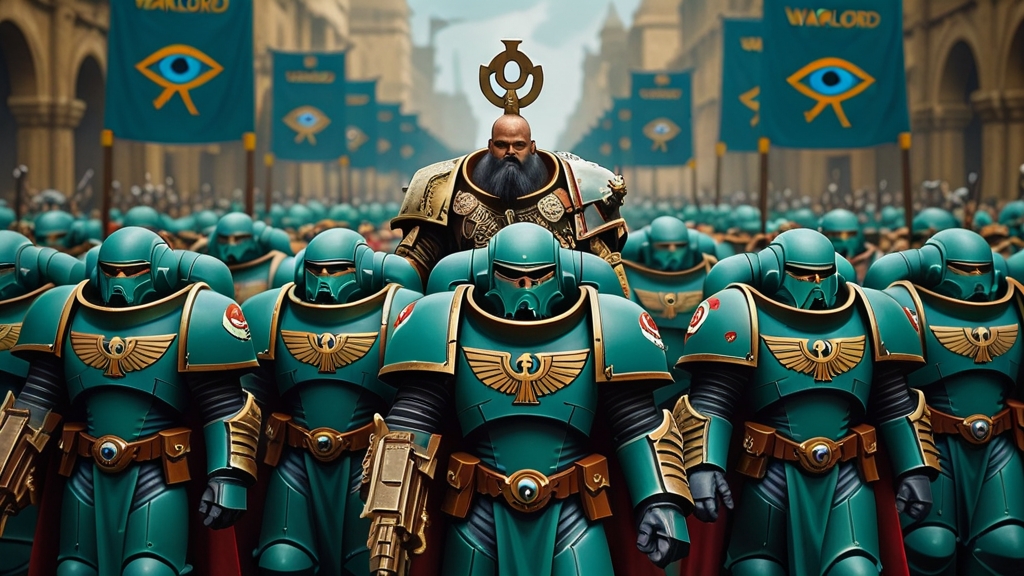
But Horus was beloved. The legion overwhelmingly supported the change, seeing it as a mark of honour and devotion to their father. They repainted their armour from the Luna Wolves’ pale grey to the Sons of Horus’ distinctive sea-green (often called “Son of Horus green” by painters), and they marched forward as the Warmaster’s own.
In hindsight, the renaming was a warning sign. A legion named after its primarch was a legion that would follow that primarch anywhere — even into heresy.
The Great Crusade
Under Horus’s command, the Sons of Horus were the tip of the spear of the Great Crusade. They spearheaded campaigns across the galaxy, bringing hundreds of worlds into compliance. Horus himself was the Emperor’s most trusted son — the primarch other primarchs looked to for guidance, mediation, and leadership.
The Sons of Horus developed a particular reputation for pragmatic brutality. They didn’t revel in violence like the World Eaters, but they were utterly ruthless when necessary. If a world resisted, the Sons of Horus would identify the power structure, destroy it with overwhelming force, and move on. They were conquerors, not administrators — they took worlds and left others to manage them.
This period represented the legion at its peak. They were proud, efficient, loyal, and led by the greatest commander in the Imperium. The tragedy of what came next is magnified by how bright this era was — the Sons of Horus had everything, and they threw it away.
The Horus Heresy
The fall of Horus — and with him his legion — is the defining tragedy of the 40k universe. The full story is told across dozens of Horus Heresy novels, but the essential arc is this:
Horus was wounded by a Chaos-tainted weapon on the moon of Davin. While he lay dying, the Chaos Gods reached out to him through the Warp, showing him visions of a future where the Emperor would be worshipped as a god, the primarchs would be forgotten, and everything they had fought for would be perverted. The visions were manipulated — half-truths twisted to turn Horus against his father — but in his weakened state, Horus believed them.
Horus turned against the Emperor, and the Sons of Horus turned with him. Not all of them — some loyalists within the legion resisted. Horus dealt with them at the Isstvan III Atrocity, where he virus-bombed his own loyalist troops to purge them from the legion. The survivors, including Garviel Loken and Tarik Torgaddon, fought to the death against their former brothers.
With the loyalists purged, the Sons of Horus became the central force of the traitor alliance. Horus coordinated the other traitor legions, formed alliances with the Dark Mechanicum and traitorous Imperial Army forces, and launched a galaxy-spanning civil war aimed at deposing the Emperor and seizing the Imperium for himself.
The Siege of Terra
The Heresy culminated in the Siege of Terra — the greatest battle in human history. Horus led the combined traitor forces against the Emperor’s Palace on Terra, and the Sons of Horus were at the forefront of the assault.
The siege was apocalyptic. Millions died on both sides. The traitor forces breached the walls of the Imperial Palace itself, and for a time it seemed certain that Horus would win. The Sons of Horus fought through the palace defences with the same devastating efficiency they had once used in the Emperor’s service, and the defenders were pushed to the breaking point.
But Horus made a fateful decision. Rather than continuing the ground assault, he lowered the shields of his flagship, the Vengeful Spirit, daring the Emperor to face him in single combat. The Emperor accepted, teleporting aboard with a strike force of his finest warriors.
The duel between Horus and the Emperor is the most important event in 40k lore. Horus, empowered by the four Chaos Gods, fought with power beyond anything a primarch should possess. He grievously wounded the Emperor. But the Emperor, in a final, devastating psychic attack, destroyed Horus utterly — not just killing him, but annihilating his soul so completely that even the Chaos Gods couldn’t save him.
With Horus dead, the Sons of Horus collapsed. Their leader, their identity, their purpose — all of it died on the Vengeful Spirit. The legion broke and fled, retreating into the Eye of Terror with the other traitor legions.
After Horus’s Death
The period after Horus’s death was the lowest point in the legion’s history. The Sons of Horus were shattered — not just militarily, but spiritually. They had staked everything on Horus, and Horus was gone.
Within the Eye of Terror, the legion fell into disarray. Other traitor legions — particularly the Emperor’s Children and the World Eaters — attacked the Sons of Horus, stealing their resources, their recruits, and their gene-seed. The Sons of Horus, once the mightiest legion, became prey. They were hunted, mocked, and diminished.
Horus’s body was preserved by his followers, who hoped to clone him or resurrect him through dark rituals. The corpse became a relic — a source of hope for the legion that everything could be restored. But this hope was a chain, keeping the Sons of Horus trapped in the past, defined by a dead primarch rather than forging a new identity.
Becoming the Black Legion
The rebirth of the Sons of Horus came through Abaddon the Despoiler — the former First Captain of the legion, and arguably the most formidable warrior among the traitors after Horus himself.
Abaddon recognised that the Sons of Horus could not continue as they were. Clinging to Horus’s memory was destroying them. The legion needed to become something new — something that wasn’t defined by one primarch’s failure, but by a new vision of conquest.
In a decisive act, Abaddon destroyed Horus’s cloned body, severing the legion’s connection to its dead primarch. He repainted his armour black and declared the Sons of Horus dead. In their place rose the Black Legion — an army devoted not to any primarch, but to the total destruction of the Imperium.
The Black Legion became the largest and most powerful Chaos Space Marine force in the galaxy. Abaddon accepted warriors from any legion, any warband, and any background, so long as they painted their armour black and swore loyalty to the Despoiler’s cause. The former Sons of Horus formed the core of this new force, but the Black Legion grew to encompass far more than any single legion’s remnants.
Under Abaddon, the Black Legion launched thirteen Black Crusades against the Imperium, culminating in the destruction of Cadia and the opening of the Great Rift. The Sons of Horus may be dead in name, but their legacy — conquest, betrayal, and unrelenting war — lives on in every Black Legionnaire.
Key Characters
Abaddon the Despoiler
Horus’s First Captain and the inheritor of his legacy — though Abaddon would reject that characterisation. Abaddon is the Warmaster of Chaos, leader of the Black Legion, and the greatest living threat to the Imperium. He chose to destroy Horus’s memory rather than be defined by it, and in doing so created something arguably more dangerous than the Heresy itself — a unified Chaos war machine with no loyalty to any god or primarch, only to conquest.
Garviel Loken
Captain of the Luna Wolves’ 10th Company and one of the legion’s finest officers. Loken was a loyalist who resisted Horus’s betrayal. He survived the Isstvan III Atrocity through sheer determination, fought against his former brothers, and was believed dead for many years. Loken’s story is the emotional heart of the early Horus Heresy novels — a good man trapped in a nightmare, trying to understand how everything went wrong. He eventually became a Knight Errant serving Malcador the Sigillite.
Horus Aximand (“Little Horus”)
Named “Little Horus” for his resemblance to the primarch, Aximand was one of Horus’s inner circle — the Mournival, a council of four captains who advised the Warmaster. Aximand’s tragedy is that he followed Horus not out of conviction but out of loyalty. He didn’t believe in Chaos; he believed in Horus. When forced to kill his friend Torgaddon during the purge of loyalists, Aximand broke inside. He continued to fight for the traitors, but he was a hollow man going through the motions of a war he no longer believed in.
Tarik Torgaddon
The most likeable member of the Mournival — a warrior with a sharp wit, easy charm, and genuine warmth. Torgaddon was a loyalist who stood with Loken against the traitors. His death at Aximand’s hands during the Isstvan III betrayal is one of the most devastating moments in the Horus Heresy novels. Torgaddon represents the best of what the Luna Wolves could have been — a warrior who fought for honour and brotherhood rather than power and glory.
Ezekyle Abaddon (Pre-Black Legion)
Before becoming the Despoiler, Abaddon was the First Captain and the most aggressive member of the Mournival. He was the first to embrace Horus’s rebellion, the most committed traitor among the inner circle, and the warrior who pushed hardest for the final assault on Terra. Where Aximand followed out of loyalty and others wavered, Abaddon chose treachery with open eyes and fierce conviction.
Frequently Asked Questions
Are the Sons of Horus the same as the Black Legion?
Not exactly. The Sons of Horus were the XVI Legion during the Heresy. After Horus’s death, Abaddon reformed the remnants into the Black Legion — a new identity that rejected the old primarch and accepted warriors from all traitor legions. The Black Legion’s core is former Sons of Horus, but the Black Legion is bigger and more diverse.
Why did Horus turn traitor?
Horus was manipulated by the Chaos Gods while mortally wounded on Davin. He was shown twisted visions of a future where the Emperor would be worshipped as a god and the primarchs forgotten. Combined with genuine grievances — the Emperor’s secrecy, his withdrawal from the Crusade, the perceived abandonment of his sons — Horus was convinced that rebellion was justified.
What colour are the Sons of Horus?
The Sons of Horus wore distinctive sea-green armour, often called “Sons of Horus Green” by painters. This contrasted with the pale grey-white of their earlier Luna Wolves identity. When they became the Black Legion, they painted their armour black.
Can I play Sons of Horus on the tabletop?
Yes. In Warhammer: The Horus Heresy (the dedicated Heresy-era game), the Sons of Horus are a fully supported legion with unique rules, characters, and special units. In Warhammer 40,000, you would play them as the Black Legion using Chaos Space Marines rules.
Is Horus coming back?
Extremely unlikely. The Emperor destroyed Horus’s soul so completely that even the Chaos Gods couldn’t restore him. Abaddon also destroyed Horus’s cloned body. Narratively, Horus’s death is permanent and final — it’s what makes the story tragic.
Who was the best member of the Mournival?
This is entirely subjective, but fan favourites tend to be Loken (for his integrity) and Torgaddon (for his personality). The Mournival — Abaddon, Aximand, Loken, and Torgaddon — represents four different responses to the Heresy: zealous commitment, reluctant compliance, principled resistance, and loyal sacrifice.
Where is the Sons of Horus homeworld?
The Sons of Horus homeworld was Cthonia, a mined-out, gang-ridden world close to Terra where Horus was found by the Emperor. Its brutal gang culture shaped the Legion’s recruits, who were known for their hard, pragmatic outlook, and Cthonian accents and customs ran through the Legion. Horus’s own upbringing there helped make him the charismatic, ruthless leader he became.
What is the Sons of Horus symbol?
The Sons of Horus symbol is the Eye of Horus, a single staring eye that represented the Warmaster watching over his Legion. As the Luna Wolves they used a different, moon-themed emblem. After Horus’s death, Abaddon’s Black Legion kept the Eye of Horus, usually displayed over the eight-pointed star of Chaos.
Related Content
- The Horus Heresy Explained — Complete Timeline & Guide — understand the pivotal Horus Heresy era
- Best Warhammer Books to Read — Fiction Guide — find great Warhammer novels to read
- Warhammer Etiquette Guide — Sportsmanship & Table Manners — explore more Warhammer content