
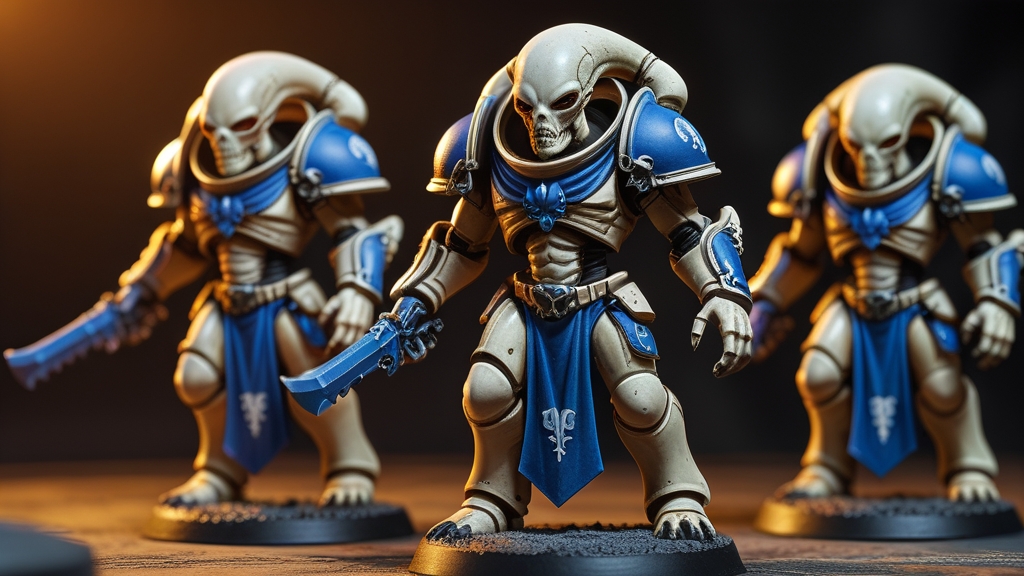
Part of our Aeldari hub: every Aeldari guide, lore page and painting tutorial in one place.
How to Paint Eldar — Step by Step Guide
Learning how to paint Eldar is one of the most rewarding challenges in the Warhammer hobby. This guide uses the classic Craftworld Ulthwé scheme as its main example: black armour with bone-coloured helmets and details, and red spirit stones. Black is a forgiving colour to start with, and the bone details give it a sharp contrast that looks great on the table.
We cover the full paint list, then priming, base coating, shading, layering and highlighting, through to gems, basing and varnish. After that you’ll find paint recipes for the other major Craftworlds (Iyanden, Saim-Hann, Biel-Tan and Alaitoc). Every recommendation uses current Citadel paint names.
Complete Paint List for Craftworld Aeldari
Gather these Citadel paints before you start painting your Ulthwé Aeldari:
| Paint Type | Paint Name | Purpose |
|---|---|---|
| Base | Abaddon Black | Black armour base coat |
| Layer | Eshin Grey | First armour highlight |
| Layer | Dawnstone | Fine armour edge highlights |
| Base | Zandri Dust | Helmet and bone detail base |
| Layer | Ushabti Bone | Helmet and bone layer |
| Layer | Screaming Skull | Helmet and bone highlight |
| Base | Rakarth Flesh | Cloth, banners and sashes |
| Layer | Pallid Wych Flesh | Cloth highlight |
| Base | Mephiston Red | Spirit stones and gems |
| Layer | Evil Sunz Scarlet | Gem highlight |
| Base | Leadbelcher | Blades, weapon details and small metal parts |
| Layer | Stormhost Silver | Metallic edge highlight |
| Shade | Nuln Oil | Black armour and metal shade |
| Shade | Seraphim Sepia | Bone and cloth shade |
| Spray | Chaos Black / Mechanicus Standard Grey | Primer |
Step-by-Step Painting Guide
These steps work whether you are batch painting a squad of Guardians or spending longer on a character such as a Farseer.
Step 1: Preparation and Priming
Clean the mould lines from your Guardians with a sharp hobby knife or mould line remover, and dry-fit components before gluing. Aeldari kits are slender and finely detailed, so consider leaving heads, weapons and jetbike riders separate until they are painted; it’s much easier to paint a helmet off the body.
Prime with Chaos Black spray. Hold the can around 20–30cm away and apply several thin, sweeping passes rather than one heavy coat, then let it cure before handling. Touch up any missed spots with Abaddon Black. If you prime the helmets separately, use Mechanicus Standard Grey or a white primer on those to make the bone colour easier to build up.
Step 2: Base Coating
Apply Abaddon Black to the armour to even out the primer. Base the helmets, weapon casings and any other bone details in Zandri Dust, the cloth in Rakarth Flesh, the spirit stones and gems in Mephiston Red, and blades and small metal parts in Leadbelcher.
Use two thin coats rather than one thick one, especially over black, so you don’t fill the fine sculpted detail that makes Aeldari kits look so elegant.
Step 3: Shading
Wash the bone areas and cloth with Seraphim Sepia, guiding it into the recesses rather than flooding the flat panels. Use Nuln Oil on metal parts. Black armour doesn’t need a wash, though a thin coat of Nuln Oil followed by gloss varnish can deepen it if you want a richer finish.
Let everything dry completely before moving on, or the shade will lift when you paint over it.
Step 4: Layering
Re-apply Ushabti Bone to the helmets and bone details, leaving the shade visible in the recesses. Black armour is mostly about highlights, so there’s no big layering step for it; instead, apply a thin Eshin Grey line along the larger edges and the tops of curved panels.
Use thin paint and build up opacity gradually. Two thin layers always look better than one thick one.
Step 5: Edge Highlighting
Aeldari armour has long, smooth curves rather than hard edges, so keep your highlights fine. Add Dawnstone to the very sharpest points of the black armour, such as helmet crests, the edges of shoulder plates and weapon housings.
Highlight the bone with Screaming Skull, the cloth with Pallid Wych Flesh and the metal with Stormhost Silver on the blade edges and points.
Prioritise edges that face upwards; they catch the most light when the model is viewed on the tabletop.
Step 6: Gems, Lenses and Spirit Stones
Spirit stones and gems are the jewellery of an Aeldari army. Over the Mephiston Red base, add Evil Sunz Scarlet to the lower half of the gem, then a tiny dot of White Scar in the upper corner for the reflection. Finish with gloss varnish. Helmet lenses on Guardians can be painted the same way; Ulthwé lenses are often red to match the gems.
Step 7: Basing and Finishing
Apply Stirland Mud or Astrogranite Debris texture paint to the base, depending on whether you want an earthy or urban look. Once dry, drybrush with Tyrant Skull or a pale grey to bring out the texture, add a few tufts, and paint the base rim Abaddon Black or Steel Legion Drab.
Apply any transfers (Micro Set and Micro Sol help them settle), then seal the model with matte varnish, adding gloss back onto the gems afterwards.
Pro Tips for Painting Craftworld Aeldari
- Batch painting: Paint 5–10 Guardians at a time, completing each step across all of them before moving on.
- Wet palette: Keeps your paints workable for longer and helps you keep highlights consistent across a squad.
- Brush care: Aeldari edges are fine, so a brush with a good point makes a big difference. Clean and reshape your brushes regularly.
- Subassembly: For vehicles such as Wave Serpents and Falcons, paint the canopy, weapons and hull separately.
- Thin your paints: Thin coats preserve the delicate detail Aeldari sculpts are known for.
Alternative Colour Schemes for Craftworld Aeldari
Each Craftworld has its own colours, and the same step-by-step process works for all of them. Here are paint recipes for the best-known alternatives.
Craftworld Iyanden
Yellow armour with blue trim and details. Prime white or Wraithbone, then base the armour in Averland Sunset, shade with Casandora Yellow and layer Yriel Yellow, finishing with Flash Gitz Yellow edge highlights. For a faster route, Iyanden Yellow Contrast over Wraithbone was made for exactly this scheme. Paint the blue details in Kantor Blue highlighted with Calgar Blue. Iyanden’s ghost-warrior theme also makes it a natural fit for Wraithguard and Wraithlords.
Craftworld Saim-Hann
Bright red armour with white and black details. Base in Mephiston Red, shade the recesses with Carroburg Crimson, then layer Evil Sunz Scarlet and edge highlight with Wild Rider Red. Paint the white details over a Celestra Grey base with Ulthuan Grey and White Scar highlights. Saim-Hann’s wild-rider heritage makes it the classic choice for jetbike-heavy armies.
Craftworld Biel-Tan
Biel-Tan is usually shown with bright green armour and white (or bone) helmets. Base the armour in Warpstone Glow, shade with Biel-Tan Green and highlight with Moot Green. Paint the helmets and details over a Celestra Grey base with Ulthuan Grey and White Scar highlights. Biel-Tan’s focus on the Aspect Shrines makes it a great excuse to paint a range of Aspect Warriors.
Frequently Asked Questions
What primer should I use for Craftworld Aeldari?
Chaos Black spray primer is the best choice for an Ulthwé black-armour scheme. It provides natural shadows and is already most of the way to your armour colour. For lighter Craftworlds such as Iyanden or Biel-Tan, use Grey Seer or Wraithbone instead.
How long does it take to paint an Aeldari army?
It depends on your speed, your army’s size and the standard you’re aiming for, but a full tabletop-standard army is usually a project of several dozen hours. Batch painting in groups of 5–10 models is the most efficient approach, and characters and vehicles take longest.
Can I use Contrast paints for Aeldari?
Yes, and they can speed things up a lot. For Ulthwé, paint Black Templar Contrast over a Grey Seer or Wraithbone primer for the armour, and Skeleton Horde on the helmets. Iyanden Yellow and other Contrast paints cover most Craftworld colours. Results differ from traditional layering, but they look excellent on the tabletop for a fraction of the time.
What are the most important colours to buy first?
For Ulthwé, start with Abaddon Black, Zandri Dust, Seraphim Sepia, Mephiston Red and Eshin Grey. Those let you get a solid, finished-looking army on the table. Add the highlight and metallic colours as your budget allows.
How do I paint the eyes on Aeldari models?
Guardian and Aspect Warrior helmets have lenses rather than visible eyes. Base them in a dark tone of your chosen colour, add a brighter tone to the lower half, and a tiny dot of White Scar in one upper corner for a reflective gleam, as with the gems above. Brace your painting hand against the model for stability, and use the finest brush you have.
Should I use an airbrush for Aeldari?
An airbrush is excellent for smooth colour transitions on vehicles such as Wave Serpents and Falcons, and on large models like Wraithlords and Wraithknights. It isn’t required, though; every technique in this guide works with standard brushes. If you do use one, it pairs well with zenithal priming.
How do I paint Eldar gemstones and spirit stones?
Basecoat the gem in a dark shade of your chosen colour, such as Mephiston Red or Caliban Green. Blend or layer a brighter tone into the lower half, then add a tiny white dot in the upper corner for the reflection. The light sits opposite the highlight, so it looks like it’s shining from inside. Finish with gloss varnish to make it glossy.
What colours are Craftworld Alaitoc?
Alaitoc uses deep blue armour with yellow helmets. A blue base such as Kantor Blue or Macragge Blue, shaded and highlighted with lighter blues, gives a striking contrast against the yellow helms. It’s a good choice if you want a classic Craftworld scheme that isn’t as hard to highlight as Ulthwé black.
Learn More About Craftworld Aeldari
Now that you know how to paint your Aeldari army, find out how to play them on the tabletop. Our Aeldari faction guide covers the army’s units, lore and how to get started in Warhammer 40,000.
Related Content
- Eldar — Explore the full army guide
- Warhammer Painting for Beginners — Start with general painting tips
- Best Paints for Warhammer — Choose the right paints for your scheme
- How to Paint Space Marines — Learn core miniature painting techniques