
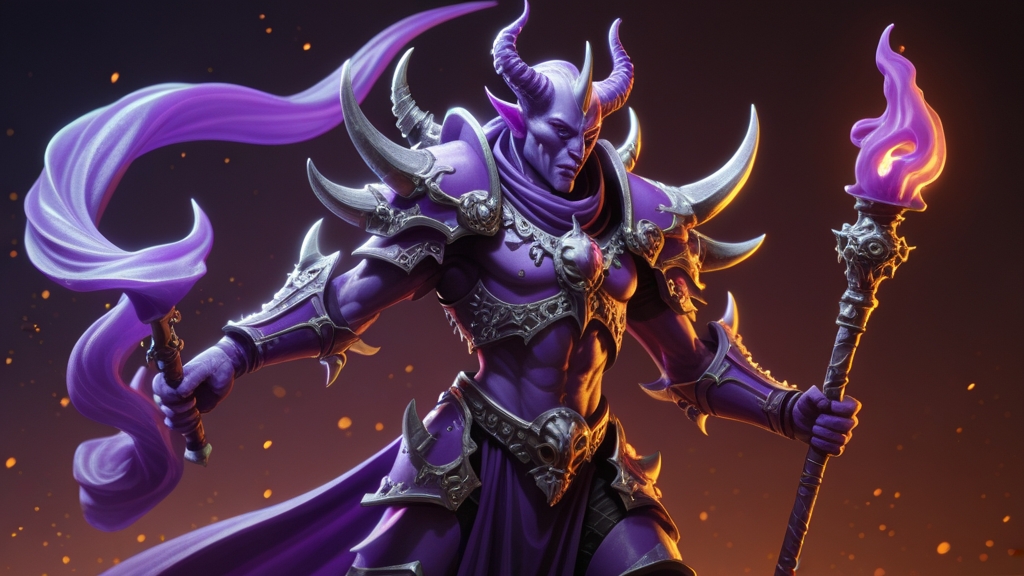
Part of our Hedonites of Slaanesh hub: every Hedonites of Slaanesh guide, lore page and painting tutorial in one place.
Learning how to paint Hedonites of Slaanesh is a great excuse to work with colours most armies never touch: pale lilac skin, rich purples, hot pinks and bright silver. This guide covers the paints you need, a step-by-step method for the classic pale-skin, purple and silver look, three alternative palettes with real paint names, and quick ways to get a whole army to tabletop standard.
Essential Paints and Tools for Hedonites of Slaanesh
Gather these before you start. The list below is one popular way to paint the classic scheme; Slaanesh armies are all about excess, so treat it as a starting point rather than a rulebook.
Citadel Paint List
- Primer: Grey Seer (or Wraithbone for warmer skin)
- Skin: Daemonette Hide, shaded with Druchii Violet, layered with Slaanesh Grey and highlighted with Pallid Wych Flesh
- Purple (claws, armour, hair): Naggaroth Night, Druchii Violet, Xereus Purple and Genestealer Purple, or Shyish Purple (Contrast) as a one-coat shortcut
- Silver: Leadbelcher, Nuln Oil, Runefang Steel and Stormhost Silver
- Pink accents (cloth, tongues, jewels): Emperor’s Children or Screamer Pink, highlighted with Lucius Lilac or Pink Horror
- Gold (jewellery, trim): Retributor Armour, Reikland Fleshshade, Liberator Gold
- Basing: Astrogranite with a Slaanesh Grey drybrush
Recommended Tools
- Brushes: A Size 1 Layer brush for detail work, a Medium Base brush for larger areas, and a Medium Dry brush for drybrushing
- Palette: A wet palette keeps paint workable, which helps a lot with smooth skin highlights
- Water pot: Two pots, one for rinsing and one with clean water for thinning paints
- Hobby knife and clippers: For cleaning mould lines before you prime
- Plastic glue or super glue: Depending on whether you are working with push-fit or multi-part kits
Step-by-Step Painting Guide: Classic Hedonites of Slaanesh Scheme
We will use Daemonettes as the reference model. Their large areas of smooth skin, purple claws and silver jewellery cover almost every technique you need for the rest of the range, including the mortal Hedonites.
Step 1: Preparation and Priming
Clean mould lines with a hobby knife, paying particular attention to faces, long limbs and claws, where lines show clearly on smooth skin. On multi-part characters, consider leaving riders or large weapons off until they are painted.
Prime with Grey Seer in short bursts from about 20 to 30 cm away, rotating the model between passes. Two thin coats are better than one heavy one. A light primer is important here: pale skin is much easier to paint over grey or bone than over black.
Step 2: Base Colours
Thin your paints slightly with water so they flow without leaving brushstrokes, and aim for two thin coats rather than one thick one. Work from the largest areas to the smallest.
Start with the skin in Daemonette Hide, a pale lilac-grey that gives Daemonettes their unearthly look. Next, paint the claws and any armour in Naggaroth Night (or a single coat of Shyish Purple over the primer). Then base the silver jewellery and blades in Leadbelcher and any gold trim in Retributor Armour. Finish with the pink details, such as tongues, cloth and gems, in Emperor’s Children or Screamer Pink.
Step 3: Washes and Shading
Shade the skin with Druchii Violet, ideally thinned with a little Lahmian Medium so it tints the recesses without staining the whole surface too dark. Use Druchii Violet on the purple areas too, Nuln Oil on the silver and Reikland Fleshshade on the gold.
For tabletop standard, an all-over wash on each area is fine. Let the wash flow into recesses, and use a clean, damp brush to wick away any pooling on flat skin, where tidemarks show badly. Allow at least 15 to 20 minutes for the wash to dry before moving on.
Step 4: Layering and Highlighting
Bring the skin back up with Slaanesh Grey over the raised muscles, faces and limbs, leaving the shade in the recesses. Add a final, smaller highlight of Pallid Wych Flesh on the very highest points: cheekbones, the bridge of the nose, shoulders and knuckles. Build up gradually, as it is easier to add more highlight than to take it away.
Layer the purple claws with Xereus Purple and edge them with Genestealer Purple, concentrating the brightest highlight towards the tips. Highlight the silver with Runefang Steel and the pinks with Pink Horror or Lucius Lilac.
Step 5: Special Details and Effects
Slaanesh models reward smooth skin transitions and small jewel-like details, so take your time here. If you want an iridescent, unnatural sheen, glaze thinned Druchii Violet or a pink Contrast paint into the transitions between skin and claw.
Finish the blades and jewellery with a fine edge of Stormhost Silver and the gold with Liberator Gold. Paint hair in a colour that contrasts with the skin: dark purple works well, or Abaddon Black edge-highlighted with a cool grey. Pick out eyes and gems last with a fine brush, using one of your accent pinks or purples.
Step 6: Basing
Apply Astrogranite to the base and, once dry, drybrush it with Slaanesh Grey so the ground picks up the same lilac tone as the skin. Paint the rim with Abaddon Black for a clean finish.
A few small rocks or tufts in pink, purple or pale tones suit the army’s otherworldly feel. Keep the base fairly muted so it doesn’t compete with the bright skin and accents.
Alternative Palettes for Hedonites of Slaanesh
Hedonite hosts, such as the Pretenders, Godseekers and Invaders, don’t come with fixed official colours, so you are free to give each one its own palette. The skin method above stays the same; only the armour, cloth and accent colours change. Here are three combinations with specific paints.
Regal gold and cream
Base armour in Retributor Armour, shade with Reikland Fleshshade and highlight with Liberator Gold. Paint cloth in Morghast Bone or Ushabti Bone, shaded with Seraphim Sepia. Keep Screamer Pink for small accents so the army still reads as Slaanesh. This suits a host built around a self-styled “true heir” of the Dark Prince.
Turquoise and silver
Use Sotek Green for armour and cloth, shade with Coelia Greenshade, then layer Temple Guard Blue and edge with Baharroth Blue. Pair it with the silver recipe above. Turquoise sits opposite the warm pinks on the colour wheel, so a few pink details pop strongly against it.
Crimson and black
Base the red areas in Mephiston Red, shade with Carroburg Crimson, then layer Evil Sunz Scarlet and highlight with Wild Rider Red. For black armour, use Abaddon Black with edge highlights of Eshin Grey and then Dawnstone. Pale skin looks especially striking against this darker palette.
Speed Painting Hedonites of Slaanesh for Tabletop Standard
Need a whole army on the table quickly? Contrast paints and batch painting will save you a lot of time.
Prime with Grey Seer or Wraithbone, then use Contrast paints straight over the primer: Shyish Purple for claws and armour, and a pink or purple Contrast thinned heavily with Contrast Medium for a quick tinted skin. Work on 5 to 10 models at a time, applying one colour to every model before moving to the next.
Once the Contrast is dry, add a quick Slaanesh Grey highlight on the skin, a Leadbelcher-and-Nuln-Oil pass on the metal, and a light drybrush on textured areas such as hair and claws. You can come back later to add edge highlights to characters. A fully painted army at tabletop standard always looks better than a few showcase models next to grey plastic.
Frequently Asked Questions
What primer should I use for Hedonites of Slaanesh?
Grey Seer is the best choice for the classic scheme because pale skin covers easily over it. Wraithbone works well if you want warmer skin tones. For darker alternative palettes such as crimson and black, Chaos Black is fine for the armour, but you will need extra coats on the skin.
How long does it take to paint a Hedonites of Slaanesh army?
It depends heavily on your army and your standard. As a rough guide, an infantry model to tabletop standard takes an hour or two, and a large hero or monster can take many hours. Contrast paints and batch painting can roughly halve the time for rank-and-file units.
Can I use Contrast paints for the entire Hedonites of Slaanesh army?
Yes, Contrast paints work well for Hedonites, particularly over Grey Seer. They are ideal for claws, hair and armour where the paint can pool and shade naturally. For the best results, combine them with a light highlight on the skin and traditional metallics for blades and jewellery.
What are the best brushes for painting Hedonites of Slaanesh?
A Size 1 detail brush handles most of the work, including edge highlighting. A Size 0 or 00 is useful for eyes, gems and the finest details. A Medium Base brush speeds up large areas, and a Medium Dry brush is essential for drybrushing. A quality sable brush such as the Winsor and Newton Series 7 holds a sharp point far longer than most synthetic brushes.
How do I strip paint from Hedonites of Slaanesh models if I make a mistake?
Soak plastic models in isopropyl alcohol (90 percent or higher) or a dedicated miniature paint stripper for 12 to 24 hours, then scrub gently with an old toothbrush. This removes acrylic paint without damaging the plastic. For resin models, use a gentler product and test on a spare part or sprue first.
Should I varnish my painted Hedonites of Slaanesh models?
Yes, for any models you plan to game with. Munitorum Varnish spray or a brush-on matte varnish protects your paintwork from handling and transport. If you want metallic areas to stay shiny, apply a gloss varnish first and then a matte varnish over everything except the metal.
Ready to explore more about this faction? Check out our Hedonites of Slaanesh army guide for the army’s units, lore and lists to go with your newly painted models.
What are the best Hedonites of Slaanesh colour schemes?
The classic look is pale lilac skin with purple claws and bright silver, using Daemonette Hide and Slaanesh Grey for skin, Naggaroth Night and Xereus Purple for purple, and Leadbelcher and Stormhost Silver for metal. Popular alternatives include regal gold and cream, turquoise and silver, and crimson and black. Pick one strong main colour and one contrasting accent so the army reads clearly on the table.
What colours are associated with Slaanesh?
Pinks, purples and lilacs are the colours most associated with Slaanesh, often set against black, gold or silver. Because Slaanesh is the god of excess, almost any bold or clashing palette suits the faction, and many painters add iridescent or colour-shifting effects to skin and armour to get that unnatural, decadent look.
Related Content
- Warhammer Painting for Beginners — Everything You Need — essential painting guide for new hobbyists
- Best Paints for Warhammer — Complete Comparison Guide — recommended paints for Warhammer miniatures
- Object Source Lighting (OSL) — Complete Miniature Painting Guide — related painting technique and tutorial
- Drybrushing Tutorial — Fast Painting for Warhammer — popular drybrushing technique tutorial