
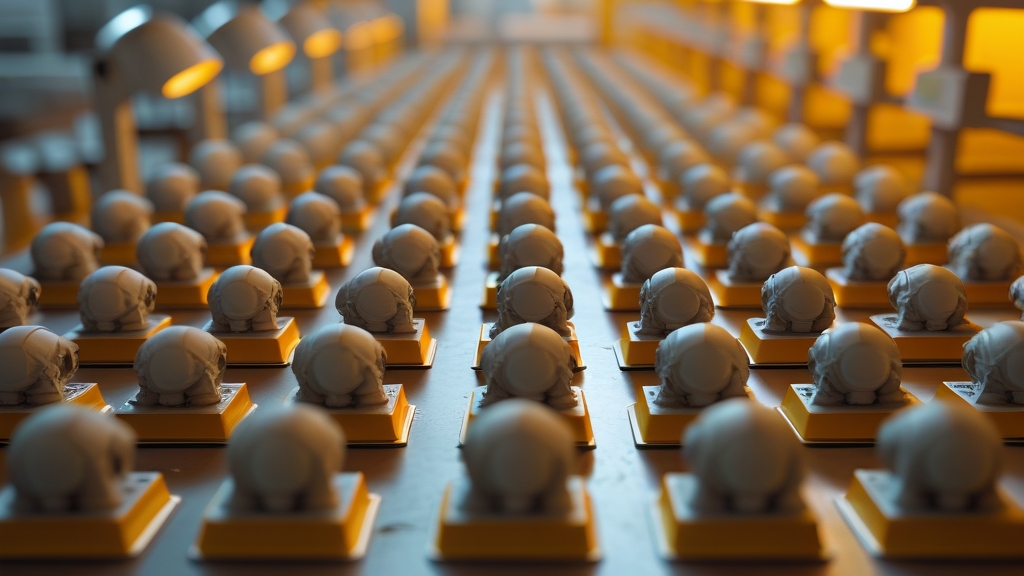
Painting Warhammer models fast without sacrificing quality is the holy grail of the hobby. Whether you have a tournament deadline, a growing pile of grey plastic shame, or simply limited hobby time, knowing how to speed paint effectively can transform your relationship with the painting side of Warhammer from a chore into a manageable, even enjoyable, part of the hobby.
The key insight is that speed painting is not about cutting corners — it is about choosing the right techniques for the right situations. A model painted using smart speed techniques will look better on the tabletop than a model painted slowly with poor technique. The methods covered in this guide can produce battle-ready results in 30-45 minutes per model, compared to the 3-5 hours that traditional painting methods often require.
This guide covers every major speed painting technique available to modern Warhammer painters — from the revolutionary Contrast paint method and the viral slap-chop technique to batch painting strategies, zenithal priming, and the efficient three-step method that competition painters use when they need armies painted fast.
What Is the Contrast Paint Speed Method?
Contrast paints, introduced by Games Workshop in 2019, fundamentally changed speed painting. These paints combine a base coat, shade, and highlight in a single application — you paint one coat over a light undercoat, and the paint automatically pools in recesses (creating shadows) and runs thin over raised areas (creating highlights).
The Contrast paint speed method works as follows: prime your model white or a light colour (Wraithbone or Grey Seer are designed specifically as Contrast undercoats), then apply one coat of the appropriate Contrast paint to each area. Flesh areas get Guilliman Flesh, red armour gets Blood Angels Red, brown leather gets Snakebite Leather, and so on. One coat per area, no mixing, no layering, no shading.
A basic Space Marine can be fully painted using Contrast paints alone in under 30 minutes. The results are not competition-winning, but they are genuinely impressive for the time invested — certainly good enough for tabletop play and far better than unpainted plastic.
The limitations of Contrast paints are worth understanding. They work best on textured surfaces with plenty of detail — cloth, fur, skin, chainmail. They struggle on large flat surfaces like Space Marine shoulder pads and vehicle panels, where the paint can pool unevenly and create blotchy results. For flat surfaces, consider using a traditional base coat instead of Contrast paint, or apply the Contrast paint in sections to control pooling.
Contrast paints have improved significantly since their 2019 launch. The Contrast 2.0 reformulation offers better coverage, smoother results, and a wider colour range. Combined with the STC (Spray-Tint-Complete) approach, Contrast paints remain the single fastest way to get paint on models.
What Is the Slap-Chop Technique?
Slap-chop is a speed painting technique that went viral in the online painting community for its ability to produce impressive results with minimal skill and time. The name is deliberately irreverent — it describes the approach of quickly slapping on a drybrush and then chopping through the painting process with Contrast or Speed Paints.
The technique works in three phases. First, you prime the model black. Second, you heavily drybrush the entire model with a mid-tone grey (such as Mechanicus Standard Grey or Dawnstone), followed by a lighter drybrush of white or off-white on the most raised areas. This creates a greyscale underpainting that establishes all the highlights and shadows on the model.
Third, you apply Contrast paints, Speed Paints, or other translucent paints over the greyscale underpainting. Because the highlights and shadows are already established by the drybrushing, the translucent paint tints the model while preserving the underlying light-dark variations. The result is a model with natural-looking highlights and shadows that required almost no brush control or blending skill.
Slap-chop is particularly effective for organic models — Tyranids, Orks, undead, and anything with lots of texture and detail. It is less effective for smooth, clean surfaces like Space Marine power armour, where the granular texture left by drybrushing can be visible through the Contrast paint.
Time estimates for slap-chop vary by model complexity, but a typical infantry model can be completed in 20-30 minutes, and the technique scales brilliantly for batch painting. You can drybrush an entire army in one session, then work through the Contrast paint application model by model.
How Does Batch Painting Save Time?
Batch painting — painting multiple models simultaneously by completing one step across all models before moving to the next step — is the single most effective time-saving strategy available to any painter, regardless of technique or skill level.
The time savings come from two sources. First, you eliminate the setup and cleanup time that accompanies each colour change. Loading your brush with red paint once and painting ten shoulder pads is dramatically faster than loading red paint, painting one shoulder pad, cleaning the brush, loading blue paint, painting a cloak, and repeating this for each model individually.
Second, batch painting gives each model’s paint time to dry while you work on other models. Instead of sitting idle waiting for a wash to dry, you apply the wash to model one, then model two, then model three — by the time you return to model one, the wash is dry and ready for the next step.
The optimal batch size depends on your patience and painting speed. Most painters find that batches of 5-10 models are ideal. Smaller batches do not maximise the efficiency gains. Larger batches can become psychologically demoralising, as it feels like you are making no progress when you are on model 15 of 20 for a single colour step. Find the batch size that keeps you motivated.
A practical batch painting workflow for ten Space Marines might look like this: prime all ten (15 minutes), base coat all armour (30 minutes), base coat all guns (15 minutes), base coat all details (20 minutes), wash all models (15 minutes), drybrush highlights (20 minutes), paint all lenses (15 minutes), base all models (20 minutes). Total: roughly 2.5 hours for ten models, or 15 minutes per model.
What Is Zenithal Priming and How Does It Speed Up Painting?
Zenithal priming is a two-stage priming technique that establishes natural highlights and shadows before you even pick up a brush. It takes its name from zenith — the point directly overhead — because it simulates light falling from above.
The technique is simple: prime the entire model black, then spray white primer from above, at roughly 45 degrees or steeper. Areas that face upward (tops of shoulders, raised fists, helmet crests) catch the white primer and become bright. Areas that face downward or are recessed (under arms, inside cloaks, weapon undersides) remain black. The result is a pre-shaded model with natural-looking directional lighting.
Zenithal priming speeds up painting because it provides a ready-made highlight map. When you apply translucent paints (Contrast, Speed Paints, inks, or thinned acrylics) over a zenithal prime, the paint tints the model while the underlying black-to-white gradient shows through, creating automatic highlights and shadows. This eliminates the need for separate shading and highlighting steps.
The zenithal-plus-Contrast combination is arguably the most efficient painting method currently available. A zenithal primed model with Contrast paints applied over the top can look remarkably polished for perhaps 30 minutes of total work per infantry model. The technique works with any spray primer — rattle cans work fine if you do not own an airbrush.
For advanced painters, zenithal priming can be done in three stages: black base, grey from 45 degrees, white from directly above. This creates a smoother gradient with more tonal range, producing even better results when transparent paints are applied on top.
What Is the Three-Step Method for Battle-Ready Models?
The three-step method is the minimalist approach to getting models painted to a clean, respectable standard. It consists of exactly three painting steps: base coat, wash, and drybrush highlight. No layering, no blending, no edge highlighting — just three steps that exploit the physics of paint behaviour to create depth and definition.
Step 1 — Base coat: Apply a solid, even base coat of colour to every area of the model. Use the appropriate base paint for each section — one colour for armour, one for cloth, one for metallics, one for skin. Do not worry about neatness at the borders between colours — the wash in the next step will smooth transitions.
Step 2 — Wash: Apply a wash (shade paint) over the entire model. Agrax Earthshade (brown) is the universal workhorse — it adds depth to virtually every colour and gives the model a warm, grounded tone. Nuln Oil (black) is the alternative for cooler colour schemes. The wash flows into recesses and around details, creating instant shadows and definition.
Step 3 — Drybrush highlight: Once the wash is fully dry, drybrush the raised areas with a lighter version of each base colour (or the original base colour, which will now appear as a highlight against the washed-down recesses). Drybrushing catches edges and raised details, creating a highlight effect that pops the model’s features.
The three-step method produces models that look great at arm’s length — perfectly adequate for gaming. Each model takes roughly 20-30 minutes depending on complexity. It is an excellent method for armies with lots of infantry where individual model quality matters less than overall army appearance.
How Long Should It Take to Paint Different Model Types?
Time expectations vary enormously based on technique, experience, and quality target. Here are realistic time estimates for different model types using speed painting techniques versus traditional painting:
Infantry (Space Marines, Guardsmen, Skeletons): Speed method: 20-45 minutes. Traditional: 2-5 hours. The biggest time savings come from infantry because armies need so many of them.
Elite infantry (Terminators, characters on foot): Speed method: 30-60 minutes. Traditional: 3-8 hours. These models benefit from slightly more attention than rank-and-file but still respond well to speed techniques.
Monsters and vehicles (Dreadnoughts, tanks, large creatures): Speed method: 1-2 hours. Traditional: 5-15 hours. Large flat surfaces on vehicles need careful Contrast application or traditional base coating — pure speed methods are less effective here.
Centrepiece models (Knights, Greater Daemons, named characters): Speed method: 2-4 hours. Traditional: 10-30+ hours. Even speed painters often invest extra time in centrepiece models, using speed techniques for the bulk of the model and traditional techniques for the face, weapons, and key details.
A full 2,000-point speed-painted army typically takes 40-80 hours depending on faction and army composition. An elite army like Custodes (25-35 models) sits at the lower end. A horde army like Orks or Skaven (100+ models) sits at the upper end. Compare this to 200-400+ hours for the same army painted to a high traditional standard.
What Are the Best Speed Painting Tips for Beginners?
If you are new to speed painting, these practical tips will help you get the best results from your first attempts:
Start with slap-chop or zenithal + Contrast. These methods are the most forgiving for beginners because the underpainting does most of the heavy lifting. Even with imperfect Contrast application, the results will look decent because the highlights and shadows are already established.
Prime in sub-assemblies if helpful. Some models are easier to speed paint when partially assembled. Painting a Space Marine’s body and backpack separately allows easier access to areas that would be obscured on the assembled model.
Do not try to fix mistakes immediately. Speed painting is about forward momentum. Small mistakes that are visible up close will be invisible at tabletop distance. Move on to the next model and fix mistakes only if they are genuinely distracting at arm’s length.
Use spray primers, not brush-on. Spray priming is faster, produces a smoother surface, and is essential for zenithal techniques. Invest in a can of black and a can of white spray primer at minimum.
Pick a limited palette. Speed painting is faster when you use fewer colours. Choose a colour scheme that uses 4-6 colours maximum, and use the same wash across the entire model. Fewer colours means fewer brush changes and faster batch painting.
Accept tabletop quality. The goal of speed painting is not perfection — it is a fully painted army on the table. A speed-painted army that is complete will always look better than a half-painted army where each finished model is a masterpiece. Done is better than perfect.
Frequently Asked Questions
Is speed painting cheating?
Absolutely not. Speed painting uses legitimate painting techniques — drybrushing, washes, and Contrast paints are all standard tools in every painter’s toolkit. Games Workshop designed Contrast paints specifically for rapid painting, and drybrushing has been a core technique since the hobby began. The only thing that matters is that your models are painted and you are having fun.
Can speed-painted models win painting competitions?
Speed-painted models are unlikely to win best-painted awards at competitive events, where judges look for advanced techniques like non-metallic metal, freehand, and smooth blending. However, many tournaments have separate best-army awards that consider overall cohesion and completion — a fully speed-painted army with a consistent scheme can absolutely win these. Speed painting is a tabletop technique, not a display technique.
Should I speed paint my whole army or just some models?
A hybrid approach works well for many hobbyists. Speed paint your rank-and-file infantry and basic units, then invest more time in characters, centrepiece models, and units that will draw the most attention. This gives your army a consistent baseline with standout models that showcase your best work. The contrast between speed-painted troops and carefully painted characters can actually enhance the visual impact of both.
Do I need an airbrush for speed painting?
No. While an airbrush can speed up basecoating and zenithal priming, every technique in this guide can be done with rattle-can primers and standard brushes. An airbrush is a luxury that enhances speed painting but is not required for any of the methods described here.
What is the absolute fastest way to paint a model?
The absolute fastest method is a single-colour spray prime (matching your army’s main colour), followed by a heavy all-over wash, followed by a quick drybrush. This can produce a passable result in under 10 minutes per model but sacrifices significant quality. For most painters, the slap-chop or Contrast method offers a better balance of speed and quality, taking 20-30 minutes but producing noticeably better results.
What is the difference between Contrast paints and Speed Paints?
They do the same job: Contrast is Games Workshop’s Citadel range, and Speed Paints are The Army Painter’s equivalent. Both are translucent one-coat paints that shade into recesses and stay lighter on raised areas over a light undercoat. Many painters mix the two ranges freely, picking whichever brand has the best shade for each area.
Can you use Contrast paint over a black primer?
Not directly. Contrast and Speed Paints are translucent, so over plain black they barely show. Use a white, Wraithbone or Grey Seer undercoat, or build a light underpainting first with a zenithal spray or the grey-and-white drybrush from the slap-chop method. The lighter the area underneath, the brighter the final colour.