
Part of our Aeldari hub: every Aeldari guide, lore page and painting tutorial in one place.
Kill Team: Exodite is the most elite team in the game — and the strangest to pilot. Just three dinosaur-riding Aeldari warriors and their pet drakes, but they play like nothing else: never deploying at the start, never using normal moves, and near-impossible to hit while they’re at full gallop. This guide breaks down the operatives, the unusual rules, what’s in the box, and whether it’s worth buying.
For the 40k side of these warriors, see our Aeldari Exodites in Warhammer 40k guide. For where this team sits among the rest, check our Kill Team warband tier list.
Who are the Exodite Dragon Masters?
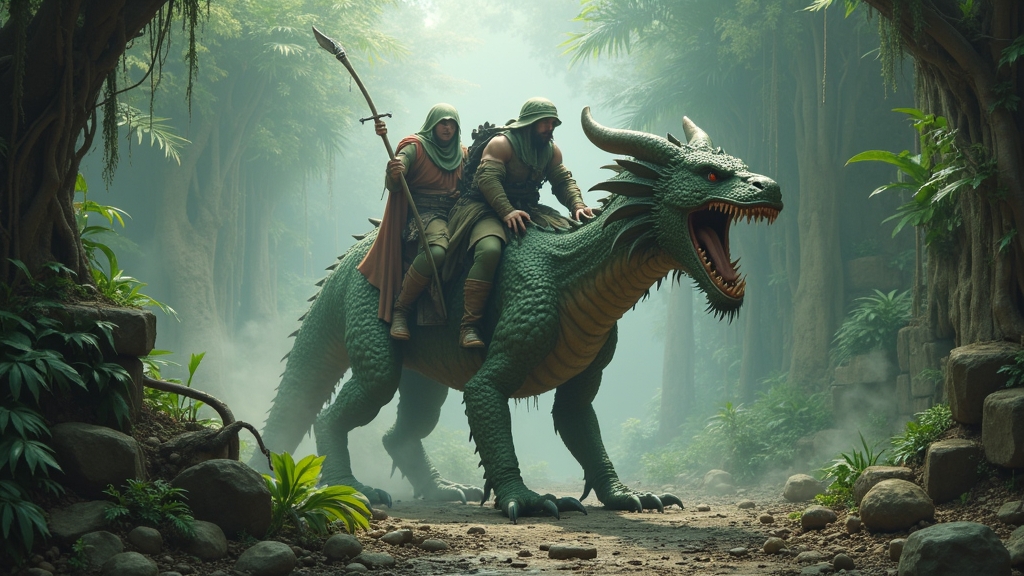
An Exodite kill team is a ritual triumvirate — three high-ranked Dragon Knights with centuries of experience, each embodying one of the Exodites’ three sacred combat arts: swordplay, marksmanship, and psychic power. They ride into battle on reptilian drakesteeds, accompanied by smaller hunting drakes. If you want the culture behind them — clans who fled the Fall to ride dragons on far-flung maiden worlds — read What Are Exodites?
The three operatives
- Clanblade — the melee specialist. A master of close quarters who wields a pair of ceremonial moonblades, whose job is to charge in and annihilate cornered foes.
- Stonesinger — the psyker. Able to commune with the souls in a world spirit, the Stonesinger ruptures enemy armour, flesh, and bone with psychic force — or heals fellow Dragon Masters.
- Leystalker — the marksman. A master sniper who fires with reflexive accuracy at speeds that would shock other shooters.
Drakolithes
Alongside the masters run the drakolithes — smaller scaled predators that chase down fleeing targets, intercept enemies trying to outflank, and sniff out foes attempting to hide. They’re your early-game scouts and board control.
How the Exodites play
This is where the team gets genuinely unique. Expect a steep but rewarding learning curve.
They don’t deploy at the start
When the game begins, only your drakolithes are on the board (the first third of your team). The three Dragon Masters stay off the killzone — their drakes scout ahead — and you bring each master on as it activates. It’s a completely different rhythm to a normal kill team.
They’re always moving
Dragon Masters don’t use Reposition, Dash, Charge, or Fall Back. Instead they manoeuvre through a series of Sprints and Turns, and crucially the Sprint action costs 0 AP — meaning the Exodites are always moving. You have to plan your routes ahead so you don’t gallop into a dead end with the enemy closing in.
They’re brutal to hit at speed
Speed is baked into their defence. When an enemy shoots a Dragon Master:
- with Speed 4+, you retain one defence dice as a normal success without rolling it;
- with Speed 7+, you retain one as a critical success instead.
Keep them fast and they shrug off incoming fire.
They adapt to the enemy
Unlike most teams, each Dragon Master gets an extra layer of customisation: after you know which faction you’re facing, each of the three picks two abilities from a list of five (Clanblade, Leystalker, and Stonesinger each have their own options). That’s a lot of tactical flexibility for a three-model team.
The overall feel: a fast, lethal assault force that punishes sloppy movement and rewards forward planning with explosive damage. It’s elite in every sense — few models, each one precious.
What’s in the box
Kill Team: Exodite is a big narrative-focused box:
- 5 elite operatives — 3 Dragon Masters and 2 drakolithes (your kill team)
- 10 Beast Snagga Boyz and five Squighog Boyz — Ork models used as non-player operatives in the included missions
- 88 datacards, an Exodite transfer sheet, and a token sheet with markers and movement aids
- The Exodite Dossier, with 20 Joint Ops missions forming a branching campaign that pits your team against the Ork NPOs
That mix makes it a strong solo/co-op box as well as a competitive team — the Beast Snaggas give you a ready-made enemy to play against.
Is Kill Team: Exodite worth it?
For Kill Team players, yes — it’s a brand-new, high-skill team with a playstyle unlike anything else in the game, plus a pile of Ork NPO models and a full narrative dossier. For Aeldari collectors, the Dragon Masters double as the core of the new Exodite cavalry in 40k, so the models pull double duty. If you’re brand new to the skirmish game, start with our Kill Team beginner’s guide first — the Exodites are a rewarding team, but not the gentlest place to learn.
Frequently Asked Questions
How many models are in the Exodite kill team?
Five: three Dragon Masters and two drakolithes. The box also includes Beast Snagga and Squighog Boyz as non-player operatives.
Why don’t the Dragon Masters deploy at the start?
By design — only the drakolithes begin on the board, and each Dragon Master arrives as it activates, reflecting their scouting-then-striking playstyle.
What makes the Exodites hard to kill?
Their Speed. Fast-moving Dragon Masters automatically retain defence successes (a normal save at Speed 4+, a critical save at Speed 7+), so keeping them moving keeps them alive.
Can I use the Exodite models in Warhammer 40k?
Yes — the Dragon Masters form the basis of the new Exodite cavalry usable within an Aeldari army. See our Aeldari Exodites 40k guide.
Can I use the Ork models from Kill Team: Exodite in Warhammer 40k?
Yes. The Beast Snagga Boyz and Squighog Boyz are standard Ork models, so you can build and use them in a normal Ork army in Warhammer 40,000 or as an Ork kill team. In the Exodite box they serve as non-player operatives for the Joint Ops missions, but nothing stops you adding them to your Ork collection afterwards.
Can Exodites be used in normal Kill Team matched play?
Yes. The Exodite Dragon Masters are a full kill team for matched play, not just a narrative force, so you can take them to club nights and events like any other team. The included Joint Ops missions and Ork non-player operatives are extra, giving the box solo and co-op value on top of its competitive use.