
Necromunda — Underhive Gang Warfare Guide
What Is Necromunda?
Necromunda is Games Workshop’s game of gang warfare in the underhive — the sprawling, lawless depths beneath the massive hive cities of the Imperium of Man. Where Warhammer 40,000 tells stories of galaxy-spanning conflicts between vast armies, Necromunda zooms in to the most personal scale of warfare: small gangs of fighters struggling for survival, territory, and power in the claustrophobic industrial wasteland beneath a single city. It is one of the most atmospheric and narratively rich games in the entire Warhammer universe.
First released in 1995 and relaunched in 2017 with updated rules and stunning new miniatures, Necromunda has cultivated a devoted following among hobbyists who love its unique combination of skirmish combat, campaign progression, and deeply characterful factions. Each game tells the story of your gang — fighters gain experience, learn new skills, suffer injuries, and develop personal narratives over the course of a campaign. Your champion might become a legendary underhive hero, or they might take a bullet in the third game and spend the rest of the campaign with a bionic leg and a grudge.
The game is set on the hive world of Necromunda, one of the most important industrial planets in the Imperium. The upper levels of the hive — the spires — are home to the noble houses and wealthy elites. Below them, the hive city proper houses billions of workers in crowded habitation blocks. And far below everything, in the ancient, crumbling levels that have been built upon for millennia, lies the underhive: a lawless frontier where gangs fight for control of resources, territory, and the scant opportunities for advancement that trickle down from above.
The Underhive Setting
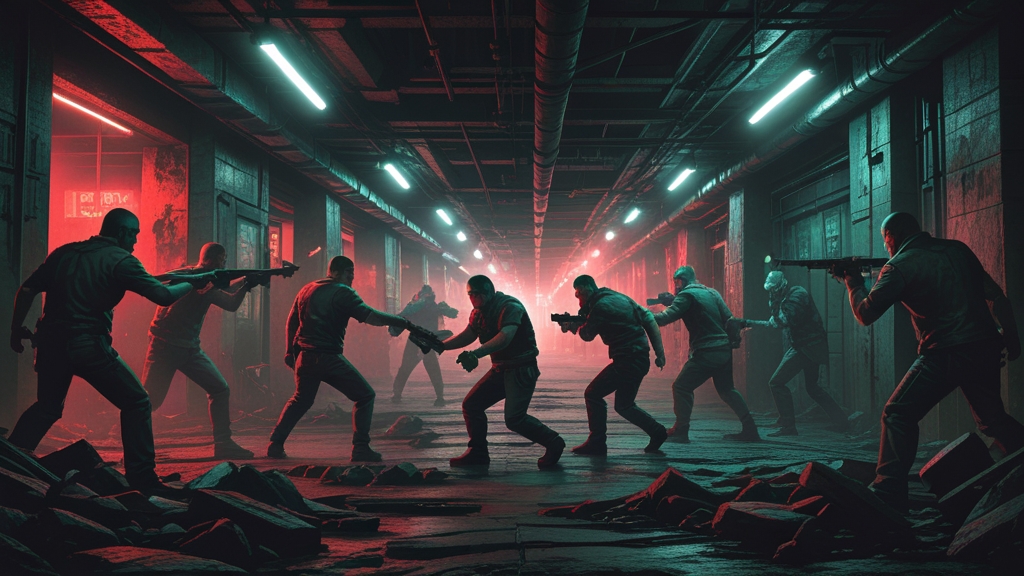
The underhive of Hive Primus on Necromunda is one of the most evocative settings in all of Warhammer. It’s a vertical frontier, stretching downward through thousands of years of accumulated construction, collapse, and rebuilding. The upper underhive is merely dangerous — abandoned factories and habitation blocks where gangs fight for territory. The deeper you go, the more alien and hostile it becomes, until you reach the absolute depths where mutants, monsters, and things far worse lurk in the perpetual darkness.
The physical environment of the underhive shapes everything about Necromunda’s gameplay and narrative. Visibility is limited by darkness, industrial haze, and the cramped architecture of corridors, gantries, and rusted platforms. Combat is close-range and brutal — long sightlines are rare, and most fights happen at shotgun range or closer. Verticality is a constant factor, with gangs fighting up and down multilevel terrain that includes walkways, ladders, pit traps, and unstable platforms that can collapse under the weight of a firefight.
Resources in the underhive are scarce and fiercely contested. Clean water, working technology, ammunition, and particularly the raw materials that can be traded upward to the hive proper are the currencies of power. Gangs control territory not for its own sake but for the resources it provides — a gang that controls a functioning water still, a weapons cache, or a trade route to the upper hive has the means to arm, feed, and recruit fighters. Lose your territory, and your gang starves.
The social structure of the underhive reflects its brutal environment. The six Great Clan Houses of Necromunda — Goliath, Escher, Van Saar, Cawdor, Delaque, and Orlock — each control vast swathes of the underhive through their gangs. These houses are not just criminal organizations but complete subcultures, each with its own values, aesthetic, fighting style, and relationship with the hive above. Beneath and between the houses, independent gangs, outcasts, mutants, and Chaos cultists fight for whatever scraps they can claim.
The Six Great Gangs
Each of Necromunda’s six core gangs is drawn from one of the planet’s Great Clan Houses. Each gang has a distinct identity, playstyle, and model range that makes them feel completely unique on the tabletop.
House Goliath — The Brutes
Goliath gangers are massive, heavily muscled fighters who rely on raw strength, stimulant drugs, and close-range brutality to overwhelm their opponents. Drawn from the furnace workers and heavy labourers of the underhive, Goliath fighters are genetically enhanced and chemically boosted to superhuman levels of strength and aggression. On the tabletop, they excel in close combat and short-range firefights but struggle at range and with subtlety. If you want to kick down doors and punch things until they stop moving, Goliath is your gang.
House Escher — The Matriarchy
Escher is a matriarchal house whose all-female gangs combine speed, agility, and chemical expertise to devastating effect. Escher fighters are fast and deadly, favouring hit-and-run tactics, toxin weapons, and stimm-enhanced combat drugs that push their reflexes to inhuman levels. On the tabletop, Escher gangs are glass cannons — devastating on the attack but vulnerable if caught in a prolonged firefight. Their extensive use of chem-weapons and toxins gives them unique tactical options that no other gang can match.
House Van Saar — The Technologists
Van Saar is the most technologically advanced of the Great Houses, with access to superior weapons, energy shields, and equipment that would be the envy of many Imperial Guard regiments. Van Saar fighters carry lasweapons, plasma guns, and advanced body armour that gives them a significant edge in firepower. However, their technology comes at a cost — the Van Saar are afflicted by a genetic degradation caused by their ancient STC (Standard Template Construct) system, and their fighters are physically frail compared to the underhive average. On the tabletop, Van Saar gangs are elite shooty forces that dominate at range but suffer in close combat.
House Cawdor — The Faithful
Cawdor is a house of fanatical Redemptionists — religious zealots who worship the Emperor with a fervour that borders on insanity. Cawdor fighters are poorly equipped individually but fight with the desperate courage of true believers, overwhelming opponents through sheer numbers and willingness to die for their faith. Their weapons tend toward the crude and improvised — autoguns, flails, and incendiary devices — but their devotion makes them fearless in battle. On the tabletop, Cawdor gangs are cheap and numerous, using bodies and faith to compensate for their inferior wargear.
House Delaque — The Shadow
Delaque is the most mysterious of the Great Houses — a network of spies, assassins, and information brokers who operate from the shadows. Delaque fighters are pale, gaunt figures who favour stealth, misdirection, and precision over brute force. They have access to exotic psychic abilities, infiltration equipment, and weapons designed for assassination rather than open warfare. On the tabletop, Delaque gangs use stealth and trickery to control the flow of battle, striking from unexpected angles and disappearing before the enemy can retaliate.
House Orlock — The Ironworkers
Orlock is the most “conventional” of the Great Houses — a clan of miners, road warriors, and frontier fighters who value self-reliance, toughness, and practical firepower. Orlock fighters are the underhive’s everyman — well-rounded combatants who can fight at any range and adapt to any situation. They lack the extremes of other houses but have no crippling weaknesses either. On the tabletop, Orlock gangs are versatile and forgiving, making them an excellent choice for new players who want a balanced force that can handle any opponent.
Additional Gangs and Factions
Beyond the six core houses, Necromunda has expanded to include a growing roster of additional gangs and factions that add variety and narrative depth to the underhive.
Genestealer Cults: Insidious alien-hybrid cultists who secretly infiltrate underhive populations, waiting for the moment to rise up and summon their Tyranid masters.
Chaos Cultists (Corpse Grinders): Gangs devoted to the Chaos Gods, particularly Khorne, whose members practice ritual cannibalism and seek to bring the underhive under the sway of the Dark Powers.
Enforcers (Palanite): The local law enforcement of Necromunda, equipped with riot gear and military-grade weapons to suppress gang activity. Playing Enforcers lets you be the law in a lawless place.
Squats (Ironhead Squat Prospectors): Short, tough miners who venture into the deepest underhive in search of valuable resources, armed with heavy mining equipment repurposed for combat.
Nomads (Ash Waste Nomads): Riders and survivalists who operate in the toxic ash wastes outside the hive, bringing a completely different aesthetic and playstyle to Necromunda with their vehicles and mounted fighters.
How Necromunda Plays
Necromunda is a skirmish game where each player controls a gang of typically 5-15 individually based fighters. Games are played on dense, multi-level terrain that represents the cramped corridors, platforms, and industrial spaces of the underhive.
Core Mechanics
The game uses an alternating activation system where players take turns activating individual fighters rather than moving their entire gang at once. Each fighter can perform two actions on their activation — moving, shooting, charging, taking cover, or using special abilities. This creates a tense, tactical experience where every activation matters and both players are constantly engaged.
Combat uses a familiar dice-based system with to-hit rolls, wound rolls, and armour saves. However, Necromunda adds layers of detail that standard Warhammer lacks — fighters can be pinned by enemy fire, can fall from elevated positions, and can suffer specific injuries that affect their performance. The injury system is particularly detailed, with results ranging from flesh wounds that reduce effectiveness to critical injuries that take fighters out of action and may have lasting consequences in campaign play.
The Campaign System
Necromunda’s campaign system is the heart of the game and what truly sets it apart from other miniature wargames. Between games, gangs earn credits to buy new equipment and recruit new fighters. Fighters who perform well gain experience and learn new skills, becoming increasingly powerful — and increasingly valuable — over the course of a campaign. Fighters who are taken out of action roll on injury tables that can result in anything from a full recovery to permanent stat reductions, bionic replacements, or death.
Territory control forms the strategic layer of the campaign. Gangs fight to control territory that generates income, provides tactical advantages, or grants access to special resources. Winning games allows you to expand your territory, while losing can see your holdings shrink. The interplay between tactical success on the tabletop and strategic success in the campaign creates a compelling narrative arc where every game matters and has consequences.
This campaign focus means that Necromunda games build stories naturally. Your gang develops its own narrative over the course of a campaign — rivalries with other gangs, legendary fighters who become the stuff of underhive legend, and dramatic moments where everything hangs in the balance. Many Necromunda players consider the campaign experience to be the finest narrative gaming experience in the Warhammer hobby.
Starter Sets
Games Workshop offers starter sets for Necromunda that provide everything needed for two players to begin playing. These sets typically include two gangs (usually Goliath and Escher as the iconic matchup), terrain, dice, templates, cards, and the core rulebook. The starter set is the recommended entry point for new players, offering significant savings over purchasing components separately.
Beyond the starter set, each gang has its own box of models, and Games Workshop has released extensive terrain sets designed specifically for Necromunda’s multi-level gameplay. Additional rulebooks — including the gang-specific “House of” supplements — provide expanded rules, additional fighter types, and deeper campaign mechanics for each faction. Check Games Workshop’s current catalogue for the latest product availability and pricing.
Necromunda vs Kill Team
Necromunda and Kill Team are both Games Workshop skirmish games, and newcomers often wonder which to choose. While they share the basic concept of small-model-count games with individual fighter activation, they serve very different purposes and offer very different experiences.
Kill Team is a more streamlined, competitive game designed for balanced matched play. Teams are drawn from Warhammer 40,000 factions, games are played on standardized terrain boards, and the rules prioritize balance and quick play. Kill Team is the better choice if you want tight, competitive games that can be completed in an hour, or if you want to use your existing Warhammer 40,000 models in a skirmish format.
Necromunda is a deeper, more narrative game designed primarily for campaign play. Gangs are unique to the Necromunda setting, terrain is multi-level and complex, and the rules prioritize storytelling and progression over competitive balance. Necromunda is the better choice if you want an evolving narrative experience where your fighters develop over many games, or if you’re drawn to the underhive setting and its distinctive gangs.
The games aren’t mutually exclusive — many players enjoy both. Kill Team for competitive game nights, Necromunda for long-running campaigns with a dedicated group. If you can only choose one, consider what matters more to you: competitive balance and quick games (Kill Team) or narrative depth and campaign progression (Necromunda).
Getting Started with Necromunda
Ready to descend into the underhive? Here’s how to begin your Necromunda journey.
Choose your gang: Read through the gang descriptions above and pick the one whose aesthetic and playstyle appeal to you most. Don’t worry about competitive tier lists — every gang is viable, and Necromunda is a narrative game where fun and character matter more than optimization.
Start with a starter set or a gang box: The starter set is the best value if you have a friend who wants to learn alongside you. If you’re joining an existing gaming group, a single gang box plus the core rules is all you need.
Build terrain: Necromunda demands dense, multi-level terrain to play properly. Games Workshop sells dedicated Necromunda terrain, but the game also lends itself perfectly to scratch-built terrain using cardboard, foam board, and household junk. The underhive’s industrial aesthetic means almost anything can be repurposed into convincing terrain.
Find a campaign group: Necromunda is best experienced as a campaign with regular opponents. Find a local gaming group or convince friends to start a campaign together. Most Necromunda communities are welcoming to newcomers and can help you learn the rules quickly.
Don’t buy everything at once: Start with the basic gang box and core rules. Add specialist fighters, exotic weapons, and supplementary rulebooks as your campaign progresses and you discover what aspects of the game you enjoy most. Necromunda rewards gradual investment both financially and narratively.
Frequently Asked Questions
Which Necromunda gang is best for beginners?
House Orlock is generally recommended for beginners due to their versatile, well-rounded playstyle. They have no extreme strengths or weaknesses, making them forgiving of tactical mistakes while still being competitive. House Goliath is another good choice — their straightforward “get close and hit things” approach is easy to learn.
How many models do I need for a Necromunda gang?
A starting gang typically consists of 7-10 fighters, drawn from a single gang box. As your campaign progresses, you’ll recruit additional fighters, potentially expanding to 12-15 models. A single gang box (usually containing 10 models) is sufficient to start playing.
Can I play Necromunda without a campaign?
Yes. While the campaign system is Necromunda’s signature feature, one-off games are perfectly viable and enjoyable. Standalone scenarios, tournaments, and casual games all work well with Necromunda’s rules. However, the game truly shines in campaign play, and most veteran players consider it the definitive way to experience Necromunda.
Is Necromunda expensive?
Necromunda is one of the more affordable Games Workshop games to enter. A single gang box provides a playable force, and the small model count means painting your gang is quick compared to a full Warhammer army. The main ongoing expense is terrain, which can be managed through scratch-building, and supplementary rulebooks as they release.
Can I use Necromunda models in Warhammer 40,000?
While Necromunda models aren’t directly compatible with Warhammer 40,000 army lists, many players use them as proxies, conversion bases, or narrative game pieces. Necromunda gangers make excellent Chaos Cultists, Genestealer Cult neophytes, or Astra Militarum conscripts with minimal conversion work. The high quality of Necromunda models also makes them popular for Kill Team conversions.
If Necromunda’s skirmish gameplay appeals to you, check out our Kill Team beginner’s guide for another excellent small-scale Warhammer experience.
Is Necromunda set in the Warhammer 40k universe?
Yes. Necromunda takes place in the Warhammer 40,000 universe, on the Imperial hive world of Necromunda. Instead of galaxy-spanning wars, it zooms in on gangs fighting in the underhive beneath Hive Primus. Space Marines and Tyranids rarely appear, but the Imperium, the Adeptus Arbites-style Palanite Enforcers, Genestealer Cults and Chaos cults all tie it to the wider setting.
Who rules Necromunda?
Lord Helmawr of House Helmawr rules Necromunda as its Imperial Governor from the top of Hive Primus. His house sits above the Great Clan Houses such as Goliath, Escher and Orlock, playing them off against one another while keeping the planet’s huge industrial tithe flowing to the Imperium.
How long does a game of Necromunda take?
Most games of Necromunda take about one to two hours, depending on gang size, the scenario and how much terrain you use. Campaign play adds time between battles for post-game steps such as injuries, experience, income and recruiting new fighters.
Related Content
- Warhammer 40k Factions Ranked — see where every faction stands
- How to Play Warhammer 40k — complete beginner’s guide to 40k
- All Warhammer 40k Factions — explore every faction
Book review: Kal Jerico: Sinner’s Bounty Review — our review of the underhive bounty-hunter romp.