
Part of our Space Marines hub: every Space Marines guide, lore page and painting tutorial in one place.
What Is a Redemptor Dreadnought?
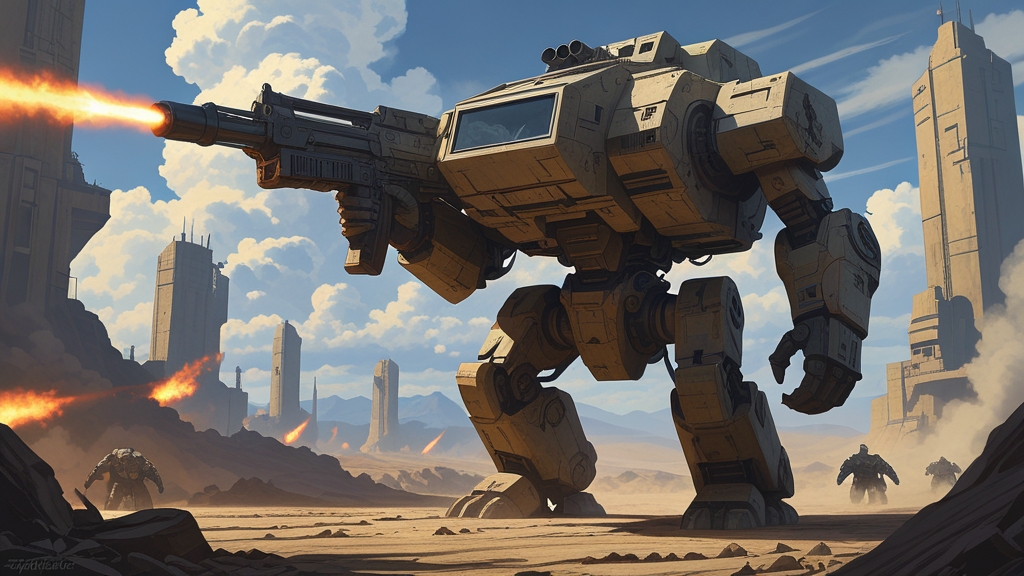
The Redemptor Dreadnought is a heavily armed Space Marine walker and one of the most versatile fire-support and counter-assault units in Warhammer 40,000. Much larger than the venerable Castraferrum-pattern Dreadnoughts of old, the Redemptor is a Primaris-era war machine built to carry heavier weapons and shrug off punishing amounts of firepower.
Like every Dreadnought, a Redemptor houses a mortally wounded Space Marine within its armoured sarcophagus, letting a fallen hero keep fighting for his Chapter long after his body has failed. On the tabletop it gives you a tough, hard-hitting centrepiece that contributes in both the shooting and fight phases.
Redemptor Dreadnought Lore
The Redemptor was one of the new war machines Archmagos Belisarius Cawl developed alongside the Primaris Space Marines, and it reached the Chapters with the reinforcements of the Ultima Founding. The classic Castraferrum Dreadnought had served the Adeptus Astartes for ten thousand years; the Redemptor is a bigger, better-armed and better-armoured successor.
Its chassis is substantially larger than a standard Dreadnought, with heavier armour plating and weapon mounts that take some of the most powerful guns in the Space Marine arsenal, such as the heavy onslaught gatling cannon and the macro plasma incinerator. Like older patterns, it is piloted by a warrior interred within the sarcophagus, and being chosen for that duty is regarded as a great honour.
Datasheet Overview
The Redemptor occupies a key role in Space Marine armies as a durable, high-output fire-support platform. It brings strong shooting and a genuine melee threat with its Redemptor fist, so it can contribute in every phase of the game.
In broad terms it is a high-Toughness, multi-wound Vehicle with good Ballistic Skill and a fist that can threaten enemy vehicles and monsters. As a Vehicle, it does not get the benefit of cover just for standing in a terrain area in 11th Edition; it needs intervening terrain to obscure it, so plan its lanes of fire and approach with that in mind. Characters with the Leader ability attach to infantry bodyguard units, not to Dreadnoughts, so the Redemptor’s output comes from its own datasheet and your detachment rules rather than from a nearby Captain or Lieutenant.
Note: Always check the current Codex: Space Marines datasheet and the Munitorum Field Manual or Warhammer 40,000 app for exact characteristics, abilities and points, as these change with each balance update.
Best Weapon Loadouts
The Redemptor’s main weapon choice comes down to two options: the macro plasma incinerator and the heavy onslaught gatling cannon. Each fills a different role, and knowing when to take each is the key decision when you write your list.
Macro Plasma Incinerator
The macro plasma incinerator is the anti-elite option. It fires fewer shots than the gatling cannon but at higher Strength, AP and Damage, making it strong against heavy infantry, Terminators and light vehicles. Its more powerful firing mode carries a risk of hurting the Dreadnought itself, so check the current profile before deciding how often to use it.
Take the macro plasma when you expect to face lots of elite, multi-wound infantry such as Gravis-armoured Marines or Custodians. The higher damage per shot makes each hit count against these durable targets.
Heavy Onslaught Gatling Cannon
The heavy onslaught gatling cannon is the horde-clearing option. It puts out a large volume of shots, making it very effective against big units of light infantry such as Ork Boyz, Tyranid Gaunts or Guardsmen, and you can strip squads off objectives in a single shooting phase.
Take the gatling cannon when you expect hordes, or when you want consistent damage without any self-inflicted risk. Rolling lots of dice also makes it statistically more predictable than the plasma option.
Secondary Weapons
Alongside the main gun, the Redemptor carries either a heavy flamer or an onslaught gatling cannon, a pair of fragstorm grenade launchers or storm bolters, and an optional Icarus rocket pod. The Icarus rocket pod is a solid pick in most lists, adding extra shots that are especially useful against flyers. Fragstorm grenade launchers are generally preferred over storm bolters against larger units; check the current datasheet for their exact profiles.
Tactics for Using the Redemptor Dreadnought
The Redemptor excels as a midfield anchor. Its mix of ranged firepower, melee threat and durability makes it ideal for pushing towards central objectives and daring your opponent to commit resources to shift it.
Screening and Fire Support
Deploy the Redemptor behind a screen of Intercessors or other infantry to protect it from early charges. Remember that engagement range is 2″ in 11th Edition, so leave a little more room between your screen and the Dreadnought than you might be used to. Once the enemy’s combat units are committed or depleted, push the Redemptor forward to claim midfield objectives.
Counter-Charge Threat
One of the Redemptor’s most underrated roles is as a counter-charge unit. If an enemy melee unit crashes into your lines, the Redemptor can charge in the following turn with its Redemptor fist and deal heavy damage to most targets. Keep it within charge range of your frontline units to make that threat real.
Support and Stratagems
Because a Dreadnought can’t be joined by a Leader, its support comes from elsewhere. Look at what your chosen detachments offer vehicles, and remember that a unit can only benefit from one Stratagem per phase in 11th Edition, Command Re-roll included. Decide in advance whether a key turn is better spent on a damage or durability Stratagem or saved for a re-roll. A Techmarine is a useful companion: its Blessings of the Omnissiah ability lets it either restore lost wounds to a nearby friendly vehicle or let that vehicle ignore modifiers to its hit and wound rolls, and it has Lone Operative while it stays close to a vehicle.
Target Priority
Use the Redemptor to remove key enemy threats your infantry can’t handle. Prioritise vehicles, monsters and elite units pushing for objectives. With objectives now tied to terrain areas, clearing an enemy unit out of a key piece of terrain can swing the primary mission in a single shooting phase.
Which Armies Use the Redemptor Dreadnought?
The Redemptor Dreadnought is available to Space Marine Chapters and their successors, including Ultramarines, Imperial Fists, Salamanders, Raven Guard, White Scars, Iron Hands and the other Codex-compliant Chapters. Divergent Chapters such as the Blood Angels, Dark Angels, Space Wolves and Black Templars can also field it alongside their own supplement units.
The old Chapter Tactics that once made particular Chapters better with Dreadnoughts no longer exist. In 11th Edition, what makes a Redemptor stronger is your detachment choice: some detachments focus on armour and vehicles, while others reward infantry or speed. Check your codex for detachments that buff vehicles, and see our Space Marines guide for the wider army picture.
Painting Tips for the Redemptor Dreadnought
The Redemptor Dreadnought is a rewarding model to paint thanks to its large, flat armour panels and wealth of detail. Here are some tips for getting a great result:
- Sub-assemblies: Paint the main body, arms and base separately before gluing them together. This makes it much easier to reach the recessed areas around the sarcophagus and waist.
- Edge highlighting: The large, clearly defined armour panels make edge highlighting straightforward. Use a lighter shade of your base colour to pick out every edge for a striking tabletop effect.
- Weathering: Dreadnoughts look fantastic with battle damage and weathering. Use sponge weathering with a dark brown or gunmetal colour to add paint chips, and apply streaking effects with thinned brown or rust-coloured paints.
- The sarcophagus: The front-facing sarcophagus is the visual centrepiece of the model. Take extra time on the details here, including the skull or Chapter icon, to draw the viewer’s eye.
- Basing: The Redemptor’s large base gives you plenty of room to create a scenic base. Rubble, fallen enemies or urban debris all work well to reinforce the Dreadnought’s presence on the battlefield.
Frequently Asked Questions
How many points does a Redemptor Dreadnought cost?
The points cost of a Redemptor Dreadnought changes with each balance update from Games Workshop. Check the latest Munitorum Field Manual or the official Warhammer 40,000 app for current points values. As a general guide, the Redemptor sits in the mid-range for Space Marine vehicles.
Is the Redemptor Dreadnought better than a standard Dreadnought?
The Redemptor is generally more powerful than a standard Castraferrum Dreadnought, offering more wounds, better weapons and improved durability. The choice is also simpler now: the standard Dreadnought moved to Warhammer Legends with the 11th Edition Codex: Space Marines, so for most games the Redemptor, Ballistus and Brutalis are the Dreadnoughts to build around.
Can the Redemptor Dreadnought be used in every Space Marine Chapter?
Yes. The Redemptor Dreadnought is available to Space Marine Chapters generally, including the Blood Angels, Dark Angels, Space Wolves and the Codex-compliant Chapters and their successors.
Should I take the plasma or gatling cannon on the Redemptor?
Take the macro plasma incinerator when facing elite, multi-wound targets. Take the heavy onslaught gatling cannon when facing hordes or when you want consistent, reliable damage output. In a take-all-comers list, the gatling cannon is often the safer pick due to its higher volume of shots.
How many Redemptor Dreadnoughts should I run?
One or two Redemptors is a common choice. Running three can work in vehicle-heavy lists, but be careful not to over-invest in one platform at the expense of the infantry you need to hold terrain objectives.
What is the best Chapter for the Redemptor Dreadnought?
In 11th Edition there are no Chapter Tactics, so the Chapter you paint matters less than the detachments you take. Look for detachments in your codex that buff vehicles. Iron Hands remain the classic Dreadnought-themed Chapter in the lore, but any Chapter can use the Redemptor effectively.
What weapon options does a Redemptor Dreadnought have?
The Redemptor has four weapon choices plus its fist. Its main gun is either a heavy onslaught gatling cannon or a macro plasma incinerator; it also carries a heavy flamer or an onslaught gatling cannon, two fragstorm grenade launchers or two storm bolters, and an optional Icarus rocket pod. In melee it uses its Redemptor fist. Check the current datasheet for exact profiles.
What is the difference between a Castraferrum Dreadnought and a Redemptor?
The Redemptor is a much larger Primaris-era walker designed by Belisarius Cawl, while the Castraferrum is the classic Dreadnought pattern that has served for over ten thousand years. The Redemptor carries heavier weapons and is tougher on the tabletop. The standard Castraferrum Dreadnought moved to Warhammer Legends with the 11th Edition Codex: Space Marines, so it is now mainly for casual and narrative games.
What base size does the Redemptor Dreadnought use?
The Redemptor Dreadnought comes on a 90mm round base. That is much larger than the 60mm round base of a standard Castraferrum Dreadnought, which affects how easily it moves through gaps in terrain, and it gives you plenty of room for a scenic base with rubble or debris.
What types of Dreadnought do Space Marines use?
Space Marines field several Dreadnought patterns. The classic Castraferrum covers standard and Venerable Dreadnoughts (now Warhammer Legends on the tabletop), while Primaris-era Chapters use the Redemptor, the long-ranged Ballistus and the melee-focused Brutalis. Older or rarer patterns include the Contemptor, the heavily armoured Ironclad and the huge Leviathan siege Dreadnought, some of which are now Legends or Forge World units.