
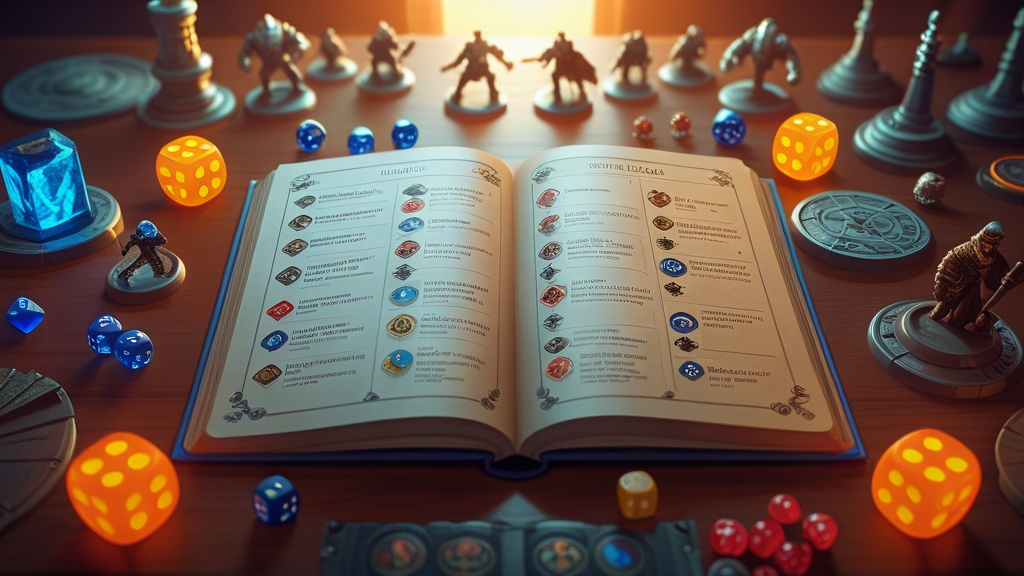
This is a historical guide. Warhammer 40,000 10th Edition was replaced by 11th Edition on 20 June 2026. The page below explains what 10th Edition changed and how it played, for returning players and anyone curious about the game’s history. For the current rules, start with our 11th Edition hub and the 11th Edition rules changes.
Warhammer 40,000 10th Edition launched in June 2023 and was, at the time, the biggest rules overhaul in the game’s history. It simplified many of 9th Edition’s most complex systems and introduced several ideas (detachments, attached Leaders, free points updates) that 11th Edition went on to build upon.
What Changed in 10th Edition?
The move from 9th to 10th Edition touched every part of the game. These were the most significant changes.
Simplified Datasheets
Every unit received a redesigned datasheet. Long ability trees and paragraph-length special rules were replaced by standardised keywords, and the key stats (Movement, Toughness, Save, Wounds, Leadership, Objective Control) were laid out the same way for every unit.
Universal rules like Feel No Pain became simple abilities printed on datasheets (for example “Feel No Pain 5+”), so you no longer had to cross-reference the rulebook. This one change cut the learning curve dramatically.
Simplified Stratagems
9th Edition’s stratagem bloat was one of its biggest pain points, with some armies having 30 or more unique stratagems. 10th Edition introduced Core Stratagems, a set available to every army:
- Command Re-roll (1CP): Re-roll one hit roll, wound roll, damage roll, saving throw, or Advance/Charge roll
- Counter-offensive (2CP): Fight with a unit after an enemy unit has fought
- Epic Challenge (1CP): A character’s melee attacks gain Precision
- Fire Overwatch (1CP): Shoot at an enemy unit that moves or charges nearby
- Go to Ground (1CP): Improve an infantry unit’s protection against shooting
- Grenade (1CP): Use a grenade in the Shooting phase
- Heroic Intervention (2CP): Charge an enemy unit in your opponent’s turn
- Insane Bravery (1CP): Automatically pass a Battle-shock test
- Rapid Ingress (1CP): Set up a Reserves unit at the end of your opponent’s Movement phase
- Smokescreen (1CP): Give a SMOKE unit cover and Stealth
- Tank Shock (1CP): Deal mortal wounds when a vehicle charges
Faction-specific stratagems still existed, but only a small number tied to your chosen Detachment, which made them far more manageable.
The Detachment System
This was 10th Edition’s most important innovation. Instead of choosing a sub-faction (Chapter, Sept, Hive Fleet and so on) that locked you into a set of rules, you chose one Detachment that defined your army’s playstyle. Each Detachment gave you:
- Detachment Rule: a passive ability affecting your army
- Stratagems: a handful of unique stratagems
- Enhancements: upgrades for your characters
Any unit in your faction could be used with any Detachment. A Space Marine player might use the Gladius Task Force for balanced play, the Ironstorm Spearhead for vehicle-heavy lists or the Firestorm Assault Force for close-range aggression, all from the same collection.
11th Edition kept detachments but made them modular: instead of one Detachment, you now spend Detachment Points on one or more of them.
Army Construction Changes
- No more Force Organisation charts: you simply needed a Character to be your Warlord
- Points separate from datasheets: Games Workshop updated points regularly through the free Munitorum Field Manual, allowing quick balance adjustments
- Rule of three: up to 3 copies of most non-unique datasheets (more for Battleline and Dedicated Transports)
- Character attachment: characters joined units as Leaders, providing buffs and protection
Character Leader Mechanic
Characters with the Leader ability could be attached to specific units, joining them as one unit. While the bodyguard models were alive, attacks were allocated to them before the character, so the character was protected. In return, the character gave its unit buffs or abilities.
This created meaningful choices: attach your Captain to Intercessors for a solid firebase, or to Bladeguard Veterans for a melee hammer? 11th Edition expanded the idea with separate Leader and Support characters; see what changed in 11th.
Combat Patrol Format
10th Edition made Combat Patrol a fully supported game mode. Each army had a fixed Combat Patrol list with its own simplified rules, designed for quick, balanced games:
- No list building required: pick your faction’s box and play
- Balanced by design: Combat Patrols were balanced against each other
- Short games: ideal for a weeknight or for learning
- Low model count: achievable for new painters
- A gateway to full 40k: the models can be used in full-size games
For a deeper dive, see our Combat Patrol Rules Guide.
Indexes to Codexes Transition
When 10th Edition launched, every army received a free digital Index containing updated datasheets, one Detachment and basic army rules, so every player could start immediately.
Over the following years, armies received full Codex books that expanded on the Index with:
- Additional Detachments
- Updated and refined datasheets
- Army-specific rules and lore
- Crusade (narrative campaign) rules
By the end of the edition, nearly every faction had its codex. Those 10th Edition codexes remain valid in 11th Edition until a faction receives its 11th Edition codex.
10th vs 9th Edition Comparison
| Feature | 9th Edition | 10th Edition |
|---|---|---|
| Datasheets | Complex, faction-specific rules | Simplified, standardised format |
| Stratagems | 30+ per faction | Core universal + a handful per Detachment |
| Sub-factions | Locked rules per sub-faction | Detachment system, any units with any Detachment |
| Army Construction | Force Org Charts, complex restrictions | Simple minimums, flexible construction |
| Characters | Independent, hide near units | Leader mechanic, attached to specific units |
| Points | In Codex, infrequent updates | Separate free document, regular updates |
| Learning Curve | Steep, requires extensive reading | Moderate, streamlined rules |
What 11th Edition Changed
11th Edition, launched in June 2026 with the Armageddon starter set, is described by Games Workshop as “an evolution, not a revolution”. The headline changes from 10th are:
- Detachment Points: 2 DP at 1,000 points and 3 DP at 2,000 points, with detachments costing 1 to 3 DP each, so you can combine several
- One stratagem per unit per phase: Command Re-roll included
- Cover reworked: −1 to hit against ranged attacks instead of +1 to your save
- Terrain objectives: terrain areas are the objectives, rather than circular markers
- Engagement range: now 2″ instead of 1″
- Missions: each player’s primary mission is set by the Force Dispositions both players choose
The full breakdown is in our 11th Edition rules changes guide, and the 11th Edition cheat sheet has the key numbers on one page.
Frequently Asked Questions
Is 10th Edition still the current edition?
No. 11th Edition replaced it on 20 June 2026. Your 10th Edition codex still works in 11th until your faction gets its 11th Edition codex, but the core rules, missions and army building are now 11th Edition.
Do I need to buy a Codex to play?
Not immediately. In 11th Edition, existing 10th Edition codexes stay valid until your faction’s new codex arrives, so if you already own one you can keep using it. A codex gives you more detachments and options, but it isn’t required to learn the game.
Can I use my 9th or 10th Edition models?
Yes. Models from earlier editions remain fully compatible. Some units may have different rules or loadout options, but the models themselves still work.
How many points is a standard game?
The standard matched play game is Strike Force at 2,000 points. Incursion (1,000 points) is popular for smaller games and learning, and Combat Patrol uses fixed lists.
What’s the best faction for beginners?
Space Marines are the classic recommendation — durable, forgiving, and well-supported with models and rules. Necrons are another good choice for their resilience. Check out our How to Play guide for more beginner recommendations.
How long does a game take?
Combat Patrol is the quickest. An Incursion game (1,000 points) usually takes an hour or two, and a Strike Force game (2,000 points) a few hours. Expect longer while you’re learning.
Ready to get started? Read our How to Play Warhammer 40k guide, explore Combat Patrol, or browse all Warhammer 40k factions to find your army.
Related Content
- Warhammer 40k 11th Edition — Everything about the current edition
- 40k on a Budget — How to start cheap
- Best Starter Sets — Which box to buy first
- How to Play 40k — Complete beginner rules guide
- What Is Warhammer 40k? — Introduction for newcomers