
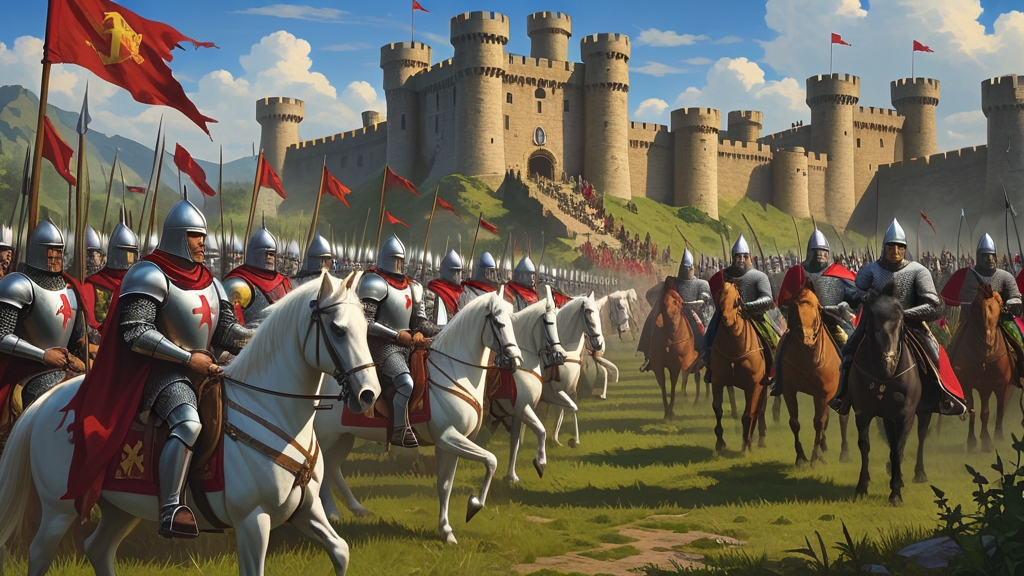
What Is Warhammer: The Old World?
Warhammer: The Old World is Games Workshop’s revival of classic Warhammer Fantasy Battles — the original tabletop wargame that started it all. Released in January 2024, The Old World brings back the ranked regiment combat system that defined Warhammer for decades before it was replaced by Age of Sigmar in 2015.
For veteran players, The Old World is a homecoming. It resurrects the setting, the factions, and the gameplay style that many considered the golden age of Warhammer. For new players, it offers something fundamentally different from both Warhammer 40,000 and Age of Sigmar — a fantasy wargame built around massive blocks of infantry, cavalry charges, and strategic manoeuvring on a grand scale.
The game is set during the reign of the “three Emperors” — several centuries before the End Times that destroyed the original Warhammer world. This means beloved factions like Bretonnia and the Tomb Kings are alive and active, and the world hasn’t yet descended into the apocalyptic chaos of its final years.
Games Workshop has positioned The Old World as a specialist game, similar in status to Horus Heresy. It’s not replacing Age of Sigmar — it exists alongside it as an alternative for players who prefer the classic Fantasy Battles experience.
How The Old World Differs from Age of Sigmar
If you’re coming from Age of Sigmar, The Old World will feel like a completely different game — because it is.
Ranked Combat vs Free Movement
The biggest difference is the movement system. In AoS, models move individually and can be placed freely during movement. In The Old World, models are arranged in ranked blocks on movement trays. A unit of 20 swordsmen moves as a single block, and the shape and facing of that block matters enormously. Flanking, wheeling, and reforming are all tactical considerations that don’t exist in AoS.
The Importance of Facing
In The Old World, every unit has a front, flanks, and rear. Being charged in the flank or rear is devastating — it negates rank bonuses, can cause units to break and flee, and often leads to total destruction. This makes positioning and screening far more important than in AoS, where models can simply turn to face any threat.
Magic System
Magic in The Old World uses the Winds of Magic system — a pool of power dice generated each turn that both players draw from. Casting spells is more impactful but also more dangerous, with the possibility of miscasts causing catastrophic effects on your own wizard. AoS magic is more streamlined; Old World magic is more dramatic and consequential.
Army Scale
The Old World typically uses more models than AoS. A standard army might include blocks of 20-40 infantry models, plus cavalry, war machines, and characters. This makes the hobby commitment larger but also creates stunning visual spectacles when fully painted armies take the field.
Points and Army Building
Army construction uses a percentage-based system where you must spend minimum amounts on Core (basic troops) and have maximum limits on Lords, Heroes, Special, and Rare choices. This is fundamentally different from AoS’s simpler unit slot system and encourages balanced armies rather than skewing heavily toward elite units.
The Setting
The Old World is set in the Warhammer Fantasy world — a dark, gritty version of medieval Europe mixed with high fantasy. The world is dominated by a massive continent called the Old World (roughly analogous to Europe), surrounded by other lands each with their own civilisations and threats.
Key Locations
- The Empire — The largest human nation, a Holy Roman Empire analogue ruled by the Emperor from Altdorf. Constantly threatened by Chaos, greenskins, and internal politics.
- Bretonnia — A kingdom of feudal knights and peasants, inspired by Arthurian legend and medieval France. The knights are among the most powerful cavalry in the game.
- Ulthuan — The island homeland of the High Elves, a fading civilisation desperately defending against the Dark Elves and Chaos.
- The Badlands — Vast wastelands dominated by Orcs, Goblins, and the undead Tomb Kings of Khemri.
- Naggaroth — The cold, cruel land of the Dark Elves in the New World.
- The Chaos Wastes — The far north, where reality breaks down and the forces of Chaos gather for their periodic invasions.
The Timeline
The Old World is set hundreds of years before the End Times. The Empire is fractured between three rival claimants to the throne. Bretonnia is at the height of its power. The Tomb Kings rule Nehekhara. This is the world at its most politically complex and strategically interesting — before everything went wrong.
Available Factions
The Old World launched with a selection of factions, divided into “Forces of Good” and “Forces of Evil” (though “good” is relative in the Warhammer world).
Full Army Lists (Dedicated Army Books)
- Kingdom of Bretonnia — The star faction of the launch. Knights of the Realm, Grail Knights, and peasant bowmen. A cavalry-focused army that hits like a hammer on the charge. If you love the idea of a medieval knight army led by holy warriors, Bretonnia is your faction.
- Tomb Kings of Khemri — The undead rulers of an ancient Egyptian-inspired civilisation. Skeleton legions, chariots, war sphinxes, and powerful liche priests. They’re back and more popular than ever.
Legacy Army Lists
These factions have rules in the core rulebook or supplementary PDFs but haven’t received dedicated army books yet:
- The Empire — State troops, knights, war machines, and wizards. The versatile all-rounder human faction.
- Orcs & Goblins — Green-skinned hordes of brutal warriors and sneaky gits. Unreliable but fun and powerful when things go right.
- High Elves — Elite warriors, powerful mages, and dragons. Few in number but exceptional in quality.
- Wood Elves — Forest-dwelling elves who fight with hit-and-run tactics, ambushes, and powerful shooting.
- Dwarfs — Stubborn, heavily armoured warriors backed by devastating war machines. Slow but incredibly resilient.
- Warriors of Chaos — Heavily armoured Chaos-worshipping northmen, each one a formidable warrior. Elite and terrifying.
- Beastmen — Twisted man-beast hybrids that ambush from forests and overwhelm with savage fury.
- Skaven — Rat-men with insane technology, overwhelming numbers, and treacherous leadership. Wildly unpredictable.
- Vampire Counts — Vampires leading endless hordes of zombies, skeletons, and nightmarish undead creatures.
- Daemons of Chaos — The literal daemons of the Chaos Gods, manifested in the mortal world.
- Dark Elves — Cruel, sadistic elves who raid and enslave. Fast, lethal, but fragile.
- Lizardmen — Ancient reptilian warriors guided by their Slann mage-priests, the oldest civilisation in the world.
- Ogre Kingdoms — Massive, gluttonous ogres who fight as mercenaries and conquerors. Few models but each one is a monster.
How the Game Works
The Old World uses an “I go, you go” turn structure where one player completes their entire turn before the opponent takes theirs. A turn consists of several phases:
Movement Phase
This is where the game is won or lost. You manoeuvre your ranked blocks of troops, wheel them to face threats, declare charges, and position for flanking attacks. Movement is measured from the unit’s front and must account for the unit’s formation — a block 5 models wide moves differently than one 10 wide. Terrain, other units, and table edges all constrain movement.
Magic Phase
Both players roll for the Winds of Magic to determine the power and dispel dice available. The active player’s wizards attempt to cast spells using power dice, while the opponent tries to dispel using dispel dice. Magic can be devastating — fireballs, buffs, hexes, and summoning spells can all swing the game. But miscasts can kill your own wizard or worse.
Shooting Phase
Ranged units fire at enemies within range and line of sight. This includes bows, crossbows, handguns, war machines (cannons, catapults, bolt throwers), and magical ranged attacks. Shooting is important but rarely decisive on its own — it softens enemies before the real business of close combat.
Close Combat Phase
This is where battles are decided. Units that charged or are locked in combat fight simultaneously (with some exceptions for charging). Combat resolution is calculated based on wounds caused, rank bonuses, standard bearers, charging, and outnumbering. The loser must take a leadership test — if they fail, they break and flee, with the winner potentially running them down. A single failed break test can destroy an entire unit.
What You Need to Play
- The Rulebook — The core rules for The Old World, available as a hardback book
- An Army Book or Legacy List — Rules for your chosen faction
- Models — Your army, assembled and ideally painted
- Movement Trays — Essential for moving ranked blocks of infantry efficiently
- Square/Rectangular Bases — The Old World uses square bases (20mm, 25mm) and rectangular cavalry bases, NOT the round bases used in AoS and 40k
- Dice — Standard D6 dice, plus artillery dice and scatter dice for war machines
- Measuring tape — For movement and range
- Templates — Blast templates for war machine and spell effects
Best Starter Sets
Games Workshop released The Old World with several entry points:
Tomb Kings of Khemri Core Box
This is one of the best value starter sets Games Workshop has produced. It includes a substantial Tomb Kings army — skeleton warriors, skeleton horsemen, chariots, and characters — plus dice, templates, and a reference sheet. It’s enough to play small games immediately and forms the core of a full army. If you have any interest in the Tomb Kings, this box is excellent value.
Kingdom of Bretonnia Core Box
The Bretonnia box gives you a strong starting force of knights, men-at-arms, and bowmen. It’s similarly good value and provides the nucleus of a competitive Bretonnian army. Knights of the Realm look incredible ranked up, and the box gives you enough to build several lances.
Starting with a Legacy Faction
If you want to play Empire, Dwarfs, Orcs, or any other faction without a dedicated box set, you’ll need to source models individually. Games Workshop still produces many classic Fantasy kits, and the second-hand market is thriving with old Warhammer Fantasy models. Sites like eBay, trading groups, and even charity shops can yield excellent finds at a fraction of retail price.
Is The Old World Worth It?
The Old World is worth it if you want a deeper, more tactical wargame than what 40k or AoS offer. The ranked combat system rewards strategic thinking, careful positioning, and long-term planning in ways that the more modern games don’t.
Reasons to Play
- Tactical depth — The movement and combat systems are rich and rewarding
- Visual spectacle — Ranked blocks of painted infantry look incredible on the table
- Nostalgia — For returning players, it’s the Warhammer they remember and love
- Community — The Old World has attracted a passionate, dedicated community
- Different pace — Games are longer and more strategic, with momentum swings and dramatic moments
- Unique factions — Bretonnia and Tomb Kings don’t exist in AoS (at least not in their classic form)
Reasons to Hesitate
- Model count — You need more models than 40k or AoS, which means more building, painting, and expense
- Game length — Games take longer due to the more complex rules
- Learning curve — The rules are more involved than AoS, though less complex than historical wargames
- Specialist status — As a specialist game, it may receive less frequent updates and support than 40k or AoS
- Square bases — If you’re coming from AoS, you may need to rebase your collection (though adapters exist)
- Finding opponents — Depending on your area, finding other Old World players may require effort
Frequently Asked Questions
Can I use my old Warhammer Fantasy models?
Yes. The Old World is designed to be compatible with classic Warhammer Fantasy miniatures. If you have old models on square bases, they’re ready to play. This is one of the game’s biggest appeals for returning players who still have their old collections.
Can I use Age of Sigmar models in The Old World?
Some AoS models are compatible — particularly those that originated in Warhammer Fantasy (like Freeguild models, which are essentially Empire troops). However, AoS-exclusive models designed for round bases may not fit on the required square bases without modification. Check your faction’s legacy army list for which models are valid.
Is The Old World replacing Age of Sigmar?
No. Games Workshop has been clear that The Old World is a specialist game existing alongside AoS, not replacing it. AoS continues to receive full support, new editions, and new models. The two games coexist for different audiences.
What size army do I need?
A standard game of The Old World is played at 2000 points. For most factions, this means 60-120 infantry models plus cavalry, characters, and war machines. Starting at 1000 points (30-60 infantry) is a good way to learn the game without committing to a full army immediately.
Do I need square bases?
Yes. The Old World requires square or rectangular bases for its ranked combat system. Models need to fit together in block formations, which doesn’t work with round bases. You can buy square bases cheaply, and movement tray adapters are available for converting round-based models.
How long does a game take?
A standard 2000-point game takes approximately 3-4 hours, sometimes longer for new players or complex armies. This is longer than a typical 40k or AoS game, but many players enjoy the extended, strategic pace.
What’s the best faction for beginners?
Bretonnia is excellent for beginners — the knight-heavy army has fewer models to paint than infantry-based factions, and the gameplay is straightforward (charge with knights, win). The Empire is another good choice thanks to its versatility — you can experiment with different unit types to find what you enjoy. Avoid Skaven or Orcs & Goblins as your first army, as their unpredictable special rules add complexity.
Which books do I need for my Old World army?
You need the core rulebook plus your army’s list. Most full army lists are collected in two books: Forces of Fantasy (factions such as the Empire, Dwarfs, Bretonnia and the elves) and Ravening Hordes (factions such as Orcs & Goblins, Warriors of Chaos, Beastmen and Tomb Kings). Legacy factions use free downloadable army lists instead.
What is an Arcane Journal?
An Arcane Journal is a smaller supplement for a single faction. It adds extra magic items, background and Armies of Infamy, which are themed army lists with their own rules and restrictions. You don’t need one to play, since your faction’s main list covers the basics, but they add variety once you know the game.
Related Content
- Grey Knights — Warhammer 40k Guide — apply this guide to a specific army
- How to Play Warhammer 40k — Complete Beginner’s Guide — learn the core rules of Warhammer 40K
- Warhammer Underworlds — Beginner’s Guide — explore another helpful guide
- All Warhammer 40k Factions Ranked — Tier List — see which factions rank highest