
What Is Warhammer Underworlds?
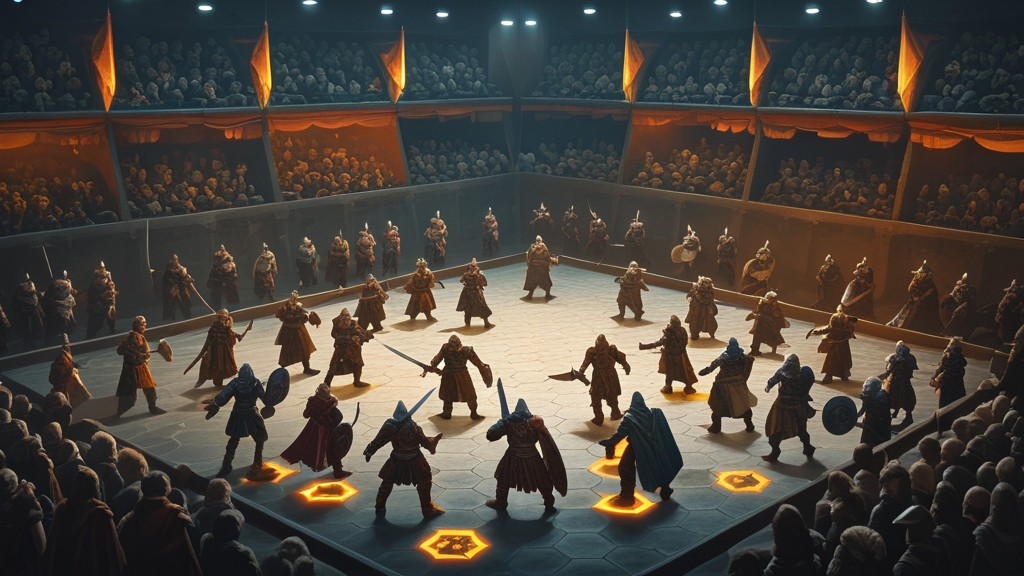
Warhammer Underworlds is Games Workshop’s competitive card-and-miniatures hybrid game, combining tactical miniatures combat with deck-building strategy in fast-paced matches that typically last 30 to 45 minutes. It is set in the Mortal Realms of Age of Sigmar and uses small warbands of highly detailed push-fit miniatures on hexagonal tile boards.
Unlike the full-scale wargames of Warhammer 40,000 or Age of Sigmar — which can involve dozens or hundreds of miniatures, take hours to play, and require significant financial investment — Warhammer Underworlds is designed to be accessible, affordable, and quick to play. A typical warband consists of just three to seven miniatures, games use a small board rather than a full tabletop, and the card game element adds a layer of strategic depth that rewards skilful play and clever deck construction.
Warhammer Underworlds occupies a unique niche in Games Workshop’s product range. It is simultaneously a gateway game that introduces new players to the Warhammer hobby through its low model count and simple rules, and a deeply competitive game with a thriving tournament scene where experienced players compete at the highest level. This dual identity — accessible yet deep — is one of its greatest strengths.
Card Game Meets Miniatures — How the Hybrid Works
The core innovation of Warhammer Underworlds is the integration of a deck-building card game with miniatures-based tactical combat. Every player brings two decks to the table: an objective deck and a power deck.
Objective Deck
The objective deck contains cards that define how you score glory points — the game’s victory currency. Objective cards might require you to hold specific hexes on the board, eliminate enemy fighters, achieve certain board states, or complete specific tactical goals during the game. Your objective deck is essentially your game plan — it tells you what you need to do to win.
Building an effective objective deck means selecting cards that synergise with your warband’s strengths and your overall strategy. An aggressive warband should have objectives that reward killing enemy fighters and controlling territory. A defensive warband should have objectives that reward holding ground and surviving. A balanced warband might mix both approaches.
Power Deck
The power deck contains two types of cards: gambits (instant-effect cards played during the game to gain tactical advantages) and upgrades (permanent improvements applied to individual fighters). Power cards are how you execute your game plan — they give your fighters the tools they need to achieve your objectives.
Gambits might include extra movement, re-rolls for attacks, defensive buffs, or abilities that manipulate the board state. Upgrades permanently improve a fighter’s stats, give them new weapons, or grant special abilities. Managing when to play your power cards is a key skill — playing too many early leaves you without options later, while holding too many back means missing opportunities.
Deck Building
Before the game, you construct both decks within specific size limits. The deck-building process is where much of the strategic depth lies — choosing which objectives to pursue, which power cards to include, and how to balance aggression with defence. The best players in the competitive scene spend as much time refining their decks as they do practicing on the board.
How Warhammer Underworlds Plays
A standard game of Warhammer Underworlds consists of three rounds, with each round containing a fixed number of activations that players alternate.
Board Setup
Before the game begins, players take turns placing two hexagonal tile boards (one each) to create the arena. Board placement is itself a tactical decision — you can position the boards to create corridors that funnel combat, open spaces that favour shooting, or blocked hexes that provide cover. The way the boards connect affects the entire flow of the game.
Alternating Activations
During each round, players alternate activating individual fighters. An activation typically allows a fighter to move, attack, or use a special ability. This alternating system means you are constantly reacting to your opponent’s moves, creating a back-and-forth dynamic that keeps both players engaged throughout the game.
After each pair of activations, there is a power step where both players can play gambit cards. This creates a rhythm of activate, respond, activate, respond that makes every decision feel consequential.
Objective Scoring
At the end of each round (and sometimes during rounds, depending on the objective cards), players check their objective cards and score glory points for any objectives they have achieved. Glory points are spent during the game to equip upgrades from the power deck, creating a dynamic where scoring early objectives funds the upgrades that help you achieve later, harder objectives.
Winning the Game
After three rounds, the player with the most glory points wins. This means that killing all the enemy’s fighters is not necessarily the path to victory — a player who scores efficiently from objective cards can win even if they lose fighters in the process. Understanding this is crucial for new players who might assume that combat is the only goal.
Current Warbands
Warhammer Underworlds features a wide roster of warbands drawn from the Age of Sigmar setting. Each warband has a unique playstyle, fighter composition, and set of faction-specific cards that give it a distinct tactical identity.
Types of Warbands
Elite warbands (3-4 fighters) have fewer but stronger fighters. Each model is powerful individually, but losing even one is a significant blow. Examples include Stormcast Eternal warbands and Khorne-focused warrior groups.
Horde warbands (6-7 fighters) have many weaker fighters that overwhelm through numbers. Losing individual models is less impactful, but each fighter contributes less in combat. Skaven-themed and Goblin-themed warbands typically fall into this category.
Balanced warbands (4-5 fighters) sit between elite and horde, offering a mix of capable fighters without the extremes of either approach. Many warbands from various factions fall into this middle ground.
Warband Selection Tips
For new players, start with a warband that matches your preferred playstyle. If you like aggressive, combat-focused play, choose a warband with strong attack profiles. If you prefer strategic, objective-focused play, choose a warband with good movement and objective-scoring abilities. Every warband is viable at the casual level — competitive viability varies with the meta and card pool.
Best Starter Sets
Games Workshop regularly releases starter sets for Warhammer Underworlds that include everything two players need to start playing: two warbands, boards, dice, tokens, and cards. These starter sets are the best entry point for new players.
Current Core Set
The latest core set provides the most up-to-date rules, cards, and warbands. It is designed as a complete out-of-box experience that teaches the game through play. The core set warbands are typically balanced against each other, making them ideal for learning. Check the Games Workshop website for the current core set, as this changes with each new season.
Warband Expansion Packs
Once you have the core set, individual warband packs let you expand your collection. Each warband pack includes the miniatures, fighter cards, and a set of faction-specific cards. Some warband packs also include universal cards that can be used by any warband, making them valuable for expanding your deck-building options.
Rivals Decks
The Rivals format is the most accessible way to play Warhammer Underworlds. In Rivals, you use a pre-built deck that comes with your warband — no deck building required. This eliminates the barrier of needing to own a large card collection and makes the game immediately playable. Many tournaments now offer Rivals as a format, making it a legitimate competitive option as well as a great entry point.
Warhammer Underworlds vs Kill Team vs Warcry
Games Workshop offers several small-scale games, and understanding the differences helps you choose the right one.
Underworlds vs Kill Team
Kill Team is a miniatures skirmish game set in the Warhammer 40,000 universe with no card game element. It uses larger teams (typically 6-14 models), takes longer to play (60-90 minutes), and focuses more on tactical positioning and shooting mechanics. Underworlds is faster, uses fewer models, and adds the strategic depth of deck building. Choose Kill Team if you want a deeper miniatures experience; choose Underworlds if you want a faster game with card strategy.
Underworlds vs Warcry
Warcry is a miniatures skirmish game set in the Age of Sigmar universe (same setting as Underworlds) with larger warbands and more terrain-focused gameplay. Warcry emphasises vertical movement, climbing, and dynamic terrain in a way Underworlds does not. Underworlds is the more competitive, tournament-focused game with its card element; Warcry is the more narrative, terrain-driven game.
Which Should You Choose?
Choose Underworlds if you enjoy card games, want the fastest possible game length, prefer the lowest model count, or are interested in competitive tournament play. Choose Kill Team if you prefer the 40k setting and want a pure miniatures game. Choose Warcry if you prefer the fantasy setting and want dynamic terrain-based gameplay.
How Much Does Warhammer Underworlds Cost?
Warhammer Underworlds is one of the most affordable entry points in the Games Workshop hobby.
Entry Cost
A core set costs roughly the same as a single large unit for Warhammer 40,000 but provides a complete two-player game. Individual warband packs are priced similarly to small infantry kits, making expansion affordable. The total investment to have a competitive collection (one core set plus two to three warband packs) is a fraction of what a competitive 40k or AoS army would cost.
Ongoing Costs
New seasons bring new core sets, warbands, and card pools. Competitive players who want access to all available cards will need to purchase new releases each season. Casual players can easily play with a single core set and a few favourite warbands without feeling the need to buy everything. The Rivals format specifically addresses cost concerns by ensuring every warband comes with a playable deck out of the box.
Hidden Costs
Miniatures require assembly and painting — though Underworlds models are push-fit (no glue required) and can be played unpainted, many players enjoy painting them. Budget for basic painting supplies (brushes, paints, primer) if you want to paint your warband. Card sleeves are recommended for tournament play to protect your cards and ensure consistent shuffle quality.
Getting Started — Step by Step
If you are ready to start playing Warhammer Underworlds, follow these steps:
Step 1: Buy the current core set. This gives you everything you need for two players.
Step 2: Play through the tutorial games included in the core set. These teach the rules progressively.
Step 3: Try the Rivals format with the pre-built decks included in your warbands. This lets you focus on learning gameplay without worrying about deck building.
Step 4: Once comfortable with the rules, start experimenting with deck building. Swap out cards you find underperforming and try different strategies.
Step 5: Purchase a warband that appeals to you and try different playstyles.
Step 6: Find a local community — Games Workshop stores, local game shops, and online communities all host Underworlds events and leagues.
Frequently Asked Questions
Do I need to know Age of Sigmar to play Warhammer Underworlds?
No. Warhammer Underworlds is a completely standalone game. While it shares a setting with Age of Sigmar, knowledge of AoS lore or rules is not required. The game teaches you everything you need to know.
Can I use my Underworlds miniatures in Age of Sigmar?
Some Underworlds warbands have rules for use in Age of Sigmar, though not all. Check the Games Workshop website or your local community for current crossover rules.
How competitive is Warhammer Underworlds?
Very. Warhammer Underworlds has an active tournament scene with regular events at local, regional, and national levels. The card-and-miniatures hybrid format creates a high skill ceiling that rewards practice and strategic thinking. If you enjoy competitive gaming, Underworlds offers a rich competitive environment.
Is Warhammer Underworlds good for solo play?
Underworlds is designed as a two-player competitive game and does not have official solo rules. However, fan-made solo variants exist online. If solo play is a priority, other Games Workshop games like Warhammer Quest or narrative 40k/AoS campaigns may be better suited.
What happens when a new season releases?
Each new season brings a new core set, new warbands, and a new card pool. Cards from older seasons may rotate out of competitive formats, though casual play typically allows all cards. This rotation keeps the competitive meta fresh and prevents card pools from becoming too large.
Can I play Warhammer Underworlds online?
Games Workshop has released digital versions of Underworlds in the past. Check current availability on digital storefronts (Steam, mobile app stores) for the latest digital offerings. Tabletop Simulator also has community-created modules for Underworlds.
What dice does Warhammer Underworlds use?
Underworlds uses its own custom dice rather than numbered D6s. Attack dice and defence dice show symbols such as hammers, swords, shields, dodges and critical hits, so you compare symbols instead of adding numbers. Magic dice are used for casting spells. The core set includes everything two players need.
Is Warhammer Underworlds still supported?
Yes. Games Workshop relaunched Underworlds with a new edition in 2024 and keeps releasing new warbands and card sets in seasons. Each season can change which cards are legal for competitive play, so check the current format list before buying older warbands for tournament use.
Related Content
- Grey Knights — Warhammer 40k Guide — apply this guide to a specific army
- How to Play Warhammer 40k — Complete Beginner’s Guide — learn the core rules of Warhammer 40K
- Warhammer: The Old World — Beginner’s Guide — explore another helpful guide
- All Warhammer 40k Factions Ranked — Tier List — see which factions rank highest