
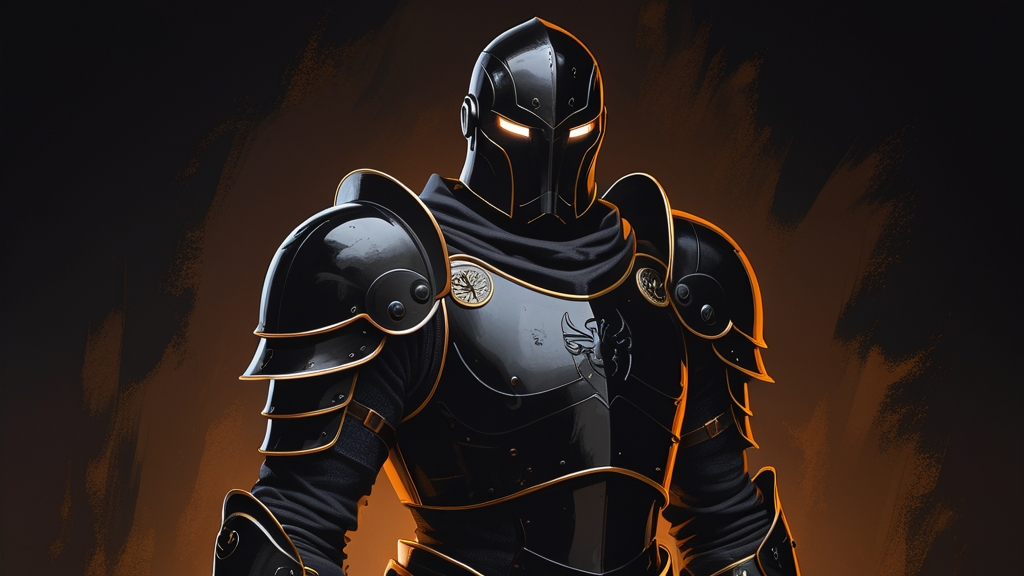
Black armour is NOT just Abaddon Black — it needs edge highlights to read as armour rather than a flat void. Basecoat Abaddon Black, highlight with Dark Reaper, then Thunderhawk Blue or Fenrisian Grey on the sharpest edges. Without highlights, black armour looks like an unfinished model.
Black armour is both the simplest and most challenging colour to paint well. The basecoat takes seconds — one coat of Abaddon Black over black primer and you are done. But that flat, featureless black surface looks like an unfinished model unless you add careful edge highlights. The edge highlights are what transform flat black into convincing armour, and mastering this technique is essential for any painter tackling Black Templars, Raven Guard, Deathwatch, or Iron Hands.
This guide explains how to make black armour look like actual armour rather than a black void, covering highlight colour choices, application techniques, and faction-specific approaches.
What Paints Do You Need for Black Armour?
The essential paints for black armour are Abaddon Black (base), Dark Reaper (layer), Thunderhawk Blue (layer), and Fenrisian Grey (layer). Some painters prefer a grey highlight progression using Eshin Grey, Dawnstone, and Administratum Grey instead. Both approaches work well.
- Abaddon Black (Base paint) — pure black, the foundation of all black armour. One coat over black primer provides perfect coverage.
- Dark Reaper (Layer paint) — a dark blue-grey that is the first highlight step. Subtle enough to blend smoothly with the black while providing the first suggestion of volume.
- Thunderhawk Blue (Layer paint) — a medium blue-grey for the main edge highlights. This creates the blue-tinted black that the Eavy Metal team uses on Black Templars and other black-armoured factions.
- Fenrisian Grey (Layer paint) — a pale blue-grey for the finest point highlights at corners and edges where the light is strongest.
- Eshin Grey (Layer paint) — an alternative first highlight if you prefer a neutral grey progression rather than blue-grey.
- Dawnstone (Layer paint) — a medium neutral grey for edge highlights in the grey progression.
Why Does Black Armour Need Edge Highlights?
Without edge highlights, black armour has no visible detail. The human eye cannot distinguish panel lines, edges, or shape on a uniformly dark surface. Edge highlights simulate how light catches the sharp edges of armour plates, making the black surface readable as three-dimensional armour rather than a featureless void.
This is the single most important concept in painting black armour. In real life, even the blackest surfaces show reflections and light on their edges. On a miniature, you need to create these reflections manually because the model is too small for natural light to define the edges at tabletop distance.
The amount of highlighting you apply determines the style:
- Minimal highlighting — just Fenrisian Grey on the most prominent edges. Creates a dark, brooding look suitable for grimdark armies. Fast to apply but can look incomplete if too sparse.
- Standard highlighting — Dark Reaper on broad edges, Fenrisian Grey on the sharpest edges. The balance most painters aim for. Defines the armour clearly without being too stark.
- Heavy highlighting — full three-stage progression (Dark Reaper, Thunderhawk Blue, Fenrisian Grey) with wide application. Creates a brighter, more stylised look similar to comic book illustration. Takes longer but looks incredibly striking on the tabletop.
How Do You Apply Edge Highlights to Black Armour?
Hold your fine detail brush at a 90-degree angle to the edge and draw it along quickly, using the side of the bristles to catch only the very tip of the edge. Use minimal paint on the brush — too much paint creates thick, messy lines. Practice on a spare piece of sprue before working on your models.
Edge highlighting is a technique that rewards practice. Here are the key principles:
- Brush angle — hold the brush perpendicular to the edge, not parallel. The side of the brush catches the edge more consistently than the tip.
- Speed — quick, confident strokes produce cleaner lines than slow, hesitant ones. The brush should glide along the edge in one smooth motion.
- Paint consistency — thin your highlight paint slightly so it flows off the brush smoothly. Too thick and it creates a lumpy line. Too thin and it runs everywhere.
- Less is more — load very little paint on the brush. Wipe most of it off on your palette. The small amount remaining is enough for the thin lines you need.
- Fix mistakes immediately — if a highlight line is too thick, clean it up immediately with Abaddon Black while you can still see exactly where the mistake is.
Should You Use Blue or Grey Highlights on Black?
Blue-grey highlights (Dark Reaper, Thunderhawk Blue, Fenrisian Grey) create a cooler, more stylised appearance that is the Games Workshop standard. Neutral grey highlights (Eshin Grey, Dawnstone, Administratum Grey) create a more realistic, military appearance. Both are valid — it comes down to personal preference.
The blue-grey progression is the official Eavy Metal standard because the blue tint prevents the highlights from looking chalky. Pure grey over pure black can appear dusty or faded, while the blue tint keeps the highlights looking clean and intentional.
However, the grey progression has its advocates. Many painters prefer the more realistic, utilitarian appearance of grey highlights. For military-themed armies like the Deathwatch or certain Imperial Guard regiments, grey highlights can look more appropriate than blue-tinged ones.
Some painters use a warm approach with browns (Rhinox Hide, then Gorthor Brown) for a leather-like black, or a green approach (Incubi Darkness, then Kabalite Green) for a distinctive alien-black appearance suitable for Drukhari or Tyranids.
What Factions Use Black Armour?
Black armour is extremely popular across Warhammer, used by many iconic factions. The Black Templars, Raven Guard, Deathwatch, and Iron Hands all feature black as their primary armour colour.
- Black Templars — the poster boys of black armour. Black with white shoulder pads and red accents. Their crusading zealotry is perfectly reflected in stark black armour.
- Raven Guard — stealthy black armour with white chapter markings. Their guerrilla warfare style suits the dark, subtle appearance.
- Deathwatch — black armour with silver left arm and chapter-specific shoulder pads. Every model is unique while maintaining the cohesive black appearance.
- Iron Hands — black armour with extensive silver bionics and mechanical augmentations. The contrast between black armour and silver metal is striking.
- Black Legion — Chaos Space Marines in black armour with gold trim. Formerly the Luna Wolves and Sons of Horus, their black reflects their fall to Chaos.
- Dark Eldar / Drukhari — dark, menacing armour that ranges from black to very dark purple or blue.
How Do You Paint Black Armour Quickly?
For speed painting, spray the entire model Chaos Black or Abaddon Black, then drybrush the armour with Eshin Grey. This takes minutes and creates a convincing, battle-ready appearance at tabletop distance. Follow with a selective drybrush of Dawnstone on the most prominent edges for additional definition.
The drybrush approach sacrifices the crisp, clean lines of edge highlighting for speed. On a single display piece, the difference is obvious. Across a 60-model army on a gaming table, drybrushed black looks excellent and can be completed in a fraction of the time.
Another speed method is Black Templar Contrast paint over Grey Seer primer. This creates a slightly textured black with natural highlights where the primer shows through. It produces a different look to traditional black — slightly warmer and with more visible tonal variation — but it is fast and effective.
How Do You Shade Black Armour?
Strictly speaking, you cannot shade pure black because nothing is darker than black. However, you can create the impression of depth by applying Nuln Oil Gloss into the deepest recesses. The gloss finish catches light differently from the matte black surface, creating subtle contrast that defines the deepest shadows.
An alternative approach is to basecoat with a very dark grey (such as Dark Reaper or Corvus Black mixed with Abaddon Black) and then shade with Nuln Oil. This creates a more nuanced black with genuine tonal variation in the shadows. The result looks more natural than pure Abaddon Black because real-world black surfaces always have some tonal variation.
How Do You Paint Black Vehicles and Large Surfaces?
Large black surfaces on vehicles like Rhinos, Land Raiders, and Knights benefit from panel-line shading and edge highlighting. Apply Nuln Oil Gloss along every panel line for definition. Then highlight every upward-facing edge with your chosen highlight colour. On vehicles, thick edges make highlighting easier than on infantry.
For a more advanced effect, create a zenithal gradient on large surfaces. Airbrush or carefully drybrush a dark grey (Eshin Grey) on the upper surfaces, blending into pure black on the sides and bottom. This creates a natural directional light effect that adds visual interest to large, flat panels.
Weathering is particularly effective on black vehicles. Chipping, scratches, and dust effects show up dramatically against the dark surface, and even a small amount of weathering transforms a featureless black tank into a convincing war machine.
Frequently Asked Questions
Can I just leave my models Abaddon Black without highlighting?
Technically yes, but the models will look unfinished. Even a single, quick edge highlight with Fenrisian Grey on the most prominent edges makes an enormous difference. Spend five minutes per model on highlights — it transforms the result.
Why do my black highlights look chalky or messy?
Chalky highlights are caused by paint that is too thick. Thin your highlight paint and apply less. Messy highlights are caused by unsteady brush control — practice on spare sprues before working on your models. If highlights are already applied and look bad, carefully neaten them with Abaddon Black.
Should I prime black or grey for black armour?
Black primer is the obvious choice because a single coat of Abaddon Black creates perfect coverage. However, some painters prefer grey primer because it provides slightly better paint adhesion and makes it easier to see where they have applied the base coat. Both work well.
How do I paint black robes to look different from black armour?
Use a different highlight colour for robes than for armour. If your armour uses blue-grey highlights, use pure grey highlights for the robes. Alternatively, highlight cloth with a dark green (Incubi Darkness) or dark purple (Naggaroth Night) to create a distinct visual texture that reads as fabric rather than metal.
What accent colours work best with black armour?
White provides the strongest contrast and is used by Black Templars and Raven Guard. Red accents (Blood Angels Red or Mephiston Red) create a dramatic, aggressive look used by many Chaos factions. Gold trim (Retributor Armour) adds richness and is used by the Black Legion. Silver trim (Leadbelcher) creates a utilitarian, military appearance.
How do you weather black armour?
Weather black armour with chips, scratches and dust. Sponge or brush small chips of a dark grey such as Eshin Grey, then put a tiny dot of Leadbelcher inside some chips for bare metal. Add pigment powder or a light drybrush of a dusty brown on the lower legs. Weathering shows up dramatically on black, so a light touch goes a long way.
What is the best black paint for miniatures?
Abaddon Black is the standard choice for Citadel users, because one coat over black primer gives smooth, matt coverage. Other ranges have good equivalents, such as Vallejo Model Color Black and The Army Painter Matt Black. For a softer, less stark black, some painters basecoat with a very dark grey like Corvus Black, then shade into the recesses with Nuln Oil.