
Part of our Space Wolves hub: every Space Wolves guide, lore page and painting tutorial in one place.
Who Is Leman Russ?
Leman Russ is the Primarch of the Space Wolves, the VI Legion of Space Marines, and one of the Emperor’s most loyal and fearsome sons. Known as the Emperor’s Executioner, Russ was the weapon the Emperor unleashed against threats too dangerous for diplomacy — including, when necessary, other Space Marine Legions. He is a figure of myth and saga, a warrior-king who embodied the fierce, independent spirit of his frozen homeworld of Fenris and instilled that same spirit in every warrior who bore the mark of the wolf.
Leman Russ occupies a unique place among the Primarchs as both one of the most physically imposing warriors and one of the most misunderstood. Beneath the image of a drunken barbarian that he carefully cultivated lay a cunning mind, a deep loyalty, and a capacity for introspection that few of his brothers recognised. His disappearance into the Eye of Terror remains one of the great mysteries of Warhammer 40,000, and the Space Wolves believe to this day that their Primarch will return at the hour of the Imperium’s greatest need — the mythic Wolftime.
Origins on Fenris
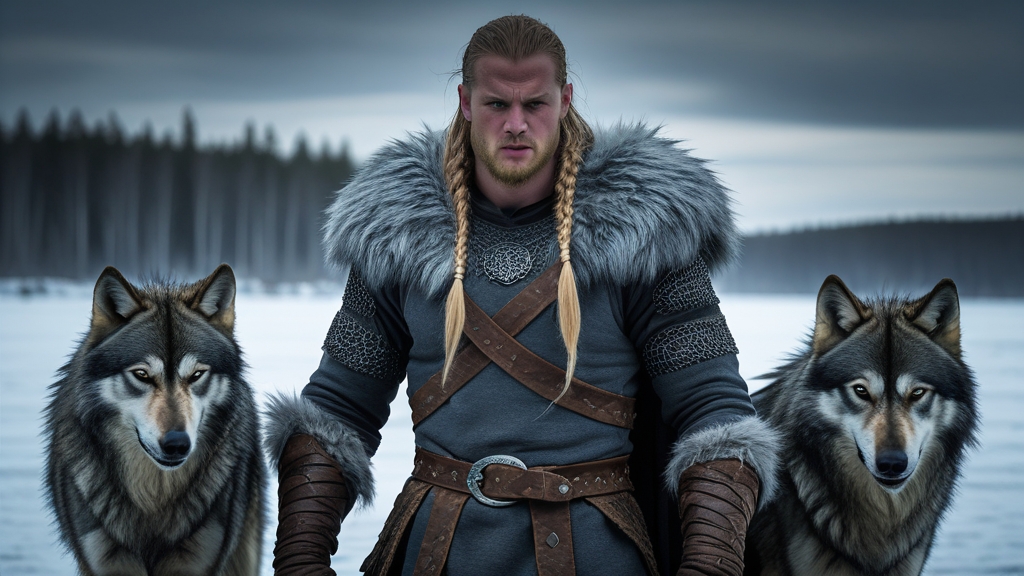
Leman Russ’s gestation pod landed on Fenris, one of the most hostile death worlds in the Imperium — a planet of freezing oceans, volcanic islands, and perpetual tectonic upheaval where the seasons last for years and the native fauna includes monstrous sea serpents and enormous predatory beasts. The infant Primarch was discovered not by humans but by a she-wolf named Freki, who adopted the superhuman child into her pack.
Russ spent his earliest years living as a wolf, hunting with the pack, and developing the feral instincts and savage combat skills that would define his character. He grew at a staggering rate, quickly surpassing the wolves in size and strength, yet he remained with the pack out of loyalty to the creatures that had raised him. Eventually, the Primarch was discovered by King Thengir of the Russ tribe, who captured the wild Primarch-child and brought him into human society.
Under Thengir’s guidance, Russ learned human speech, customs, and the arts of war as practised by Fenris’s fierce tribal warriors. He proved an extraordinary student, mastering every weapon, every fighting style, and every aspect of Fenrisian culture with superhuman speed. When Thengir died, Russ became king of his tribe and rapidly unified the warring clans of Fenris under his rule. By the time the Emperor arrived to reclaim His son, Russ ruled Fenris as undisputed king — a feat no mortal had ever accomplished on a world where warfare between tribes was a way of life.
The Emperor won Russ’s loyalty through a series of legendary contests. According to Fenrisian saga, the Emperor challenged Russ to contests of eating, drinking, and fighting. Russ won the first two but was defeated in combat — the first and only time anyone on Fenris had bested the Primarch. Russ knelt and swore allegiance, and the Emperor gave him command of the VI Legion, who were renamed the Space Wolves in honour of the beasts that had raised their gene-father.
The Emperor’s Executioner
Leman Russ earned the grim title of the Emperor’s Executioner because he was the Primarch called upon when a Legion or its commander had become too dangerous to be allowed to continue. This was not a role Russ relished, but one he accepted as his duty — someone had to be willing to do the Emperor’s darkest work, and Russ understood that his unique combination of martial might, unflinching loyalty, and willingness to act made him the only viable candidate.
The most significant and well-documented instance of Russ acting as Executioner was the destruction of the II and XI Legions — an event so traumatic that all records of it have been expunged from Imperial history. What is known is that two Primarchs and their Legions were lost during the Great Crusade, and persistent rumours suggest that Russ played a role in their elimination. The truth of what happened to the Lost Legions is one of the deepest mysteries in Warhammer 40,000 lore, deliberately left ambiguous by Games Workshop.
This role as Executioner had profound psychological consequences for Russ. It isolated him from his brothers, many of whom viewed him with suspicion or outright fear. It also created a dangerous dynamic that Horus would later exploit during the Heresy — when Horus ordered Russ to destroy Magnus the Red and his Thousand Sons Legion, Russ obeyed because the order was consistent with his established role. The tragedy of Prospero might have been avoided had Russ not been so conditioned to accept the role of executioner without question.
The Great Crusade
During the Great Crusade, the Space Wolves operated as the Emperor’s enforcers and compliance specialists. While other Legions focused on expanding the Imperium’s borders, the Space Wolves were often deployed to deal with situations that had gone wrong — rebellious worlds that had overthrown Imperial governance, xenos threats that had proven too dangerous for conventional forces, and internal threats that required a Primarch’s personal attention.
Russ’s approach to warfare was deceptively simple. He projected an image of a savage barbarian who favoured brute force, but this was largely a performance designed to make enemies underestimate him. In reality, Russ was a cunning strategist who used his reputation as a berserker to lull opponents into complacency before striking with devastating precision. His campaigns were characterised by aggressive, fast-moving assaults that shattered enemy defences before they could be properly organised.
The Space Wolves’ culture during the Great Crusade reflected Fenrisian traditions. They fought in packs rather than formal squad structures, maintained a warrior culture based on honour, saga, and personal glory, and celebrated their victories with legendary feasts and drinking bouts. This culture set them apart from the more disciplined Legions and occasionally caused friction with brothers like Guilliman, who viewed the Space Wolves’ rejection of standardised tactics with disapproval.
Despite his cultivated image as a barbarian, Russ was deeply literate and thoughtful. He composed poetry, engaged in philosophical debates with his brothers, and demonstrated a keen understanding of politics and diplomacy when he chose to apply it. His closest friendship was with Sanguinius, the angelic Primarch of the Blood Angels, whose nobility and warmth complemented Russ’s ferocity and bluntness.
The Burning of Prospero
The Burning of Prospero is one of the most tragic events of the Horus Heresy and the act for which Leman Russ is most remembered — and most criticised. Prospero was the homeworld of the Thousand Sons Legion and their Primarch Magnus the Red, a powerful psyker who had been censured by the Emperor at the Council of Nikaea for his Legion’s extensive use of psychic sorcery.
When Magnus used his psychic powers to breach the Emperor’s psychic wards on Terra — attempting to warn his father of Horus’s betrayal — he inadvertently damaged the Emperor’s secret Webway project and released daemons into the Imperial Palace. The Emperor, furious, ordered Russ to bring Magnus to Terra. However, Horus intercepted the message and altered the orders, telling Russ to destroy Magnus and his Legion entirely.
Russ, conditioned by his role as Executioner and already hostile to psykers due to Fenrisian cultural taboos, accepted the altered orders without sufficient question. He did reportedly attempt to contact Magnus before the assault, giving the Crimson King a chance to surrender — but Magnus, resigned to his fate and wracked with guilt over the damage he had caused, refused to respond. What followed was a devastating assault that saw the Space Wolves, aided by the Sisters of Silence and Adeptus Custodes, raze Prospero to the ground.
The Burning of Prospero destroyed the Thousand Sons as a loyalist force and drove Magnus directly into the arms of the Chaos God Tzeentch — exactly as Horus had planned. It was Horus’s manipulation at its finest: by turning two loyal Legions against each other, he removed both from the war and created a lasting enmity that persists into the 41st Millennium. Russ never fully came to terms with what happened on Prospero, recognising in his later years that he had been manipulated into an atrocity that served only the enemies of the Imperium.
The Horus Heresy
Following Prospero, Leman Russ and the Space Wolves fought their way back toward Terra, engaging traitor forces across multiple war zones. Russ was consumed by guilt and rage — guilt over Prospero, rage at Horus’s betrayal, and a burning desire to confront the Warmaster personally and make him answer for his treachery.
Russ got his chance at the Battle of Trisolian and later at the Battle of Yarant, where the Space Wolves engaged Horus’s forces directly. During a confrontation with Horus, Russ attempted to reach his brother through words, appealing to the man Horus had once been. When words failed, the two Primarchs fought. Horus, empowered by the Chaos Gods, proved the superior combatant and inflicted a grievous wound on Russ — a neck wound from the Warmaster’s talon that nearly killed the Wolf King.
The wound was not merely physical. Horus’s Chaos-tainted weapon left a spiritual wound that slowly drained Russ’s vitality. Though the Primarch recovered enough to continue fighting, he was never quite the same after Yarant. The experience of being defeated by a brother he had once admired, combined with the guilt of Prospero and the horror of the wider Heresy, left deep psychological scars that shaped Russ’s later decisions.
Like several other loyal Primarchs, Russ did not reach Terra in time for the final Siege. The Space Wolves were engaged elsewhere, fighting to keep supply lines open and prevent additional traitor reinforcements from reaching the Throneworld. Whether Russ could have made a difference at the Siege is one of the great counterfactual questions of the Heresy.
Disappearance into the Eye of Terror
In the years following the Heresy, Leman Russ became increasingly withdrawn and introspective. The guilt of Prospero, the wound from Horus, and the broader trauma of the civil war weighed heavily on the Wolf King. He participated in the Scouring — the loyalist campaign to pursue and punish the traitor Legions — but his heart was no longer fully in the fight.
During a great feast on Fenris, with all his warriors gathered around him, Russ suddenly stood, prophesied that he would return for the Wolftime — the final battle at the end of days — and departed into the Eye of Terror with his closest companions. He has never been seen since. The Space Wolves believe he ventured into the Warp seeking a way to heal the Emperor, or to find the legendary Tree of Life, or to prepare for the final apocalyptic battle that Fenrisian mythology holds will end the world.
Only his closest companions — the Rune Priests — remained behind, and only one personal effect was left: his great frost blade, the sword Mjalnar, which was left upon the throne of the Fang, the Space Wolves’ fortress-monastery. Successive Great Wolves have used the blade, and its presence on Fenris serves as both a reminder of Russ’s departure and a promise of his eventual return.
Legacy
Leman Russ’s legacy extends far beyond the Space Wolves Chapter. The Leman Russ Battle Tank — the main battle tank of the Astra Militarum and the most widely produced armoured vehicle in the Imperium — is named in his honour, a testament to the Primarch’s enduring status as a symbol of Imperial military might. The tank’s rugged reliability and adaptability echo the qualities Russ valued in both his warriors and himself.
Within the Space Wolves, Russ is revered as the Allfather — a title that in Fenrisian culture carries connotations of divine paternity. The Chapter maintains his teachings, his traditions, and his unique approach to warfare. They reject the Codex Astartes (at least in its stricter interpretations), organise themselves into Great Companies rather than standard Codex companies, and maintain the Fenrisian warrior culture that Russ instilled in his Legion ten thousand years ago.
The Space Wolves’ most distinctive trait — their fierce independence and willingness to defy Imperial authority when their conscience demands it — comes directly from Russ. He taught his sons that true loyalty meant serving the spirit of the Emperor’s vision rather than blindly following orders, a philosophy born from his devastating experience on Prospero where blind obedience led to catastrophe. For more on how the Space Wolves carry their Primarch’s legacy onto the tabletop, visit our Space Wolves army guide.
Leman Russ on the Tabletop
As of the current edition of Warhammer 40,000, Leman Russ does not have an official model or rules for the tabletop in the main game system, as he has not yet returned to the setting. However, he has a model and rules in the Horus Heresy game system (Warhammer: The Horus Heresy), where he is one of the most devastating melee combatants available.
In the Horus Heresy game, Russ wields the Sword of Balenight and the Axe of Helwinter, and his rules reflect his status as the Emperor’s Executioner — he receives significant bonuses when fighting enemy characters, particularly other Primarchs. His howl ability can debuff nearby enemies, and his saga rules allow Space Wolves units to gain bonuses as the battle progresses, reflecting the Fenrisian tradition of earning glory through deeds.
Many Space Wolves players eagerly anticipate Russ’s potential return to the 40K setting, which would presumably come with a new model and powerful tabletop rules. Given that both Guilliman and the Lion have returned, the question of Russ’s return is not if but when — and the Space Wolves community is ready for the Wolftime. Visit our Space Wolves army guide for the latest on playing the sons of Russ in the current edition.
Frequently Asked Questions
Is Leman Russ dead?
No, Leman Russ is not dead. He disappeared into the Eye of Terror voluntarily, and the Space Wolves believe he is still alive somewhere in the Warp. Before he left, he prophesied that he would return for the Wolftime — the final apocalyptic battle. Given that Games Workshop has been bringing Primarchs back to the setting, it is widely expected that Russ will eventually return, though no official timeline has been announced.
Why did Leman Russ burn Prospero?
Russ burned Prospero because he received orders — manipulated by Horus — to destroy Magnus the Red and the Thousand Sons. While the Emperor originally ordered Russ to bring Magnus to Terra, Horus altered the instructions to call for extermination. Russ, conditioned by his role as the Emperor’s Executioner and already hostile to psykers, accepted the harsher orders. He did attempt to give Magnus a chance to surrender, but Magnus refused to respond, and the assault proceeded. Russ later came to regret the destruction deeply.
Who would win in a fight between Leman Russ and Lion El’Jonson?
This is one of the most debated questions in Warhammer lore, and it is deliberately left ambiguous. The two Primarchs fought once during the Great Crusade, and the duel lasted for days with no clear winner — it ended when Russ started laughing and the Lion knocked him out. In terms of pure martial skill, the Lion may have a slight edge, but Russ’s ferocity, unpredictability, and Fenrisian wolf-senses make him an equally dangerous opponent. Most lore fans consider them roughly equal.
What is the Wolftime?
The Wolftime is the Space Wolves’ prophesied end times, drawn from Fenrisian mythology. It is the final battle at the end of days when the forces of darkness threaten to overwhelm the galaxy entirely. Leman Russ prophesied that he would return to lead his sons at the Wolftime, and the Space Wolves have awaited this event for ten thousand years. Given the current apocalyptic state of the 40K setting, many in the Chapter believe the Wolftime is near.
Is the Leman Russ tank named after the Primarch?
Yes, the Leman Russ Battle Tank is named in honour of the Primarch. It is the main battle tank of the Astra Militarum (Imperial Guard) and one of the most iconic vehicles in Warhammer 40,000. The tank’s rugged, reliable design and versatile armament reflect the qualities that Leman Russ valued in both his warriors and his weapons. The tank comes in numerous variants, including the Demolisher, Vanquisher, Executioner, and Punisher, each suited to different battlefield roles.
What number Legion did Leman Russ lead?
Leman Russ led the VI Legion, the Space Wolves. Before his discovery on Fenris the Legion was simply the VI, and it was renamed the Space Wolves in honour of the wolves that raised its Primarch. After the Horus Heresy the Legion became a single Chapter that still keeps Russ’s Great Company structure instead of following the Codex Astartes.
What were Leman Russ’s wolves called?
Leman Russ’s two giant Fenrisian wolves were called Freki and Geri, names taken from the wolves of Odin in Norse myth. They fought beside him throughout the Great Crusade and the Horus Heresy, and the bond between Russ and his wolves is echoed today in the Thunderwolves and Fenrisian Wolves that run alongside the Space Wolves.
What titles is Leman Russ known by?
Leman Russ is known as the Wolf King, the Great Wolf, the Emperor’s Executioner and, to his sons, the Allfather. The Chapter’s current leader also takes the title Great Wolf in his honour, which is why Logan Grimnar is called the Great Wolf of the Space Wolves today.