
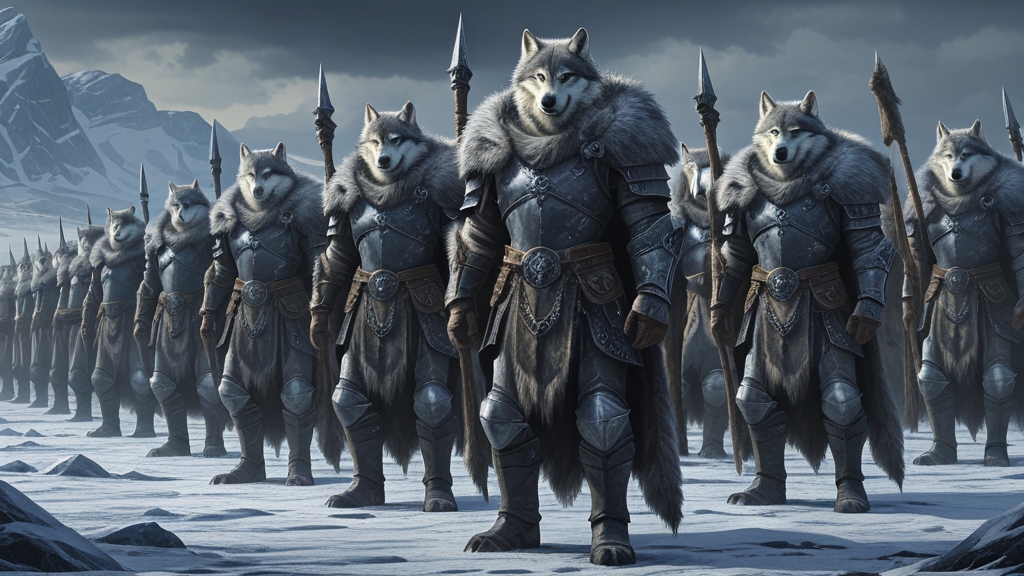
The Space Wolves are the sons of Fenris: Norse-flavoured, ferocious Space Marines who fight with bolter, axe and fang, ride giant wolves into battle and answer to no Codex but their own traditions.
On the tabletop they are a close-combat Chapter built around heroic characters, Thunderwolf Cavalry and fast assault units. In the paint pot they mean blue-grey armour, furs, bone talismans and runes.

Who Are The Space Wolves?
The Space Wolves are the VI Legion of the Space Marines, descended from the Primarch Leman Russ and recruited from Fenris, an ice-bound death world where only the strongest survive.
They differ from most Chapters in temperament as much as in rules. Their gene-seed carries the Canis Helix, which sharpens their senses and instincts but can also trigger the Wulfen curse, turning a battle-brother into a bestial, wolf-like warrior. They fight for the pack and for the Great Wolf, and beneath the ferocity sits a fierce loyalty to the Emperor and to each other.
Space Wolves 40k: Quick Facts
The Space Wolves are the VI Legion of Space Marines, the sons of the Primarch Leman Russ, recruited from the frozen death world of Fenris. In Warhammer 40,000 they stand out for their Norse-inspired culture, their rejection of the Codex Astartes and an army built around savage close combat, Thunderwolf Cavalry and heroic characters.
| Field | Detail |
|---|---|
| Legion | VI Legion, the Emperor’s Executioners |
| Primarch | Leman Russ, the Wolf King (vanished into the Eye of Terror) |
| Homeworld | Fenris, an ice-covered death world of eternal winter |
| Organisation | Great Companies led by Wolf Lords, outside the Codex Astartes |
| Gene-seed | The Canis Helix, which carries the Wulfen curse |
| Notable characters | Logan Grimnar, Ragnar Blackmane, Bjorn the Fell-Handed |
| Signature units | Thunderwolf Cavalry, Wulfen, Blood Claws, Grey Hunters |
| Famous deed | The burning of Prospero against Magnus the Red’s Thousand Sons |
| Armour colours | Blue-grey (The Fang base, Russ Grey layer, Fenrisian Grey highlight) |
| Playstyle | Aggressive melee; weaker against gunline armies |
Their rivals include the Dark Angels and the Thousand Sons, both popular narrative opponents on the tabletop.
What Are The Space Wolves Army Strengths?
Space Wolves want a messy, close-range game. These are the things that define the army:
- Close combat: much of the range carries power weapons, frost weapons, thunder hammers and claws, and the army is happiest once it is in combat.
- Fast melee threats: Thunderwolf Cavalry and other mounted or jump units close distance quickly, so you can pick the fights you want rather than waiting for the enemy.
- Characters: Ragnar Blackmane, Bjorn the Fell-Handed, Logan Grimnar and Wolf Guard Battle Leaders give the army strong melee Leaders. Under 11th Edition rules a Leader keeps its “while leading” abilities even after its bodyguard unit is wiped out, which suits a character-heavy army.
- Infantry depth: Blood Claws, Grey Hunters and Wolf Guard sit alongside the standard Space Marine infantry, so you can field a mix of expendable assault troops and solid line units for holding objectives.
- Wulfen: the cursed, half-feral warriors of the Chapter are dedicated close-combat specialists and some of the most dramatic models in the range.

Where Should Beginners Start?
For a new Space Wolves force, these units give you a solid, characterful core:
- Intercessors: the standard Space Marine line infantry. Reliable, flexible and easy to fit with Space Wolves upgrade parts.
- Blood Claws: the Chapter’s young, reckless warriors. They exist to charge in and tie up or overwhelm the enemy.
- Thunderwolf Cavalry: few units say “Space Wolves” like warriors mounted on giant Fenrisian wolves. Fast, tough and hard-hitting in melee.
- Ragnar Blackmane: the famous young Wolf Lord is an aggressive melee Leader for an assault unit.
- Wulfen: savage close-combat specialists armed with frost claws and thunder hammers.
- Bjorn the Fell-Handed: the oldest living Space Wolf, entombed in a Dreadnought. A durable centrepiece that contributes both shooting and melee.
Points, datasheet stats and detachment rules change with each Munitorum Field Manual and balance update, so check the current codex and the Warhammer 40,000 app before building a list. For a ready-made starting point, see our Space Wolves 1000 point army list.

How to Paint The Space Wolves
Painting Space Wolves is about balancing cold blue-grey armour against warm furs, leather, gold and bone. Expect plenty of detail: wolf pelts, talismans, wolf-tooth necklaces and runic markings give the models their tribal feel.

Colour Scheme Options
Classic Space Wolves grey
- Base: The Fang
- Shade: Drakenhof Nightshade or Nuln Oil in the recesses
- Layer: Russ Grey
- Edge highlight: Fenrisian Grey
- Metals: Leadbelcher for weapons, Retributor Armour for gold trims
- Spot colours: Mephiston Red or Khorne Red for lenses and markings, Averland Sunset for yellow shoulder markings
Lighter, frosty finish
For a paler, wintry look, layer Fenrisian Grey over The Fang and finish with Ulthuan Grey edge highlights. Shade with Nuln Oil, and pick out metal details with Stormhost Silver.
Darker, weathered finish
Keep more of The Fang showing, highlight straight to Fenrisian Grey, and use Runefang Steel on worn metal edges. A little Agrax Earthshade in the recesses warms the armour and suits a battle-worn army.

Space Wolves Painting Techniques
- Layering the armour: start from The Fang, build up with Russ Grey and finish with Fenrisian Grey. Administratum Grey also works for a final, very fine highlight.
- Fur: base brown pelts in Rhinox Hide and drybrush Mournfang Brown over the top. For grey wolf pelts, drybrush Mechanicus Standard Grey with Dawnstone and Administratum Grey.
- Snow and ice: drybrush white and pale blue onto bases, or use a snow texture product, to tie the models to Fenris.
- Weathering: sponge chipping and a light metallic drybrush on edges show a veteran army.
- Runes and markings: paint runes in a strong blue or red and add a little white towards the centre for a glowing effect.
- Object source lighting: glaze the area around plasma coils, lenses or runes with the light colour, then highlight the source itself in a brighter tone.
Space Wolves Lore and History
The Space Wolves are the VI Legion, the Emperor’s Executioners, sons of the wild Primarch Leman Russ. Russ was raised among the Fenrisian tribes and, in the Chapter’s legends, nursed by wolves. His Legion inherited his feral nobility: fierce in battle yet bound by a strict code of honour and loyalty. The Space Wolves were the Emperor’s sanction, the Legion sent to bring other Legions to heel, most infamously in the burning of Prospero, where they devastated Magnus the Red’s Thousand Sons.
Fenris is one of the most dangerous planets in the Imperium, a world of eternal winter, monstrous beasts and hardy tribes that produce some of the toughest recruits in the Adeptus Astartes. The Canis Helix in the Chapter’s gene-seed grants enhanced senses and feral instincts but carries the risk of the Wulfen curse, which can transform battle-brothers into bestial creatures.
The Space Wolves reject the Codex Astartes and keep their own structure of Great Companies, each led by a Wolf Lord. Rune Priests serve as the Chapter’s psykers, and Wolf Priests take on the spiritual and gene-seed duties other Chapters split between Chaplains and Apothecaries. The disappearance of Leman Russ remains the Chapter’s deepest wound: the Wolf King went into the Eye of Terror, and his sons believe he will return for the Wolftime, the final battle at the end of days.
Space Wolves on the Tabletop in 11th Edition
Space Wolves remain a melee-first Chapter. The army rewards bold, aggressive play: get into combat quickly with Thunderwolf Cavalry, Blood Claws, Wulfen and strong melee characters, and use more durable infantry to hold the objectives behind them.
11th Edition changes a few things that matter to a Space Wolves player. Army building uses Detachment Points (2 DP at 1,000 points, 3 DP at 2,000), so you can combine a Space Wolves detachment with other options. A unit can benefit from only one Stratagem per phase, Heroic Intervention is a 1 CP core Stratagem, and engagement range is now 2″. Cover now worsens the attacker’s Ballistic Skill instead of adding to your save, which helps infantry advancing through terrain.
How strong Space Wolves are competitively moves with every balance update, so check our Warhammer 40k faction tier list for current standings rather than relying on any fixed verdict.
Collecting Space Wolves
A Space Wolves collection is one of the most characterful armies you can build in Warhammer 40k. The Space Wolves Combat Patrol provides a good foundation with models that show off the Chapter’s look: pelts, runes, talismans and feral details that set them apart from any other Chapter.
Thunderwolf Cavalry are an early priority, as they are both iconic and central to the army’s identity. The Space Wolves upgrade sprue lets you convert standard Space Marine kits with Chapter-specific parts. Ragnar Blackmane is a popular early character, and Njal Stormcaller, the Chapter’s most famous Rune Priest, adds a psyker to the force. For larger games, Wulfen are among the most dramatic models in the range, and a Repulsor or Land Raider makes an impressive centrepiece (the Stormfang Gunship and Stormwolf are now Legends).
Painting Space Wolves
Space Wolves wear a distinctive blue-grey that sets them apart from every other Chapter. The classic approach uses The Fang as a base coat, layered with Russ Grey (named for their Primarch) and edge highlighted with Fenrisian Grey for a cold, wintry finish.
Pelts, furs and leather add a second skill set: Rhinox Hide with Mournfang Brown drybrushing for brown furs, and Mechanicus Standard Grey drybrushed with Dawnstone and Administratum Grey for wolf pelts. Yellow and red spot colours on shoulder and pack markings add warmth. For complete instructions, visit our Space Wolves painting guide.
Related Armies
If you enjoy Space Wolves, you might also like these armies:
- Blood Angels — Both chapters embrace a savage, close-combat warrior culture with unique character and flair.
- Dark Angels — The legendary rivalry between Wolves and Angels makes these armies perfect narrative opponents.
- Thousand Sons — The ancient enmity between Space Wolves and Thousand Sons offers incredible narrative gaming opportunities.
Everything Space Wolves on Warhammer Guild
Frequently Asked Questions
Who are the Space Wolves?
The Space Wolves are a fierce Space Marine Chapter from the frozen world of Fenris, founded by the Primarch Leman Russ. They embrace a Viking-inspired warrior culture and fight alongside giant Fenrisian wolves, with Thunderwolf Cavalry as their signature unit.
Are Space Wolves good for beginners?
Space Wolves are a good choice for beginners who enjoy melee combat. Their aggressive playstyle is intuitive, units like Thunderwolf Cavalry are exciting, and their Viking look is popular and fun to paint.
What are the strengths of Space Wolves?
Space Wolves excel in close combat with strong melee characters, Thunderwolf Cavalry and Wulfen. Their characters are dangerous duellists, and fast units let them choose their fights.
What are the weaknesses of Space Wolves?
Their melee focus makes them vulnerable to armies that can shoot them off the table before they arrive, and their elite units, such as Thunderwolf Cavalry, are expensive, so mistakes are costly. They also swap some standard Space Marine roles for their own characters, such as Wolf Priests and Rune Priests.
What makes Space Wolves different from other Space Marines?
Space Wolves reject the Codex Astartes, organising into Great Companies led by Wolf Lords instead of standard companies. They have unique units like Blood Claws, Wulfen and Thunderwolf Cavalry not available to other Chapters.
Image Attribution
Image 1 – Space Wolves Warhammer (https://www.goodfon.com/games/wallpaper-art-warhammer-40k-logan.html) by Nimarra (https://creativecommons.org/licenses/by-nc/4.0/)
Image 2 – Space Marines Space Wolves (https://www.goodfon.com/fantasy/wallpaper-download-2240×1400-warhammer-40-000-space-wolves-space-marines-khorne-berserker.html) by maria345 (https://creativecommons.org/licenses/by-nc/4.0/)
Image 3 – Space Wolves (https://www.deviantart.com/dioskyr/art/Space-Wolves-252461464) by Dioskyr (https://creativecommons.org/licenses/by-sa/3.0/)
Image 4 – Space Wolves Land Raider – Bran Redmaws Great Company (https://www.flickr.com/photos/38395113@N02/6903515627) by Duncan McGregor (https://creativecommons.org/licenses/by-nd/2.0/)
Image 5 – Space Wolves – Grey Hunter with Wolf Standard (https://www.deviantart.com/alvarodinson/art/Space-Wolves-Grey-Hunter-with-Wolf-Standard-611933062) by AlvarOdinson (https://creativecommons.org/licenses/by-nc-nd/3.0/)
How are the Space Wolves organised?
The Space Wolves are split into Great Companies, each led by a Wolf Lord, rather than following the Codex Astartes. Each Great Company has its own mix of Blood Claws, Grey Hunters, Long Fangs and Wolf Guard. The Thirteenth Great Company, which vanished into the Eye of Terror and whose warriors later returned as Wulfen, is known as the lost company. The whole Chapter answers to the Great Wolf, currently Logan Grimnar.
How does someone become a Space Wolf?
Wolf Priests choose Fenrisian warriors who have proved themselves in battle, often as they fall heroically. Each aspirant drinks from the Cup of Wulfen, which carries the Canis Helix, and is then abandoned in the wilds of Asaheim. Only those who survive the transformation and fight their way back to the Fang are accepted as Blood Claws. Many die or succumb to the Wulfen curse along the way.
What is the Fang?
The Fang is the Space Wolves’ fortress-monastery, carved into a colossal mountain on Asaheim, the main continent of Fenris. It houses the Chapter’s armouries, its sacred relics and the Great Wolf’s court. The Fang also gave its name to The Fang, the Citadel base paint used for Space Wolves armour.
Do Space Wolves have their own codex?
Space Wolves use a codex supplement alongside Codex: Space Marines rather than a fully standalone book. The supplement adds Chapter-specific detachments, Stratagems and units such as Thunderwolf Cavalry, Wulfen, Blood Claws and named characters like Logan Grimnar and Ragnar Blackmane, while the core Space Marine datasheets come from the main codex. In 11th Edition, existing codexes and supplements stay valid until a faction’s 11th Edition replacement arrives, so check which version is current.
Related Content
- How to Play 40k — Beginner rules guide
- 40k Factions Ranked — Competitive tier list
- 40k on a Budget — Start collecting cheap
- All Factions Guide — Every faction explained
Book review: Prospero Burns Review — our review of the Wolves’ side of Prospero.