
Part of our Sylvaneth hub: every Sylvaneth guide, lore page and painting tutorial in one place.
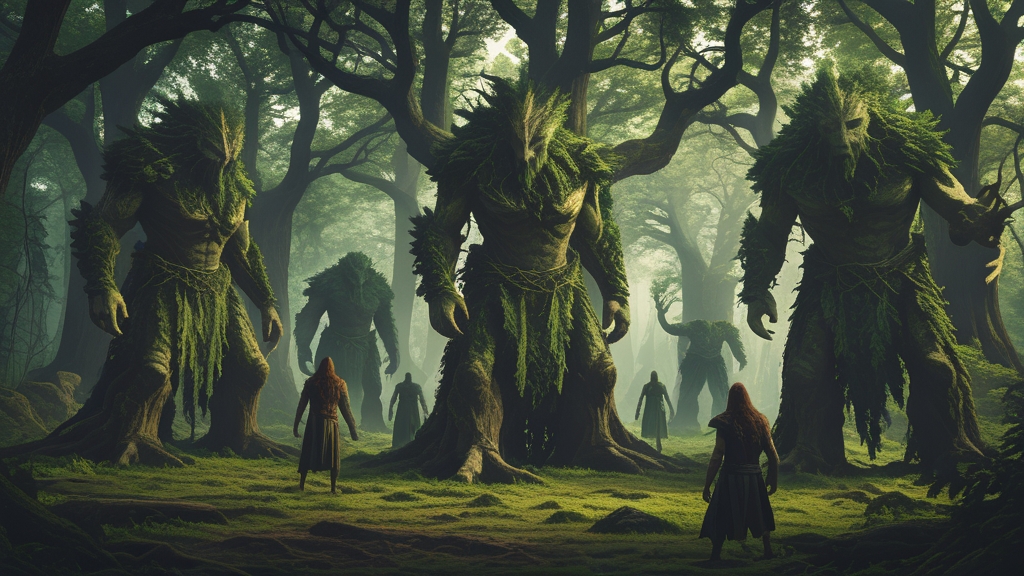
The Sylvaneth are the living spirits of the forests — an entire civilisation of sentient tree-creatures born from the goddess Alarielle, the Everqueen of Ghyran. They are not simply trees that move and fight. They are a complex society of beings who sing spirit songs through root networks, grow from mystical Soulpods, and wage a desperate war to protect the Realm of Life from the corrupting forces of Chaos, Death, and Destruction.
In the Age of Sigmar setting, the Sylvaneth represent nature’s wrath made manifest. They are beautiful and terrible in equal measure — graceful dryads who dance through moonlit glades and monstrous Treelords who crush enemies beneath root-fists the size of boulders. Their lore is among the richest in the Age of Sigmar, exploring themes of ecological warfare, divine motherhood, corruption, and the tension between nurturing growth and destroying threats.
This guide covers everything you need to know about Sylvaneth lore — from Alarielle’s creation of the first Sylvaneth to the devastating War of Life against Nurgle, the mysterious Wyldwoods, and the complex internal politics of Sylvaneth society.
How Did Alarielle Create the Sylvaneth?
Alarielle, the Everqueen, is the goddess of life and nature in the Mortal Realms. She is one of the most powerful deities in the Age of Sigmar setting, rivalling Sigmar and Nagash in raw divine power. When the Mortal Realms were young, Alarielle settled in Ghyran, the Realm of Life, and began cultivating it into a paradise of endless growth and natural abundance.
The Sylvaneth were born from Alarielle’s own life-essence. She planted Soulpods — mystical seeds infused with fragments of her divine spirit — in the heartwood of the great Wyldwoods. From these Soulpods grew the first Sylvaneth, beings that were simultaneously plants and spirits, rooted in the physical world but connected to a deeper spiritual realm through the Song of the Everqueen.
Each Sylvaneth carries a portion of Alarielle’s spirit within them, making them literal children of the goddess in a way that goes far beyond metaphor. This creates a deep psychic bond between Alarielle and all Sylvaneth — she can feel their pain, sense their emotions, and communicate with them through the spirit song that flows through the root networks connecting every Wyldwood in the Mortal Realms.
The creation process continues to this day. New Sylvaneth grow from Soulpods planted in the Wyldwoods, with each new generation carrying forward the accumulated memories and experiences of their predecessors through the lamentiri — soul-essence recordings stored in the heartwood of ancient trees. This means that Sylvaneth do not truly die as long as their lamentiri survive. Their memories and personality can be reborn in new Soulpods, giving the Sylvaneth a form of immortality that is both comforting and tragic, as the reborn Sylvaneth are not quite the same individual who fell.
What Are the Soulpods and How Do Sylvaneth Reproduce?
Soulpods are the reproductive mechanism of the Sylvaneth — magical seed-like structures that contain the spiritual template for a new Sylvaneth being. Unlike biological reproduction, Soulpod growth is a carefully managed process overseen by the Branchwyches and Branchwraiths, the Sylvaneth’s spiritual gardeners.
A Soulpod contains a fragment of life-essence drawn from the spirit song, combined with the lamentiri of fallen Sylvaneth. When planted in fertile soil within a Wyldwood and nurtured with the right combination of magical energy and natural growth, the Soulpod germinates and eventually produces a new Sylvaneth. The type of Sylvaneth that emerges depends on the Soulpod’s composition, the soil conditions, and the intentions of the Branchwych who planted it.
Dryads — the most numerous Sylvaneth — grow from the simplest Soulpods and emerge relatively quickly. Tree-Revenants grow from more complex pods and take longer to mature. The mightiest Sylvaneth, such as Treelords and Treelord Ancients, require centuries of careful cultivation and the most potent Soulpods, infused with powerful lamentiri from ancient heroes.
The Soulpod system means that the Sylvaneth can theoretically replace their losses over time, but the process is slow and vulnerable to disruption. If a Wyldwood is destroyed or corrupted, the Soulpods within it are lost, along with all the lamentiri they contained. This is why the Sylvaneth defend their Wyldwoods with such desperate ferocity — each forest is not just territory but a nursery containing the future generations of their people.
During the Age of Chaos, vast numbers of Wyldwoods were destroyed by Nurgle’s forces, creating a demographic catastrophe for the Sylvaneth. Entire lineages of lamentiri were lost forever, and the Sylvaneth population was decimated. This loss drives much of the Sylvaneth’s current aggression — they are a people fighting not just for territory but for their very survival as a species.
What Are the Spirit Songs and the Wyldwoods?
The Spirit Song is the psychic network that connects all Sylvaneth to each other and to Alarielle. It flows through the root systems of every Wyldwood, creating an underground web of communication that spans the Mortal Realms. Through the Spirit Song, Sylvaneth can share information, coordinate military actions, transmit emotional states, and access the memories stored in lamentiri.
The Spirit Song is not merely a communication tool — it is the foundation of Sylvaneth consciousness. Sylvaneth who are cut off from the Spirit Song experience something akin to sensory deprivation, losing their connection to their people and their goddess. Extended isolation from the Song can drive a Sylvaneth mad, which is one reason the Sylvaneth rarely operate far from Wyldwoods for extended periods.
The Wyldwoods themselves are far more than ordinary forests. They are living extensions of Alarielle’s power, semi-sentient ecosystems that respond to the Sylvaneth’s will and emotions. In battle, Sylvaneth can summon Wyldwoods to the battlefield, and these forests actively attack enemies — roots erupt from the ground to entangle feet, branches lash out at passing warriors, and the canopy shifts to block arrows and spells aimed at the Sylvaneth.
Wyldwoods also serve as transit networks. The Sylvaneth can travel through the root systems of connected Wyldwoods, emerging from one forest and appearing in another miles away. This gives the Sylvaneth extraordinary strategic mobility, allowing them to concentrate forces rapidly and strike where enemies least expect them. On the tabletop, this is represented by teleportation abilities that allow Sylvaneth units to move between Wyldwood terrain features.
The health of the Wyldwoods directly reflects the health of Alarielle and the broader Realm of Life. When Alarielle is strong and Ghyran flourishes, the Wyldwoods grow thick and vibrant, and the Spirit Song rings clear and strong. When she is weakened or Ghyran is corrupted, the Wyldwoods wither, the Spirit Song grows faint and discordant, and the Sylvaneth themselves become weaker and more erratic.
What Happened During the War Against Nurgle?
The War of Life — the Sylvaneth’s desperate struggle against Nurgle’s invasion of Ghyran — is one of the defining conflicts of the Age of Sigmar setting. It is a war between life and corruption, growth and decay, and it nearly destroyed the Sylvaneth entirely.
Nurgle, the Chaos God of plague and entropy, was drawn to Ghyran because the Realm of Life represented everything he desired. To Nurgle, decay is not the opposite of life — it is life’s natural conclusion, and the abundant life-energy of Ghyran was an irresistible feast. His daemons and mortal followers invaded Ghyran in overwhelming numbers during the Age of Chaos, spreading plagues that corrupted the land, poisoned the water, and turned thriving forests into reeking swamps of rot.
The Sylvaneth fought back with everything they had, but Nurgle’s corruption was insidious. It did not merely destroy — it transformed. Trees that should have been allies became twisted plague-growths. Rivers that sustained the Wyldwoods became channels of disease. Even some Sylvaneth were corrupted, their wood rotting from within while they remained horrifyingly alive, transformed into shambling plague-carriers that attacked their former kin.
Alarielle herself was nearly broken by the war. As Ghyran was corrupted, she weakened proportionally, and there came a point where she retreated into a cocooned state, withdrawing from the physical world to preserve the last remnants of her power. During this dark period, the Sylvaneth fought on without their goddess, led by Treelord Ancients and the most determined Branchwyches, waging a guerrilla war from the last uncorrupted Wyldwoods.
The turning point came with the arrival of the Stormcast Eternals. Sigmar’s warriors broke through Nurgle’s siege lines and reached Alarielle’s hidden sanctum, providing the military strength needed to protect her during her renewal. Alarielle emerged transformed — not as the gentle nature goddess she had been, but as a war goddess, the Everqueen Reborn, riding the great wardroth beetle and wielding the Spear of Kurnoth. She had internalised the lesson that nature must be red in tooth and claw to survive.
The War of Life continues in various forms, with Nurgle’s forces still holding corrupted territories within Ghyran and the Sylvaneth fighting to reclaim them. But Alarielle’s renewal shifted the balance decisively, and the Sylvaneth are now on the offensive rather than the defensive.
Who Is Drycha Hamadreth and What Is the Outcasts’ Story?
Drycha Hamadreth is one of the most compelling characters in Sylvaneth lore — an ancient and terrifyingly powerful Sylvaneth who has rejected Alarielle’s authority and wages her own war against all non-Sylvaneth life. She represents the dark side of nature: not the nurturing mother but the indiscriminate destroyer, the wildfire that consumes everything in its path.
Drycha’s hatred stems from millennia of watching outsiders — humans, duardin, aelves, and especially Chaos — despoil and destroy the forests. Where Alarielle can find common cause with Sigmar’s forces and accept alliances with other Order factions, Drycha sees all non-Sylvaneth as enemies to be exterminated. She considers Alarielle’s willingness to work with other races as a betrayal of the Sylvaneth’s true nature.
Drycha leads the Outcasts — Sylvaneth who have been exiled from mainstream Sylvaneth society or who have chosen to follow Drycha’s extremist path. The Outcasts include Spite-Revenants, twisted versions of Tree-Revenants whose connection to the Spirit Song has become corrupted by rage and hatred. They fight with a savagery that disturbs even other Sylvaneth, attacking anything that enters their territory regardless of allegiance.
The relationship between Drycha and Alarielle is complex. Alarielle does not approve of Drycha’s indiscriminate violence, but she cannot bring herself to destroy one of the oldest and most powerful Sylvaneth in existence. Drycha, for her part, does not seek to overthrow Alarielle — she simply refuses to obey her. This creates an uneasy coexistence where Drycha’s Outcasts operate as a rogue element within Sylvaneth society, sometimes fighting alongside mainstream Sylvaneth forces against common enemies and sometimes clashing with them when their goals diverge.
Drycha’s existence raises uncomfortable questions for the Sylvaneth. Is she wrong? The history of the Mortal Realms has shown repeatedly that alliances with other races are fragile and often end in betrayal. The forests were safer when outsiders feared to enter them. Drycha’s extremism may be destructive, but her fundamental argument — that the Sylvaneth should trust only themselves — has a dark logic that resonates with many Sylvaneth who have lost kin to non-Sylvaneth aggression.
How Is Sylvaneth Society Structured?
Sylvaneth society is organised into Glades — clans or nations of Sylvaneth that share common territories, traditions, and temperaments. Each Glade has its own character, shaped by the environment where its Wyldwoods grow and the personality of its founding members. The major Glades include:
Oakenbrow: The most noble and traditionalist Glade, known for their steadfast defence of ancient forests and their deep reverence for Alarielle. Oakenbrow Sylvaneth are the most likely to cooperate with other Order factions and uphold diplomatic relationships.
Gnarlroot: A Glade fascinated by magic and mystical knowledge. Gnarlroot Sylvaneth seek out arcane lore from all sources, making them unusually intellectual for a species often stereotyped as instinct-driven. They maintain libraries carved into living wood and study the magical arts with scholarly dedication.
Heartwood: The most militaristic Glade, Heartwood Sylvaneth are aggressive warriors who believe the best defence of the forests is a strong offence. They launch pre-emptive strikes against potential threats and maintain standing armies rather than relying solely on defensive warfare.
Ironbark: Named for their unusually hard wood, Ironbark Sylvaneth are renowned for their toughness and resilience. They favour defensive warfare, creating fortress-forests that are nearly impenetrable to invaders.
Winterleaf: A Glade marked by tragedy and loss, Winterleaf Sylvaneth carry the grief of forests destroyed during the Age of Chaos. They fight with cold fury, driven by a desire for vengeance that makes them relentless and pitiless in battle.
Dreadwood: The most sinister Glade, Dreadwood borders on the Outcasts in temperament. Their forests are dark, twisted places that actively hunt intruders, and the Dreadwood Sylvaneth take pleasure in terrorising non-Sylvaneth. They are loyal to Alarielle but share some of Drycha’s xenophobic instincts.
Within each Glade, Sylvaneth are further organised by type. Treelord Ancients serve as elders and commanders, while Treelords function as heavy warriors. Branchwyches and Branchwraiths manage the spiritual and magical needs of the community. Tree-Revenants and Dryads form the bulk of fighting forces, with Kurnoth Hunters serving as elite warriors dedicated to the hunt-god Kurnoth.
Frequently Asked Questions
Are the Sylvaneth connected to the Wood Elves of the old Warhammer world?
The Sylvaneth are spiritual successors to the forest spirits that fought alongside the Wood Elves in Warhammer Fantasy — particularly the Dryads, Treemen, and Treekin. However, in Age of Sigmar, the Sylvaneth are a standalone faction rather than allies of an Elven nation. Alarielle herself was the Everqueen of the High Elves in the old world, elevated to a goddess of life with a much more powerful and central role in the setting.
Can Sylvaneth grow in any realm or only Ghyran?
While Ghyran is the Sylvaneth’s homeland and where they are strongest, Wyldwoods can grow in any of the Mortal Realms where conditions allow. Sylvaneth outposts exist in Aqshy, Chamon, and other realms, though these distant forests tend to be smaller and more isolated than the vast Wyldwoods of Ghyran. The Spirit Song connects all Wyldwoods regardless of realm, though the connection weakens with distance.
What is the relationship between Sylvaneth and Kurnothi?
The Kurnothi are beings connected to Kurnoth, the hunter god who was Alarielle’s consort. Kurnoth Hunters among the Sylvaneth are dedicated to his memory and fighting style. The broader Kurnothi — including the centaur-like beings seen in Warhammer Underworlds — represent a related but distinct branch of nature spirits, blurring the line between Sylvaneth and aelven nature worship.
Why are some Sylvaneth hostile to Order factions?
Sylvaneth hostility toward other Order factions stems from historical experience. Cities of Sigmar have cleared forests for building materials. Fyreslayer mines have disrupted root networks. Even well-meaning allies have caused ecological damage through ignorance. Combined with the trauma of the Age of Chaos, many Sylvaneth view all non-Sylvaneth as potential threats. Drycha’s Outcasts represent the extreme end of this attitude, but even mainstream Glades maintain deep suspicion of outsiders.
How do Sylvaneth communicate with other races?
Most Sylvaneth communicate primarily through the Spirit Song, which non-Sylvaneth cannot hear. However, some Sylvaneth — particularly Branchwyches and Treelord Ancients — can learn to speak mortal languages, though their speech tends to be slow, formal, and laden with nature metaphors. Alarielle herself communicates fluently with other gods and mortal leaders. Some Glades, like Oakenbrow, maintain dedicated diplomats who specialise in inter-species communication.
How many Sylvaneth Glades are there?
Seven: Oakenbrow, Gnarlroot, Heartwood, Ironbark, Winterleaf, Dreadwood and Harvestboon. Each has its own character, shaped by where its Wyldwoods grow and who founded it, from the noble Oakenbrow to the sinister Dreadwood. Harvestboon is the one this page doesn’t describe, and it’s a good choice if you want a Glade that changes and adapts.
Who was Kurnoth?
Kurnoth was the god of the hunt and Alarielle’s consort, who fell during the Age of Chaos. His memory lives on in the Kurnoth Hunters, elite Sylvaneth warriors who fight in his style. Alarielle’s own weapon, the Spear of Kurnoth, carries his name, a reminder of the loss that turned her from a gentle goddess into a war goddess.