
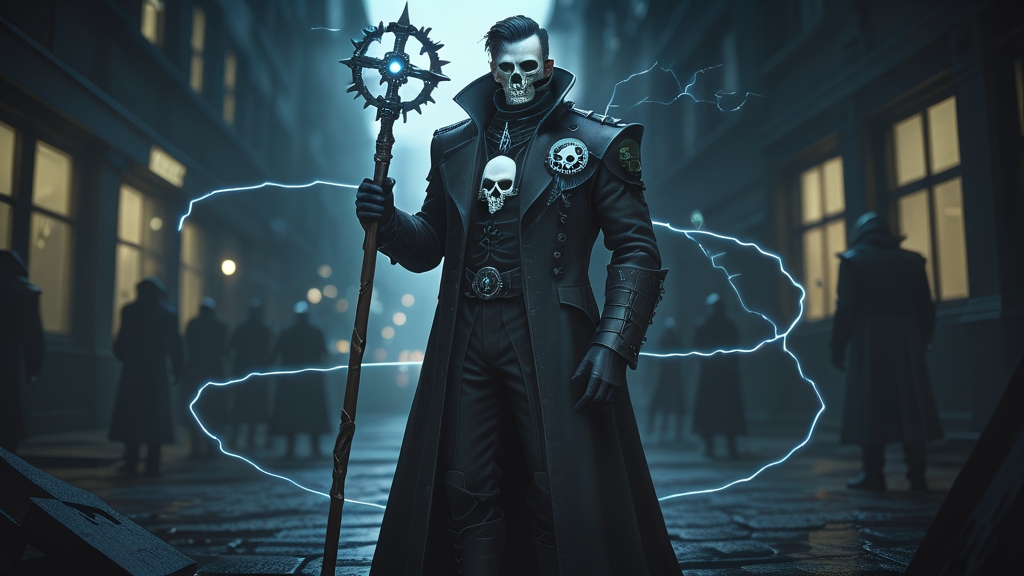
Gregor Eisenhorn is an Inquisitor of the Ordo Xenos and the protagonist of Dan Abnett’s Eisenhorn trilogy — widely considered the best entry point into Warhammer 40k fiction and one of the finest science fiction series of the 21st century. Over the course of the novels, Eisenhorn walks an increasingly dangerous line between puritan orthodoxy and radical methods, gradually becoming the very thing he once hunted — a rogue psyker willing to use daemonic tools to achieve his goals.
Eisenhorn’s story is significant because it humanises the Warhammer 40,000 setting in a way that tabletop battles cannot. Through his eyes, readers experience the Imperium not as a monolithic war machine but as a complex, morally grey civilisation where even the most righteous individuals can be corrupted by the compromises they make in the name of duty.
What Is an Inquisitor?
The Inquisition is the Imperium’s most powerful institution — a secret organisation with virtually unlimited authority to investigate and destroy any threat to humanity, whether from aliens, daemons, heretics, or even other Imperial institutions. An Inquisitor answers to no one except the Emperor Himself and other Inquisitors of higher rank.
Inquisitors can commandeer Imperial military forces, demand the cooperation of any Imperial citizen or organisation, and execute anyone they deem a threat to the Imperium. They operate in the shadows, investigating conspiracies, hunting aliens, purging cults, and making the terrible decisions that keep the Imperium alive.
Eisenhorn belongs to the Ordo Xenos — the branch of the Inquisition that specialises in alien threats. However, Inquisitors rarely limit themselves to their Ordo’s official purview, and Eisenhorn frequently investigates Chaos threats, criminal conspiracies, and political corruption alongside his anti-xenos work.
What Happens in the Eisenhorn Trilogy?
The Eisenhorn trilogy consists of three novels — Xenos, Malleus, and Hereticus — each named after a branch of the Inquisition. Together, they chart Eisenhorn’s journey over several centuries of his long life, as he pursues interconnected threats that gradually pull him away from orthodoxy and toward the use of forbidden methods.
In Xenos, Eisenhorn is a relatively conventional Inquisitor — a puritan who hunts aliens and heretics with righteous determination. He uncovers a conspiracy involving an ancient alien text called the Necroteuch and a Chaos cult that seeks to use it. The investigation takes him across multiple worlds and introduces his retinue of companions — including the daemonhost Cherubael, whose existence will come to define Eisenhorn’s moral trajectory.
Malleus sees Eisenhorn confronting the consequences of his previous actions while investigating a new threat involving daemonic possession and the radical fringes of the Inquisition. He begins using more extreme methods — including binding and controlling daemons — to combat threats that conventional approaches cannot defeat. His fellow puritans begin to view him with suspicion.
Hereticus completes Eisenhorn’s transformation. He is now openly using radical methods — daemonic weapons, forbidden knowledge, and the bound daemonhost Cherubael as a weapon. He finds himself hunted by his own former allies in the Inquisition, branded a heretic for using the very tools he once destroyed others for possessing. The final novel asks whether Eisenhorn is still serving the Emperor or has become a threat in his own right.
Who Are Eisenhorn’s Companions?
One of the Eisenhorn series’ greatest strengths is its ensemble cast. Eisenhorn’s retinue — the team of specialists he assembles — are richly drawn characters who ground the story in human relationships. Godwyn Fischig is a stolid, loyal Arbites officer whose unwavering moral compass provides a counterpoint to Eisenhorn’s increasing compromises. Alizebeth Bequin is a Blank — a psychic null whose presence disrupts Warp energy — and whose complex relationship with Eisenhorn adds emotional depth to the narrative.
Midas Betancore is a dashing pilot and gunfighter. Uber Aemos is an ancient, obsessive savant whose vast knowledge proves invaluable. Harlon Nayl is a lethal bounty hunter. Medea Betancore (Midas’s daughter) joins the retinue in later novels. Each companion has their own arc, and the series does not shy away from putting them in genuine danger — not all of them survive.
The most fascinating companion is Cherubael — a powerful daemon that Eisenhorn binds and controls. Cherubael represents everything the Inquisition exists to destroy, yet Eisenhorn keeps it as a weapon of last resort. The daemonhost serves as a physical manifestation of Eisenhorn’s moral compromise — and a constant reminder of how far he has fallen from his original principles.
What Makes the Eisenhorn Series Special?
Dan Abnett’s writing elevates the Eisenhorn series beyond typical franchise fiction. The prose is literate and atmospheric, drawing on noir detective fiction, spy thrillers, and classic science fiction. The Imperium feels lived-in — a real place with mundane concerns alongside its cosmic horrors. Characters eat meals, worry about money, maintain friendships, and deal with bureaucracy alongside fighting daemons and aliens.
The series’ central theme — the question of whether using evil to fight evil corrupts the user — resonates because it has no easy answer. Eisenhorn’s use of radical methods repeatedly saves lives and defeats threats that conventional approaches could not. But each compromise erodes his principles and alienates his allies, until he finds himself alone, hunted, and uncertain whether he serves the Emperor or his own pride.
For readers new to Warhammer 40,000, the Eisenhorn trilogy serves as an ideal introduction to the setting. It does not assume any prior knowledge, introduces the Imperium’s key concepts organically through the narrative, and provides a human-scale perspective on a setting that can otherwise feel overwhelmingly vast and inhuman.
What Comes After the Eisenhorn Trilogy?
Eisenhorn’s story continues in the Ravenor trilogy, which follows Gideon Ravenor — Eisenhorn’s former pupil — as he becomes an Inquisitor in his own right. Ravenor is a psyker confined to a force chair after being catastrophically injured, and his trilogy mirrors Eisenhorn’s in structure: a puritan investigator gradually confronting the limits of orthodox methods.
The Bequin trilogy (beginning with Pariah) brings Eisenhorn, Ravenor, and Bequin’s descendants together in a narrative that spans decades and involves the deepest mysteries of the Inquisition. This trilogy, still in progress, promises to conclude the overarching narrative that began in Xenos.
Eisenhorn has also appeared in other media — including the Eisenhorn: XENOS video game and was announced as the subject of a television series (though the show’s status has been unclear). His popularity as a character transcends the Warhammer community, drawing readers who might never pick up a miniature.
How Does Eisenhorn Connect to the Wider Setting?
While Eisenhorn operates at a human scale — investigating conspiracies, chasing criminals, and fighting individual enemies — his stories connect to the wider Warhammer 40,000 setting in important ways. The Inquisition’s internal politics, the tension between puritan and radical philosophies, and the ever-present threat of Chaos corruption are all themes that resonate throughout the setting.
Eisenhorn’s journey also illuminates a fundamental truth about the Imperium: the same system that produces its greatest defenders also creates its most dangerous enemies. The Imperium’s rigid orthodoxy forces creative, capable individuals like Eisenhorn to either break the rules or fail — and those who break the rules risk becoming exactly what they fought against.
This moral complexity is what makes Eisenhorn the most celebrated character in Warhammer 40,000 fiction — and why his story continues to attract new readers decades after the first novel’s publication.
Frequently Asked Questions
Do I need to know anything about Warhammer to read Eisenhorn?
No. The Eisenhorn trilogy is designed to be accessible to newcomers. Dan Abnett introduces the setting’s concepts naturally through the narrative, making it the most recommended starting point for anyone interested in Warhammer 40k fiction.
Is Eisenhorn a good guy or a bad guy?
This is the central question of the series, and it deliberately has no clear answer. Eisenhorn begins as a righteous Inquisitor and gradually adopts methods that the Imperium considers heretical. Whether his pragmatism is justified or represents a genuine fall from grace is left for the reader to decide.
What is a daemonhost?
A daemonhost is a daemon bound within a human body through sorcerous rituals, controlled (theoretically) by the summoner. They are extremely dangerous and utterly forbidden by Imperial law. Eisenhorn’s use of the daemonhost Cherubael is his most controversial and radical act — the tool that ultimately brands him a heretic in the eyes of his peers.
Should I read Eisenhorn before Ravenor?
Yes. While the Ravenor trilogy can theoretically be read independently, it builds directly on events, characters, and themes established in the Eisenhorn trilogy. Reading them in publication order — Eisenhorn, then Ravenor, then Bequin — provides the best experience.
Has Eisenhorn appeared on the tabletop?
Yes. Eisenhorn has an official miniature and rules for Warhammer 40,000. He can be fielded as an HQ choice in Imperial armies, reflecting his status as a powerful psyker and Inquisitor with access to his iconic force staff and the daemonhost Cherubael.
Related Content
- Chaos Knights Army Guide — explore the army behind the lore
- The Horus Heresy Explained — Complete Timeline & Guide — understand the pivotal Horus Heresy era
- Best Warhammer Books to Read — Fiction Guide — find great Warhammer novels to read
- Warhammer Etiquette Guide — Sportsmanship & Table Manners — explore more Warhammer content
Book review: Eisenhorn: Xenos Review — our review of the Inquisitor’s first novel.
Book review: Ravenor Review — our review of Abnett’s second great Inquisitor.