
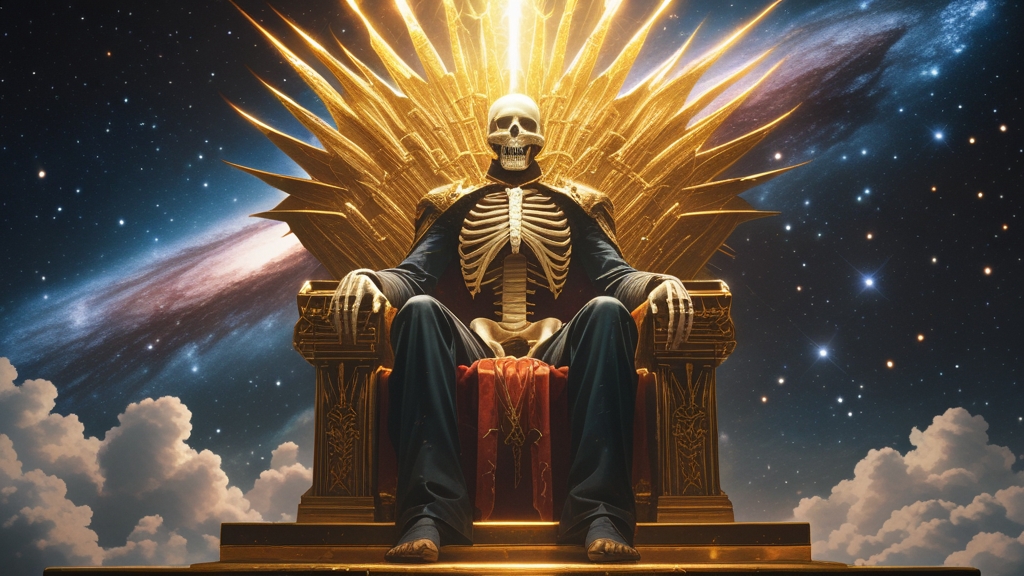
Will the Emperor of Mankind Ever Wake Up?
Whether the Emperor of Mankind will ever wake up is the biggest unresolved question in Warhammer 40k lore. There are several compelling theories — from the Star Child rebirth to his nature as a Perpetual — but Games Workshop has not confirmed any direction, and doing so would fundamentally change the setting.
The question of the Emperor’s potential return has haunted the Warhammer 40k universe since its inception. Every theory carries profound implications not just for the narrative but for the very nature of the setting itself. Here is everything we know about the possibility and what it would mean.
What Is the Star Child Theory of the Emperor’s Return?
The Star Child theory is the oldest and most established theory regarding the Emperor’s potential rebirth. Originating in the early editions of Warhammer 40k, it proposes that the Emperor’s soul — or a purified fragment of it — exists within the Warp as a gestating entity of immense power. When the Emperor’s physical body finally dies and the Golden Throne fails, this Star Child would be born as a new god of the Warp, a being of pure order capable of opposing the Chaos Gods directly.
The theory was originally supported by the existence of the Illuminati, a secret society of individuals who had survived daemonic possession and gained immunity to Chaos corruption. The Illuminati believed they could facilitate the Emperor’s rebirth by gathering the Sensei — his immortal, Warp-invisible descendants — and sacrificing them at the moment of the Emperor’s physical death to provide the psychic energy needed for the Star Child’s birth.
While the Illuminati and Sensei have been largely removed from modern lore, the core concept of the Star Child persists in various forms. The idea that the Emperor’s death might be a transformation rather than an ending continues to appear in novels and supplementary material, keeping the theory alive without confirming or denying it.
Could the Emperor Regenerate as a Perpetual?
The Horus Heresy novel series established that the Emperor is almost certainly a Perpetual — a being capable of regenerating from death. This revelation has enormous implications for the question of his return. If the Emperor is a Perpetual, then his current state on the Golden Throne may be preventing his natural regeneration rather than sustaining him.
Perpetuals like Vulkan have demonstrated the ability to recover from complete physical destruction, their bodies reforming over time regardless of the severity of the damage. If the Emperor possesses this same ability, then removing him from the Golden Throne might trigger a regeneration process that could restore him to full health and power. The Throne’s life-support systems, in this interpretation, are actually trapping the Emperor in a state between life and death — too alive to regenerate, too dead to act.
The problem with this theory is practical rather than theoretical. Removing the Emperor from the Golden Throne would open the Warp breach beneath the Imperial Palace, potentially unleashing a daemonic incursion onto Terra itself. It would also collapse the Astronomican, stranding Imperial ships across the galaxy and fragmenting the Imperium. Even if the Emperor could regenerate, the time required — which could be days, years, or centuries — would be catastrophic for humanity.
This creates an agonising dilemma: the Imperium may be holding its saviour prisoner because it cannot survive the process of freeing him. The cure might kill the patient, even as the disease slowly kills them anyway.
Is the Emperor Already Becoming a God?
One of the most widely discussed theories proposes that the Emperor is not dying on the Golden Throne but evolving — slowly transforming from a powerful psyker into a genuine god of the Warp, fed by the faith of trillions of worshippers across the galaxy. This theory suggests that the Emperor’s return is not a sudden event but a gradual process that has been underway for millennia.
Evidence for this theory includes the increasing frequency of miraculous events attributed to the Emperor — Living Saints returning from death, entire armies being shielded from daemonic attack by golden light, and the Emperor’s psychic presence apparently growing stronger over time rather than weaker. The establishment of the Great Rift and the subsequent increase in psychic phenomena across the galaxy may also be connected to the Emperor’s evolving nature.
If this theory is correct, the Emperor’s “awakening” would not involve opening his eyes on the Golden Throne. Instead, it would manifest as the Emperor transcending the need for a physical body entirely, becoming a Warp entity of such power that he could directly oppose the Chaos Gods. This would effectively make the Imperial Creed — the religion that the Emperor himself originally forbade — retroactively true. The irony of the Emperor becoming the god he always denied being is one of the richest potential narrative payoffs in the setting.
What Did Guilliman’s Audience With the Emperor Reveal?
When Roboute Guilliman was resurrected and travelled to Terra to speak with the Emperor, the encounter provided the most significant new information about the Emperor’s state in decades. Guilliman described communicating with a being of overwhelming psychic power whose mind operated on scales that even a Primarch could barely comprehend.
The key takeaway from Guilliman’s account was that the Emperor was conscious, aware, and actively directing his power with purpose. This contradicts theories that the Emperor is brain-dead or operating purely on psychic autopilot. However, Guilliman also perceived the Emperor as fundamentally changed — colder, more alien, and less recognisably human than the father he remembered. Whether this represents the Emperor’s evolution into something greater or his degradation into something less remains ambiguous.
Guilliman’s audience suggests that if the Emperor does return, he may not be the benevolent leader the Imperium hopes for. The being on the Golden Throne may have been transformed by ten thousand years of isolation, suffering, and psychic warfare into something that views humanity very differently from the Emperor who once walked among them.
What Would Happen to the Imperium If the Emperor Returned?
The Emperor’s return would create as many problems as it solved. The entire structure of the Imperium — its government, religion, military doctrine, and social order — has been built around his absence. The Ecclesiarchy, which commands the faith of trillions, teaches that the Emperor watches over humanity from the Golden Throne. A living, walking Emperor would invalidate their theology and potentially spark a civil war between those who accepted the returned Emperor and those who viewed him as an impostor or heretic.
The Adeptus Mechanicus, which worships the Emperor as the Omnissiah, would face a similar crisis. Their entire religion is built around the veneration of technology and the Emperor’s sacred connection to the machine. A flesh-and-blood Emperor walking among them would challenge fundamental tenets of their faith.
The High Lords of Terra, who govern the Imperium in the Emperor’s name, would face an existential threat to their power. For ten thousand years, they have wielded authority derived from the Emperor’s absence — making decisions, issuing decrees, and controlling policy without oversight. A returned Emperor could strip them of power overnight, and many would resist such a change.
Even the Space Marines would face challenges. The Codex Astartes, which has governed their organisation for millennia, was written by Guilliman, not the Emperor. Would a returned Emperor endorse it, modify it, or abolish it entirely? The political and military implications would ripple across every Chapter in the galaxy.
Would the Emperor’s Return Ruin the Setting?
This is perhaps the most important question surrounding the Emperor’s potential return, and it is one that Games Workshop must consider carefully. The grimdark atmosphere of Warhammer 40k — the sense of hopelessness, decay, and inevitable decline — depends in part on the Emperor’s absence. He is the light that humanity lost, and his absence is what makes the darkness so oppressive.
A triumphant return, where the Emperor rises from the Golden Throne, rallies humanity, and leads a crusade against the enemies of mankind, would fundamentally change the tone of the setting. It would introduce hope where there was none, purpose where there was only survival, and direction where there was only stagnation. For many fans, this would undermine what makes Warhammer 40k unique.
However, Games Workshop has shown that they can evolve the setting without destroying its essence. The return of Guilliman and the creation of the Great Rift moved the narrative forward significantly while maintaining the grimdark tone. A carefully handled Emperor return — perhaps one where the Emperor comes back changed, compromised, or at odds with the Imperium he finds — could advance the story without losing the darkness that defines it.
The most likely approach, if GW ever does bring the Emperor back, would be a partial or ambiguous return — the Emperor manifesting in some limited way that changes the status quo without resolving it. Perhaps he speaks but cannot act. Perhaps he acts but cannot speak. Perhaps he returns but is not the Emperor anyone remembers. The possibilities for nuanced storytelling are vast.
What Do the Major Factions Want to Happen?
Different factions within the setting have very different views on the Emperor’s potential return, and their motivations add complexity to the question. The Ecclesiarchy publicly prays for the Emperor’s return but privately might fear it — a living Emperor would not need a church to interpret his will. The Adeptus Custodes presumably desire their master’s return above all else, but even they might question what form that return would take. The Inquisition, divided into radical and puritan factions, has members who have actively researched ways to restore the Emperor and others who believe any attempt to interfere with the Golden Throne is heresy.
Among the enemies of the Imperium, the Chaos Gods may actually fear the Emperor’s return more than they desire his death. A fully empowered Emperor, free of the Golden Throne and potentially ascended to godhood, could be a greater threat than the slowly dying figure they currently face. The Eldar, who have their own prophecies about the Emperor’s role in the cosmic struggle against Chaos, may view his return as essential to their own survival.
What Does the Current Lore Suggest?
As of the most recent narrative developments, the lore seems to be building toward some kind of change in the Emperor’s status without committing to a specific outcome. The increasing frequency of miracles, the return of Primarchs, the opening of the Great Rift, and the intensification of psychic phenomena all suggest that the galaxy is approaching a tipping point. Whether that tipping point involves the Emperor’s return, transformation, or final death remains the setting’s greatest unanswered question.
Games Workshop has demonstrated a willingness to advance the Warhammer 40k narrative in ways that were previously unthinkable — destroying Cadia, splitting the galaxy, returning Primarchs. The Emperor’s status changing in some way seems increasingly likely, but the form that change will take remains anyone’s guess.
The only certainty is that whatever happens to the Emperor will be the most significant event in Warhammer 40k’s history, both in-universe and out. It will define the setting for the next generation of fans and players. And given Games Workshop’s track record of deliberate ambiguity and careful storytelling, it will almost certainly raise as many questions as it answers.
Will We Ever Get a Definitive Answer?
The honest answer is probably not — at least not in the way fans might hope. Games Workshop has built its setting on productive ambiguity, and the Emperor’s fate is the ultimate expression of that philosophy. Resolving it completely would close off more storytelling possibilities than it opens.
What we may get are incremental developments — hints, partial revelations, and narrative movements that change the status quo without answering the fundamental question. The Emperor may grow more active without waking up. He may communicate more clearly without speaking. He may change the galaxy without leaving the Throne. This approach — giving fans just enough new information to fuel fresh debates while preserving the core mystery — is the most likely path forward, and it is probably the best one for the long-term health of the setting.
In the grim darkness of the far future, hope itself is the cruelest weapon. And the hope that the Emperor might return — always present, never confirmed, never extinguished — is what keeps both the Imperium and its fans enduring.
Frequently Asked Questions
Is the Emperor of Mankind dead?
Not exactly. The Emperor’s body is a withered husk kept alive by the Golden Throne, but his mind is still active, powering the Astronomican and holding back the Warp breach beneath Terra. He can’t move or speak in any normal sense, which is why the lore describes him as neither fully alive nor dead.
How long has the Emperor been on the Golden Throne?
More than ten thousand years. He was placed on the Golden Throne at the end of the Horus Heresy, after his duel with Horus left him mortally wounded. He hasn’t moved since, while the Imperium has grown into the vast, stagnant theocracy of the 41st Millennium.
What keeps the Emperor alive?
The Golden Throne, an ancient life-support machine, keeps the Emperor’s body alive, and its upkeep is fed by a daily sacrifice of psykers, often given as around a thousand a day. The Black Ships gather those psykers from across the galaxy. If the Throne failed, his body would die and his Warp-shielding presence over Terra could fail with it.
Related Content
- Is the Emperor of Mankind Alive or Dead? — Explore whether the Emperor is truly alive
- What Is the Golden Throne Made Of? — Learn about the device keeping the Emperor alive
- The Horus Heresy Explained — Understand the battle that put the Emperor on the Throne
- Best Warhammer Books to Read — Read novels exploring the Emperor’s fate