
Part of our Daughters of Khaine hub: every Daughters of Khaine guide, lore page and painting tutorial in one place.
How to Paint Daughters of Khaine — Colour Schemes Guide
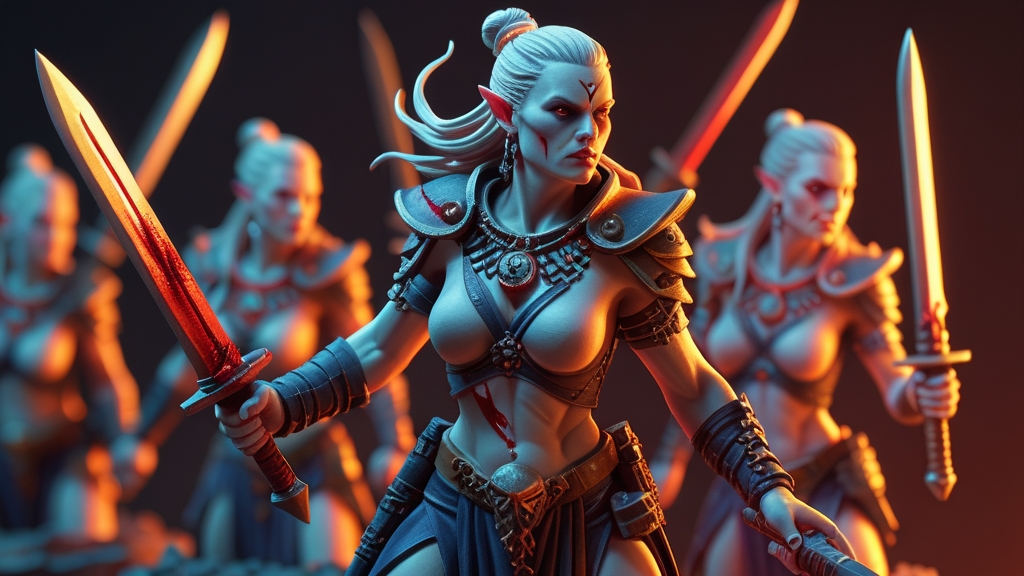
Daughters of Khaine are a rewarding army to paint. The look is built on pale aelf skin, blood-red cloth and hair, dark leathers and bronze war gear, with steel blades everywhere. Because so much of each model is bare skin, getting a smooth, pale flesh tone right matters more than on most armies.
This guide covers a paint list, a step-by-step method for the classic pale-skin, red and bronze look, basing, a Contrast alternative, and how to approach the different temple schemes. Every recommendation uses Citadel paint names, but any brand’s equivalents will work.
Complete Paint List for Daughters of Khaine
Gather these Citadel paints before you start.
| Paint Type | Paint Name | Purpose |
|---|---|---|
| Base | Rakarth Flesh | Skin base coat |
| Layer | Flayed One Flesh | Skin first layer |
| Layer | Pallid Wych Flesh | Skin highlight |
| Base/Layer | Khorne Red | Red cloth and hair base |
| Layer | Mephiston Red | Red midtone |
| Layer | Evil Sunz Scarlet | Red highlight |
| Base/Layer | Warplock Bronze | Bronze armour base |
| Layer | Brass Scorpion | Bronze layer |
| Layer | Sycorax Bronze | Bronze highlight |
| Base | Leadbelcher | Blades and steel base |
| Layer | Ironbreaker | Steel layer |
| Layer | Stormhost Silver | Steel edge highlight |
| Base / Layer | Abaddon Black / Eshin Grey | Black leather and highlight |
| Shade | Reikland Fleshshade | Skin and bronze shade |
| Shade | Carroburg Crimson | Red cloth and hair shade |
| Shade | Nuln Oil | Steel shade |
| Shade | Druchii Violet | Optional: deep skin recesses and lips |
| Spray | Chaos Black / Mechanicus Standard Grey | Primer |
Step-by-Step Painting Guide
These steps break the classic scheme into manageable stages. They work for a single character or a batch of Witch Aelves.
Step 1: Preparation and Priming
Clean mould lines from your Witch Aelves with a sharp hobby knife or mould line remover. Daughters of Khaine kits have thin blades, flowing hair and lots of exposed skin, so dry-fit parts before gluing and consider leaving bucklers, crests or large weapons off to paint separately. That gives you much better access to faces and torsos.
Prime with Chaos Black or Mechanicus Standard Grey. A grey primer makes the pale skin easier to cover; black gives deeper shadows on leathers and metals. Apply several thin, sweeping passes from about 20–30cm away rather than one heavy coat, and touch up any missed spots with a brush.
Step 2: Base Coating
Apply Rakarth Flesh to all the skin. Use two thin coats rather than one thick one, letting each dry fully, so you keep the fine facial and muscle detail. Then base coat the other areas: Khorne Red on cloth and hair, Warplock Bronze on armour, helmets and jewellery, Leadbelcher on blades, and Abaddon Black on leather straps and boots.
Don’t worry about being perfectly neat at this stage. Aim for solid, opaque coverage; you can tidy up in later steps.
Step 3: Shading
Once the base coats are dry, apply Reikland Fleshshade to the skin and the bronze, guiding it into the recesses rather than flooding flat areas such as faces and stomachs. Use Carroburg Crimson on the red cloth and hair, and Nuln Oil on the steel blades. If you want deeper, cooler shadows on the skin, a very thin touch of Druchii Violet in the deepest recesses and on the lips works well on pale aelves.
Let every shade dry completely before moving on; painting over a damp shade will lift it.
Step 4: Layering
Layer Flayed One Flesh over the skin, leaving the shade visible in the recesses around muscles, collarbones and faces. Then build up to Pallid Wych Flesh on the raised areas — cheekbones, nose, shoulders, knuckles and the upper surfaces of arms and legs. Thin your paint well; smooth transitions matter more on skin than anywhere else.
Apply Mephiston Red to the cloth and hair, leaving the darker shade in the folds and between strands. Layer Brass Scorpion on the bronze and Ironbreaker on the blades, keeping the darker base visible in the recesses for a convincing metallic finish.
Use thin paint, a steady hand and build up opacity gradually. Two thin layers will always look better than one thick one.
Step 5: Highlighting
Using a fine detail brush, add small final highlights of Pallid Wych Flesh (or Pallid Wych Flesh mixed with a little white) to the very highest points of the skin. Highlight hair strands and cloth edges with Evil Sunz Scarlet, bronze edges with Sycorax Bronze, and run Stormhost Silver along the cutting edges of every blade — Daughters of Khaine carry a lot of them, and crisp blade edges make a unit pop on the table. Pick out leather edges with Eshin Grey.
Prioritise edges that face upward, as these catch the most light on the tabletop. Downward-facing edges can stay darker for a more natural look.
Step 6: Basing and Final Details
Apply Stirland Mud or Astrogranite Debris texture paint to the base, depending on whether you want an earthy or stony look. Once dry, drybrush with Tyrant Skull or Longbeard Grey. Add tufts or small rocks, and paint the base rim Abaddon Black or Steel Legion Drab for a clean finish.
For final details, paint the eyes carefully (a thin line of a pale colour with a tiny dark pupil, or simply leave the sockets shaded at tabletop distance) and add a touch of red to the lips. A few droplets of a blood effect paint on blades suits the faction’s Khainite theme if you like that look.
Seal finished models with a matte varnish to protect the pale skin, which shows chips and handling wear easily.
Pro Tips for Painting Daughters of Khaine
- Batch painting: Paint 5–10 Witch Aelves at a time, completing each step across the batch before moving on. This keeps colours consistent across the unit.
- Wet palette: A wet palette keeps your paints workable for longer, which helps with the thin layers needed for smooth skin.
- Brush care: Clean your brushes regularly and reshape the tips before storing. A good point makes faces and blade edges much easier.
- Subassembly: For heroes and large models such as the Cauldron of Blood or Bloodwrack Shrine, paint major components separately before assembly.
- Thin your paints: Thin coats preserve detail and create smoother transitions, which matters most on large areas of skin.
Temple Colour Schemes
Daughters of Khaine are organised into temples. The best-known are Hagg Nar, Draichi Ganeth, Khailebron, Khelt Nar, Kraith and Zainthar Kai, and each has its own heraldry, shown in the battletome and in Games Workshop’s painting guides. Most keep the pale skin, bronze and steel described above and vary the colour of the cloth, hair and leathers.
The technique stays the same — base, shade, layer, highlight — so switching temples mostly means swapping the red steps for a different cloth and hair colour. Before you commit, check the official temple artwork for the scheme you want, then pick a base, shade and two highlight paints in that colour to replace Khorne Red, Carroburg Crimson, Mephiston Red and Evil Sunz Scarlet.
You can also invent your own temple, which lets you pick any robe and hair colours you like. If you vary the skin tone, keep the bronze and steel consistent so the army still reads as Daughters of Khaine.
Frequently Asked Questions
What primer should I use for Daughters of Khaine?
Mechanicus Standard Grey or Chaos Black both work for the classic scheme; grey makes pale skin easier to cover, while black gives deeper shadows. For a Contrast-based approach, use Wraithbone or Grey Seer instead.
How long does it take to paint a Daughters of Khaine army?
It depends heavily on the size of the army, your experience and the standard you are aiming for. A tabletop-standard army is a project of weeks or months for most hobbyists, while a single character painted to display standard can take many hours. Batch painting units in groups of 5–10 is the most efficient approach.
Can I use Contrast paints for Daughters of Khaine?
Yes, Contrast paints can speed things up considerably. Over a Wraithbone or Grey Seer primer, a flesh Contrast paint such as Guilliman Flesh, thinned with Contrast Medium for paler skin, gives a quick skin tone. Flesh Tearers Red works for cloth and hair, and Black Templar for leathers. Base coat the metals traditionally, then add a few highlights on top for a sharp tabletop finish. See our Contrast paints guide for technique.
What are the most important colours to buy first?
Start with the essentials: Rakarth Flesh, Pallid Wych Flesh, Reikland Fleshshade, Khorne Red and Warplock Bronze. These will get a solid base-coated and shaded army on the table. Add the highlight and accent colours as your budget allows.
How do I paint the eyes on Daughters of Khaine models?
Aelf faces are small, so keep it simple. Paint the eye area with a pale colour such as Pallid Wych Flesh or a light grey, then place a tiny dot of Abaddon Black for the pupil, touching the upper lid. Tidy around it with your skin colour. Use your finest brush and brace your hands together for stability. At tabletop distance, a neatly shaded eye socket with no pupil can look cleaner than a slightly misplaced dot.
Should I use an airbrush for Daughters of Khaine?
An airbrush is excellent for smooth skin base coats and for large models such as the Cauldron of Blood, but it is not required — every technique in this guide works with standard brushes. If you do use one, it pairs well with zenithal priming for natural lighting effects.
What are the Daughters of Khaine temple colour schemes?
Daughters of Khaine are organised into temples, and the main ones are Hagg Nar, Draichi Ganeth, Khailebron, Khelt Nar, Kraith and Zainthar Kai, each with its own colours. Most share pale aelf skin, bronze war gear and steel blades and differ mainly in their cloth, hair and leather colours. You can also invent your own temple, which lets you pick any robe and hair colours you like.
What colour is Daughters of Khaine skin?
Daughters of Khaine skin is classically very pale, painted here with Rakarth Flesh shaded with Reikland Fleshshade and layered with Flayed One Flesh and Pallid Wych Flesh. Some players use darker skin tones for variety or for a custom temple. Pale skin contrasts well with the red, bronze and black of their war gear.
Learn More About Daughters of Khaine
Now that you know how to paint your Daughters of Khaine army, make sure you understand how to play them on the tabletop. Check out our Daughters of Khaine faction guide for an overview of the army and how it plays in Age of Sigmar.
Related Content
- Daughters of Khaine — Explore the full army guide
- Warhammer Painting for Beginners — Start with general painting tips
- Best Paints for Warhammer — Choose the right paints for your scheme
- Contrast Paints Guide — Speed up painting with Contrast paints