
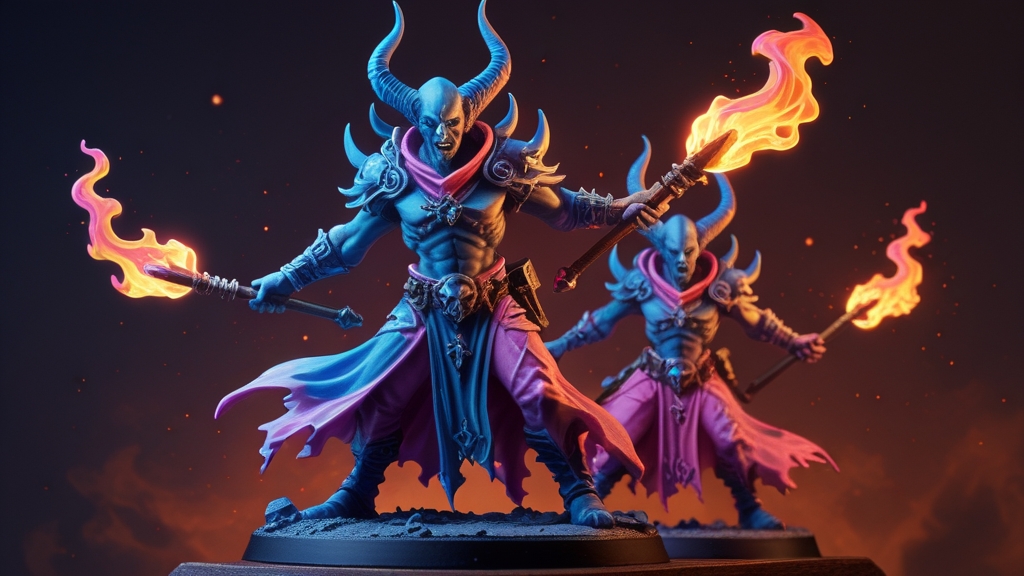
Part of our Disciples of Tzeentch hub: every Disciples of Tzeentch guide, lore page and painting tutorial in one place.
How to Paint Disciples of Tzeentch — Colour Schemes Guide
Disciples of Tzeentch mix two very different kinds of model: mortal Arcanites (Kairic Acolytes, Tzaangors and their sorcerers) and daemons of the Changer of Ways (Pink and Blue Horrors, Flamers, Screamers and Lords of Change). The army is held together by Tzeentch’s palette — turquoise blue, pink and gold, with orange-yellow warpflame as the accent. This guide gives you one paint list and a step-by-step method that covers both halves of the army, plus alternative schemes and tips for flames.
Complete Paint List for Disciples of Tzeentch
These Citadel paints cover the main scheme: turquoise and gold for the mortals and armour, pink and blue for daemon skin, and yellow-orange for flames.
| Paint Type | Paint Name | Purpose |
|---|---|---|
| Base | Thousand Sons Blue | Robes, armour and Blue Horror skin base coat |
| Layer | Ahriman Blue | Blue layer |
| Layer | Temple Guard Blue | Blue edge highlights |
| Base/Layer | Screamer Pink | Pink base |
| Layer | Pink Horror | Pink midtone |
| Layer | Emperor’s Children | Pink highlight |
| Base/Layer | Yriel Yellow | Flame and detail base |
| Layer | Flash Gitz Yellow | Flame and detail layer |
| Layer | Dorn Yellow | Flame and detail highlight |
| Base | Retributor Armour | Gold base for trim, masks and staves |
| Layer | Liberator Gold | Gold highlight |
| Layer | Stormhost Silver | Final metallic edge highlight |
| Shade | Drakenhof Nightshade | Blue shade |
| Shade | Druchii Violet | Pink shade |
| Shade | Reikland Fleshshade | Gold shade |
| Shade | Nuln Oil | Steel and dark details |
| Spray | Chaos Black / Grey Seer | Primer (black for mortals, Grey Seer for bright daemons) |
Step-by-Step Painting Guide
The steps below apply to the whole army. Where mortals and daemons differ, both are covered.
Step 1: Preparation and Priming
Clean mould lines with a sharp hobby knife or mould line remover and dry-fit components before gluing. Keep shields, Tzaangor Discs and Screamer riders separate where you can — it makes the recesses much easier to reach.
Prime Arcanites with Chaos Black: the turquoise and gold scheme looks rich over a dark undercoat. Prime daemons with Grey Seer or Wraithbone instead, because pink and bright warpflame are hard to get clean over black. Spray from about 20–30cm away in several thin passes and let it dry fully before handling.
Step 2: Base Coating
Apply Thousand Sons Blue to robes, armour panels and Blue Horror skin, and Screamer Pink to Pink Horror skin. Basecoat masks, trim and staves with Retributor Armour. Use a Medium Base brush and two thin coats rather than one thick one.
Don’t worry about perfect neatness yet — focus on solid, even coverage. You can tidy up during layering.
Step 3: Shading and Washes
Shade the blue areas with Drakenhof Nightshade and the pink areas with Druchii Violet, which keeps the pink rich rather than muddy. Gold takes Reikland Fleshshade, and any steel blades take Nuln Oil.
Guide the shade into recesses rather than flooding flat surfaces. A recess shade is slower but leaves the large, smooth areas of daemon skin cleaner. Let everything dry before moving on.
Step 4: Layering
Layer Ahriman Blue over the raised blue areas, leaving the shade in the recesses, and Pink Horror over the pink. Layer Liberator Gold on the raised gold, and Flash Gitz Yellow on any yellow details.
Use thin paint and build up gradually; two thin layers look better than one thick one.
Step 5: Edge Highlighting
Edge highlight blue with Temple Guard Blue, pink with Emperor’s Children and yellow with Dorn Yellow. Finish gold with a few points of Stormhost Silver on the sharpest edges of masks and staff heads.
On daemons there are few hard edges, so highlight the tops of muscles, fingers, faces and horns instead. Prioritise upward-facing surfaces, which catch the most light on the table.
Step 6: Warpflame, Basing and Finishing
Many Tzeentch models carry sculpted flames — on Flamers, staves, Horrors’ hands and spell effects. Paint them over a white or very light base: Yriel Yellow nearest the source, blending through orange to pink, purple or blue at the tips. Contrast paints over white make this quick.
For bases, a texture paint such as Stirland Mud or Astrogranite Debris drybrushed with Tyrant Skull or Longbeard Grey works well. Small crystal shards or rocks painted in a contrasting blue or pink suit the army’s sorcerous theme. Paint the rim Abaddon Black or Steel Legion Drab.
Seal finished models with a matte varnish spray to protect them in games.
Pro Tips for Painting Disciples of Tzeentch
- Batch painting: Paint 5-10 Horrors or Acolytes at a time, completing each step across all models before moving on. Horrors come in large units, so this saves a lot of time.
- Wet palette: Keeps paints workable for longer, which helps when blending pink into blue.
- Brush care: Clean your brushes regularly and reshape the tips before storing.
- Subassembly: Paint riders and mounts separately on Screamers, Discs and big centrepieces like the Lord of Change.
- Thin your paints: Thin coats preserve detail and make smooth transitions easier — important on daemon skin and flames.
Alternative Colour Schemes for Disciples of Tzeentch
Tzeentch armies suit a lot of variation. Earlier battletomes named Change Covens such as the Pyrofane Cult, Hosts Arcanum and Cult of the Transient Form, which make good themes for a scheme, but there’s no single “official” palette you have to follow. Three ideas that each give a different look:
Flame-themed army
Lean into warpflame: prime white, paint Flamers and fire effects with orange and yellow (Troll Slayer Orange blending up to Yriel Yellow), and keep the robes and armour a darker blue so the flames stand out. This suits a Pyrofane-style force built around Flamers and fire-wielding sorcerers.
Purple robes with blue sorcery
Swap turquoise robes for deep purple (Naggaroth Night, highlighted with Xereus Purple and Genestealer Purple) and use bright blue such as Lothern Blue for runes and glowing details. Gold trim ties it back to the classic Tzeentch look.
Blue-to-pink blend
For Horrors in particular, blend each model from Thousand Sons Blue at one end to Pink Horror at the other, using a wet palette or glazes to soften the transition. It is a good visual nod to the way Horrors split and change.
Frequently Asked Questions
What primer should I use for Disciples of Tzeentch?
Chaos Black works well for turquoise-and-gold Arcanites, giving natural shadows. For pink and blue daemons and flames, Grey Seer or Wraithbone is easier, because bright colours cover much better over a light primer.
How long does it take to paint a Disciples of Tzeentch army?
It depends heavily on army size and the standard you’re aiming for. As a rough guide, a 2,000-point army to tabletop standard can take several dozen hours. Batch painting in groups of 5-10 models is the most efficient approach, while a single centrepiece such as a Lord of Change can take many hours on its own.
Can I use Contrast paints for Disciples of Tzeentch?
Yes, Contrast paints are ideal for daemons over a Grey Seer or Wraithbone primer. Try a blue or turquoise Contrast such as Talassar Blue or Akhelian Green for blue areas and Volupus Pink for pink skin, then add a single highlight. Flames are especially quick with yellow and orange Contrast over white.
What are the most important colours to buy first?
Start with Thousand Sons Blue, Pink Horror, Drakenhof Nightshade and Retributor Armour. These four paints cover the core blue, pink and gold of the army. Add highlights, flame colours and extra shades as your budget allows.
How do I paint the eyes on Disciples of Tzeentch models?
Many daemons have small, deep-set eyes, while Acolytes and many sorcerers wear masks. For eyes, paint the socket dark, then dot in a bright colour that contrasts with the skin — yellow or white works well on pink and blue Horrors — and add a tiny dot of White Scar for a glint. Use your finest brush and brace your painting hand against the model.
Should I use an airbrush for Disciples of Tzeentch?
An airbrush is excellent for smooth blends on daemon skin and large models like the Lord of Change, and for blending flames. It isn’t required, though — every technique in this guide can be done with standard brushes. If you use one, it pairs well with zenithal priming.
What colours represent Tzeentch?
Blue is Tzeentch’s main colour, usually paired with pink, purple and gold or yellow. Pink and Blue Horrors embody the palette, and Tzeentch’s mortal followers often wear blue robes with gold trim. Turquoise blue with gold, like the Thousand Sons, is the classic look. Pink-and-blue daemon schemes and orange-yellow warpflame are the other common ways to show the Changer of Ways.
Why are Tzeentch daemons pink and blue?
Because of how Horrors split. When a Pink Horror is slain it splits into two sullen Blue Horrors, and when those die each becomes a pair of tiny, flame-like Brimstone Horrors in orange and yellow. That cycle of change is why pink, blue and fiery yellow are the core colours for Tzeentch daemon armies. Many painters blend from blue to pink to reflect it.
How do you paint Tzeentch flames?
Paint flames from light at the base to dark at the tips. Start with a white or very light core near the source, then blend through yellow and orange towards pink, purple or blue at the edges for magical warpflame. Contrast paints over a white basecoat make this quick. Flash Gitz Yellow, Troll Slayer Orange and Pink Horror are good layer paints for a traditional blend.
Learn More About Disciples of Tzeentch
Now that you know how to paint your Disciples of Tzeentch army, make sure you understand how to play them on the tabletop. Check out our Disciples of Tzeentch faction guide for background, units and army lists for Age of Sigmar.
Related Content
- Disciples of Tzeentch — Explore the full army guide
- Warhammer Painting for Beginners — Start with general painting tips
- Best Paints for Warhammer — Choose the right paints for your scheme
- Contrast Paints Guide — Speed up painting with Contrast paints