
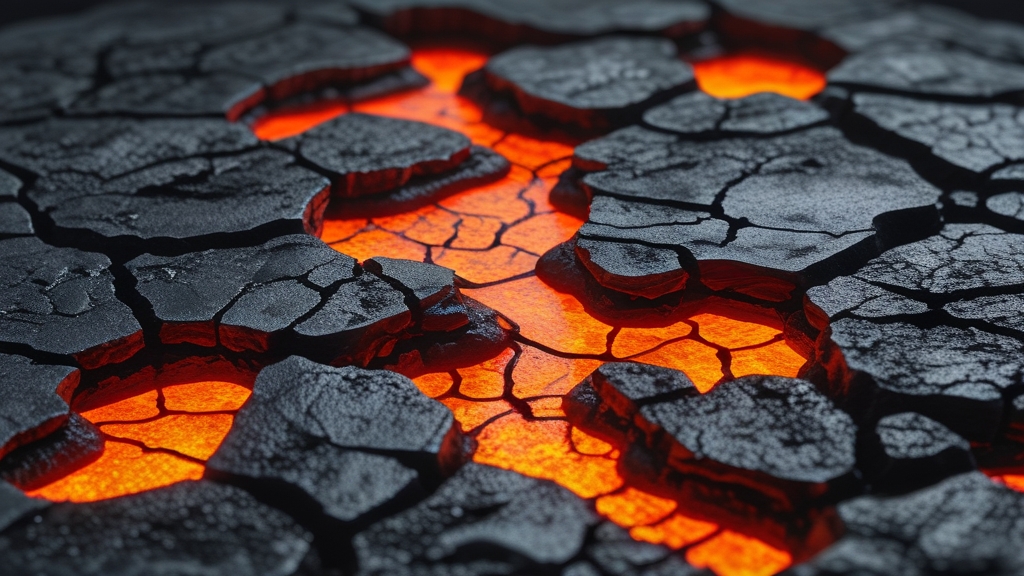
A lava base turns an ordinary miniature into a model that looks like it is striding across a cracked volcanic battlefield, with molten rock glowing between blackened plates of cooling stone. It is one of the most rewarding basing effects to learn because the glow does most of the visual work — and it is far easier than it looks.
What You Will Need
- A crackle texture paste (such as Citadel Agrellan Earth or Vallejo equivalents)
- A dark base coat — black or dark brown
- Bright layer paints: red, orange and yellow
- A glaze medium or contrast/glaze paints to blend the colours
- A drybrush and a soft brush for glazing
For the rough ground, Vallejo’s Diorama FX texture pastes are the usual alternative to Citadel’s. Black Lava gives you a dark, gritty surface to paint the glow into, and you’ll want a proper drybrush for the cooling rock.

Price details
Product prices and availability are accurate as of the date/time indicated and are subject to change. Any price and availability information displayed on Amazon.com at the time of purchase will apply to the purchase of this product.As an Amazon Associate, Warhammer Guild earns from qualifying purchases.
Step 1: Build the Cracked Surface
Apply a thick, even coat of crackle texture paste over the base and leave it to dry undisturbed. As it cures it will split into a network of cracks — these gaps are where your lava will glow, so a generous layer gives you deeper, more dramatic fissures.
Step 2: Undercoat Black
Once fully dry, base the whole thing black. This darkens the depths of the cracks and gives you the maximum contrast you need for the glow to read as light rather than just colour.
Step 3: Paint the Glow From the Cracks Outward
Work from the deepest colour to the brightest, staying inside the cracks and fading outward. Glaze red into the crevices first, then a narrower line of orange inside that, and finally a thin sliver of yellow — and, if you want maximum heat, a touch of near-white at the very centre of the brightest cracks. Because each colour sits inside the last, the eye reads it as light spilling out of molten rock.
Step 4: Drybrush the Cooling Rock
Lightly drybrush the raised black plates with a dark grey to pick out their texture, keeping them cool and dead so they contrast with the fiery cracks. Resist the urge to brighten the rock — the darker it stays, the hotter the lava looks.
Step 5: Optional Gloss and OSL
A dab of gloss varnish in the brightest cracks sells the wet, molten look. For an advanced finish, add object source lighting by glazing a faint orange onto the underside of the model’s feet and lower legs, as if the lava is casting light upward.
That is all there is to it: crack, blacken, glow, and cool. The same technique scales from a single infantry base to a whole army’s worth of volcanic terrain.
Frequently Asked Questions
Can you make a lava base without crackle texture paste?
Yes. Broken cork, bark chips or slate glued onto the base make good cooling-rock plates, with the gaps between them painted as lava. You can also fill the gaps with a smooth texture paste or PVA glue to give the molten areas a flat surface. Then follow the same steps: undercoat black and paint the glow outwards.
Which armies suit lava bases?
Lava bases suit any army with a fire or volcanic theme. Salamanders, Fyreslayers, Khorne armies, Chaos Dwarfs and Helsmiths, and anything from Aqshy, the Realm of Fire in Age of Sigmar, are popular choices. The orange glow contrasts well with cool colours too, so blue or green armies stand out strongly on them.
How long does crackle texture paste take to dry?
Leave it overnight to be safe. A thin coat may crack within an hour or so, but the thick layer you need for deep fissures takes much longer to cure all the way through. Don’t use a hairdryer, as heat can make the cracks uneven, and wait until it’s fully hard before undercoating.
Related Content
- Warhammer Painting for Beginners — Everything You Need — essential painting guide for new hobbyists
- Best Paints for Warhammer — Complete Comparison Guide — recommended paints for Warhammer miniatures
- Object Source Lighting (OSL) — Complete Miniature Painting Guide — related painting technique and tutorial
- Drybrushing Tutorial — Fast Painting for Warhammer — popular drybrushing technique tutorial