
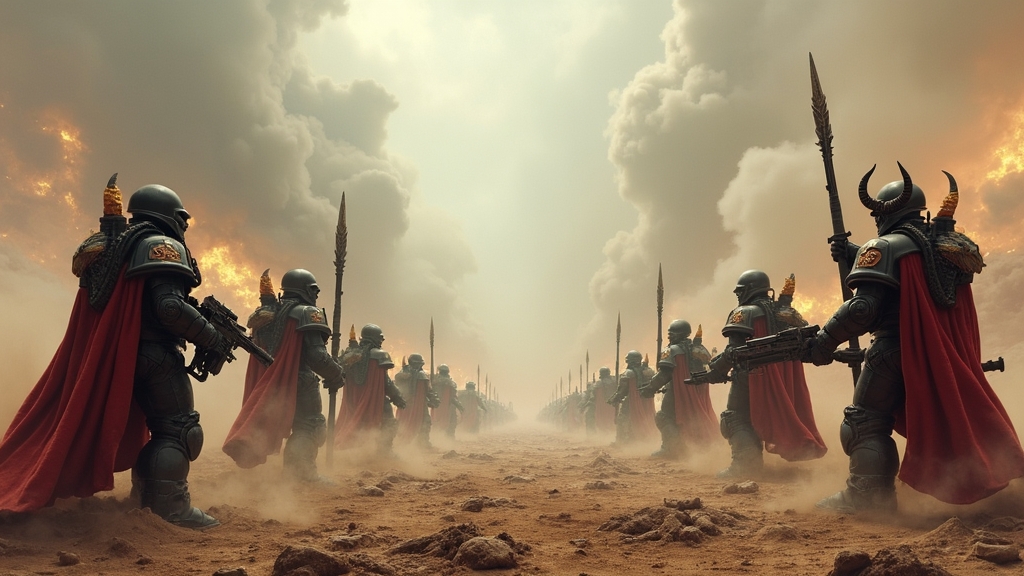
Dawn of War IV launches on 3 December 2026, with Commander Edition owners getting in three days early on 30 November. There are four factions to choose from, and they play very differently. If you’re new to real-time strategy, or new to Warhammer altogether, the faction you start with can make the difference between “one more match” and giving up after an hour.
A quick word on where this advice comes from. The game isn’t out yet, so we’ve based everything here on official faction deep dives from Deep Silver and KING Art and on hands-on previews from the press. Balance will change. Patches after launch will shift which faction is strongest in multiplayer, and our difficulty ratings are a beginner’s-eye view, not a competitive tier list. We’ll update this guide once the full game is out.
For release dates, editions and the full feature list, see our Dawn of War IV guide.
The short answer
- Best first faction overall: Orks. They’re cheap, forgiving and fun. You can make mistakes and simply build more Boyz.
- Best if you already love Space Marines: Space Marines. They’re easy to understand and have strong units, but every loss hurts.
- Best for patient, defensive players: Necrons. They’re hard to kill on home ground, but slow to get going.
- Best saved for later: Adeptus Mechanicus. They’re powerful once their network is running, but there’s the most to learn.
Faction difficulty at a glance
| Faction | Beginner difficulty (our view) | Playstyle in one line | Suits you if… |
|---|---|---|---|
| Orks | Easy | Cheap, swarming, aggressive | You like to attack and don’t mind losses |
| Space Marines | Easy–Medium | Small, elite, expensive army | You want fewer units to look after |
| Necrons | Medium | Slow, tough, expand-and-hold | You prefer defending and building up |
| Adeptus Mechanicus | Medium–Hard | Fast ranged army built on synergy | You enjoy planning and optimising |
Orks: the most forgiving start
Tabletop army: Orks
Orks reward you for getting stuck in, and that’s exactly what a beginner should be doing. Deep Silver’s faction deep dive says Ork units and buildings are among the cheapest in the game. Orks also gain veterancy faster than any other faction, so even clumsy early fights still pay off with upgrades.
Their main mechanic is easy to grasp. The Waaagh! meter fills up as you fight. Trigger it at the right moment and your whole army goes berserk. Press Start’s preview adds that at full Waaagh!, basic Boyz become free. Gretchin build your structures, but they need an Ork nearby to keep working, which is a gentle introduction to keeping your base protected.
Which commander? Start with Guzcutta, the new Beast Snagga Boss. He’s a tough fighter on foot and later rides a Squigosaur, which makes him faster and harder hitting. The developers say Gorgutz “can be challenging to play” because he’s slow in Mega Armour, so save him for your second or third campaign run.
Who it suits: anyone who learns by doing, players who like aggressive openings, and fans of chaotic, noisy armies. The Ork campaign is also one of the two campaigns previewers have played in full. Press Start suggested playing the prologue first, then the Orks, then the Adeptus Mechanicus.
Want to know what you’re fielding? Our Ork units encyclopedia covers the lore behind Flash Gitz, Meganobz and the rest.
Space Marines: simple to understand, harsh on mistakes
Tabletop army: Space Marines, with the Blood Ravens and Dark Angels
The Space Marines field a small army of elite, expensive units. That’s good news for beginners in one way: with fewer squads on the field, you’ve got less to keep track of. Units also get stronger over the course of a match as you give them equipment and upgrades, so it’s easy to grow attached to them.
The catch is that losing a fully upgraded squad really hurts, and the official deep dive admits that having fewer units makes it harder to respond to threats quickly. The faction does have safety nets, though. Reserves wait in orbit and arrive by Drop Pod, you can call in reinforcements to save a unit under heavy fire, and the Thunderhawk Relay lets you redeploy across big maps.
Which commander? There are four to choose from, two per Chapter. Company Master Astoran of the Dark Angels wears Terminator armour, which makes him slow but very durable, so he’s the most forgiving if you tend to leave your commander in the wrong place. Captain Cyrus of the Blood Ravens relies on stealth and range, and Chaplain Ezrael rides a bike, so both need more careful positioning.
Who it suits: tabletop Space Marine players, anyone coming from Space Marine 2, and players who would rather look after six squads than sixty Boyz. If you want to paint your force in the game’s Painter tool, our Space Marine Chapter colours guide has plenty of ideas.
Necrons: tough, slow and patient
Tabletop army: Necrons
The Necrons are built around steady expansion. Most of your buildings sit on a Power Matrix that grows as you build. Units on it heal faster and become much harder to kill, and Resurrection Galleries bring fallen units back for free. That makes Necrons very forgiving when you’re fighting on home ground.
The trade-off is speed. The deep dive confirms most Necron units are slower than other factions’ units, so if you fall behind early, it’s harder to catch up by racing for resource points. The best late-game tools, like Tomb Pylons, teleporting units with Translocation Science and the Monolith’s Eternity Gate, need some planning to use well.
Which commander? Ahmnok prefers straightforward close combat. Chronomancer Thothmek uses time-manipulation powers, which sounds like the more advanced option.
Who it suits: players who like to defend, build up and then roll forward, and anyone who enjoys “turtling” in strategy games. One caveat: the Necron campaign wasn’t in the preview builds, so there’s less hands-on information about it than about the others. Read up on their backstory in our Necron dynasties guide.
Adeptus Mechanicus: rewarding, but one to grow into
Tabletop army: Adeptus Mechanicus
The Adeptus Mechanicus appear in a Dawn of War game for the first time here, and they’re built around precision and synergy. Your buildings link up through the Noosphere Network. The higher your network level, the stronger the units, research and upgrades you unlock, and Cogitator Relays extend its reach. Augur Vision reveals enemy movement on the minimap.
That’s a lot of systems working together. When it all clicks, you get a fast army that’s strong at range. But it asks you to think about where you place buildings and how your units support each other, which is a lot to handle while you’re still learning the basic controls.
Which commander? You can choose Technoarcheologist Potentia-Delta 9 or Skitarii Marshal Sek-Ix-23. Detailed differences between them haven’t been fully explained yet.
Who it suits: experienced RTS players, people who love optimising, and anyone who already collects the Skitarii on the tabletop. You still get a feel for them early: their campaign was the other one available in full in previews.
Beginner tips for Dawn of War IV
- Play the prologue first. It introduces the Blood Ravens and the Astra Militarum and eases you into the controls before the full campaigns.
- Capture points early. Requisition pays for most units and energy unlocks advanced tech, so grabbing and holding points is how you win the long game.
- Use cover. Sandbags, barricades and craters help your squads survive incoming fire. Don’t leave units standing in the open.
- Retreat, don’t lose squads. You can pull a squad back to regroup. A retreated squad can be reinforced, but a dead one has to be rebuilt from scratch.
- Try the Attack Rectangle. Right-drag over a group of enemies and your selected units pair themselves up with targets automatically. It saves a lot of clicking.
- Learn one faction properly. Pick one army and play its campaign before you try multiplayer. Skirmish against the AI is a low-pressure way to practise.
- Bring a friend. Every campaign can be played in co-op, and Last Stand is a fun, relaxed way to learn how units work with two other players.
- Expect changes. Balance patches after launch will shake things up, so don’t drop a faction you enjoy just because someone online calls it weak.
Faction choice and the tabletop
Lots of players come to Dawn of War through the miniatures, or the other way round. If a faction grabs you in the game, our army guides and starter content are the next step. Try how to paint Orks, how to paint Necrons, how to paint Adeptus Mechanicus or how to paint Space Marines. And if you’re still picking a Warhammer game to play while you wait for 3 December, check our best Warhammer video games ranking.
Frequently Asked Questions
What is the hardest faction in Dawn of War IV for beginners?
The Adeptus Mechanicus, in our view. Their power depends on building up the Noosphere Network, so where you put buildings and how your units support each other both matter a lot. That’s a lot to handle while you’re still learning the controls. They’re rewarding once it clicks, so try them after a campaign with another faction.
Which Dawn of War IV campaign should I play first?
Play the prologue first. It introduces the Blood Ravens and the Astra Militarum and teaches the controls. After that, Press Start suggested playing the Orks and then the Adeptus Mechanicus. The Orks are the most forgiving faction to learn on.
Can you play the Dawn of War IV campaign in co-op?
Yes. Every campaign can be played in co-op, and the Last Stand mode lets you team up with two other players. Playing with a more experienced friend is one of the easiest ways to learn how each faction’s units work together.