
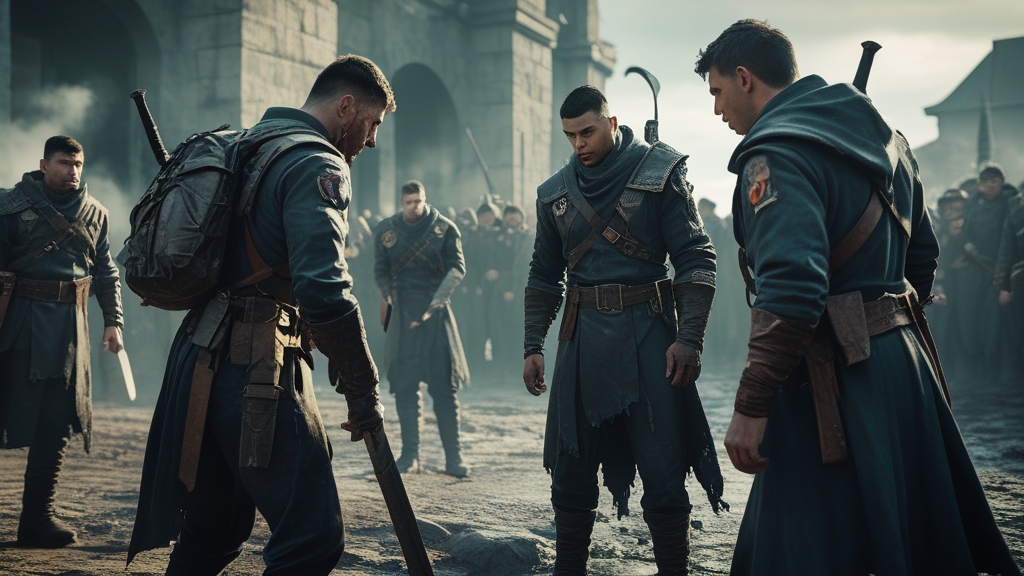
Space Marines recruit boys aged 10 to 14 from their homeworld or designated recruiting worlds through brutal trials that test physical ability, mental resilience, and genetic compatibility. Only approximately 1 in 100 aspirants survives the complete process — from initial selection through surgical implantation and hypno-conditioning — to emerge as a full battle-brother. The recruitment process is one of the most harrowing ordeals in the Imperium, transforming mortal children into transhuman warriors through a combination of surgery, indoctrination, and suffering that would be considered monstrous by any civilised standard.
The creation of a Space Marine is a process that takes years, requires extraordinary resources, and has a catastrophic failure rate. For every warrior who stands in the battle line wearing the colours of his Chapter, dozens of aspirants died during the trials, were rejected for genetic incompatibility, or perished during the surgical implantation of the gene-seed organs. Understanding this process — from the selection of candidates to the completion of their transformation — reveals both the miracles and horrors that underpin the Adeptus Astartes.
Where Do Space Marines Find Their Recruits?
Most Space Marine Chapters recruit from a single homeworld or a small number of designated recruiting worlds. The Chapter’s homeworld is typically a harsh, unforgiving environment that produces tough, resilient children — because the gene-seed implantation process is so physically demanding that only the strongest candidates have any chance of survival.
Death Worlds are among the most common recruiting grounds. The Space Wolves recruit from Fenris, a frozen death world of perpetual tribal warfare where children learn to fight before they can read. The Salamanders draw from Nocturne, a volcanic death world where the population lives in constant danger from eruptions, earthquakes, and predatory megafauna. The White Scars recruit from the steppes of Chogoris (Mundus Planus), where nomadic tribes produce expert horsemen and warriors from childhood.
Hive Worlds are another major source of recruits. The Imperial Fists have historically recruited from the underhive gangs of Terra itself, where the brutal gang warfare of the lower levels produces children who are already experienced fighters and survivors. The Crimson Fists and many other Chapters draw from hive world populations, where the sheer density of humanity ensures a large pool of potential candidates even with stringent genetic compatibility requirements.
Feral Worlds — planets where human civilisation has regressed to a pre-industrial or even pre-agricultural state — provide recruits who are accustomed to physical hardship and combat from birth. These worlds often have cultures that unknowingly prepare their youth for Space Marine recruitment through warrior traditions, coming-of-age trials, and constant inter-tribal conflict. The Space Marines may be mythologised as gods, angels, or spirits by these populations, with the recruitment process incorporated into local religious or cultural traditions.
Some Chapters recruit from fleet-based populations or multiple worlds, either because they have no fixed homeworld or because their gene-seed is compatible with a wider range of human genetic stock. The Black Templars, who maintain a perpetual crusade across the galaxy, recruit from whatever worlds they encounter, conducting trials as they pass through systems. This approach gives them access to a much larger recruiting pool than planet-bound Chapters, which is one reason why they can maintain a force well in excess of the Codex-prescribed 1,000 Marines.
What Are the Recruitment Trials?
The trials that determine which aspirants are worthy of gene-seed implantation vary enormously between Chapters, reflecting each Chapter’s culture, values, and traditions. However, they share common themes: testing physical endurance, mental resilience, combat ability, and — perhaps most importantly — the ability to endure suffering without breaking.
The Space Wolves’ Trial of Morkai: Aspirants on Fenris are chosen from the bravest warriors of the planet’s tribes, typically identified during inter-tribal conflicts. Chosen warriors are taken to the Fang — the Space Wolves’ fortress-monastery — where they must cross the frozen wasteland surrounding it on foot, without supplies, fighting off the predatory creatures of Fenris along the way. Many die of exposure, starvation, or predation. Those who reach the Fang have proven their worth. They are then given the Canis Helix — the unique element of Space Wolf gene-seed — and must survive a transformation that drives many to madness or physical mutation.
The Ultramarines’ Selection: The Ultramarines conduct a more structured selection process, reflecting their Codex-adherent culture. Aspirants from the worlds of Ultramar undergo standardised physical and mental assessments, genetic screening, and aptitude testing. While less dramatic than the Space Wolves’ approach, the standards are brutally high — only the genetic elite of Ultramar’s already exceptional population meet the requirements. The process is meritocratic and relatively fair by Imperial standards, but no less lethal for those who fail during the subsequent implantation process.
The Blood Angels’ Insanguination: Blood Angels aspirants must drink from the Red Grail — a chalice containing the blood of their Primarch Sanguinius — and survive the resulting transformation. The Sanguinary Priests monitor the aspirants as the blood triggers violent psychic visions and physical changes. Many aspirants die or go mad during this process, overwhelmed by the psychic echo of Sanguinius’s death that is encoded in his genetic material. Those who survive the insanguination with their sanity intact demonstrate the strength of will needed to resist the Black Rage that haunts all Blood Angels.
The Dark Angels’ Secret Trials: True to their secretive nature, the Dark Angels reveal little about their recruitment process. What is known suggests a series of trials that test not only physical and mental capability but also loyalty, obedience, and the ability to keep secrets. Given the Dark Angels’ obsession with the Fallen — their great shame — it is likely that recruitment trials include psychological assessments designed to identify aspirants who can be trusted with the Chapter’s darkest secrets without breaking.
The Imperial Fists’ Pain Glove: Imperial Fists aspirants must endure the Pain Glove — a device that stimulates every nerve ending in the body simultaneously, causing agony beyond anything a normal human can comprehend. The aspirant must maintain consciousness and coherent thought while subjected to this ordeal. The Pain Glove is not merely a test of pain tolerance; it assesses the aspirant’s ability to maintain cognitive function while their body screams for relief. This directly mirrors the Chapter’s combat doctrine, which emphasises holding defensive positions under punishing enemy fire.
What Happens During Gene-Seed Implantation?
Once an aspirant passes the recruitment trials, the implantation of gene-seed organs begins — a process that takes several years and transforms the human body step by step into something transhuman. The nineteen organs (twenty-two for Primaris Marines) are implanted in a specific sequence, each building on the changes made by the previous implant. Attempting to implant organs out of sequence, or implanting them in a body that has not properly integrated the previous organ, results in rejection and death.
The process begins around age 10-14, taking advantage of the natural growth period of puberty to integrate the gene-seed changes with the body’s own development. Early implants — the Secondary Heart and the Ossmodula — lay the foundation by strengthening the cardiovascular system and skeleton. These are followed by the Biscopea (muscle enhancement), the Haemastamen (blood enrichment), and progressively more complex organs that modify digestion, sensory processing, and neural function.
The later implants are the most dangerous and transformative. The Catalepsean Node, implanted in the brain, allows the Marine to function without sleep — but its installation requires delicate neurosurgery that kills a significant percentage of aspirants. The Preomnor (pre-stomach) and Omophagea (the organ that allows Marines to gain memories from consumed flesh) require invasive abdominal surgery. The Betcher’s Gland, which allows the Marine to spit acidic venom, must be carefully positioned to avoid damaging the existing salivary system.
The final and most painful implant is the Black Carapace — the interface layer that allows the Marine to connect directly with power armour. A sheet of plastiflesh is grafted beneath the skin of the entire torso, and over the following weeks, it sends neural tendrils throughout the body, creating the interface ports that will connect to armour systems. This process is described as agonising even by Space Marine standards, and aspirants who have endured everything up to this point can still die or go mad during the Black Carapace integration.
What Is the Role of the Apothecary and Chaplain?
Two figures are central to the recruitment process: the Apothecary, who oversees the medical and surgical aspects, and the Chaplain, who manages the spiritual and psychological conditioning.
The Apothecary is responsible for genetic screening of potential aspirants, selecting those whose genetic makeup is most compatible with the Chapter’s gene-seed. He performs or supervises the implantation surgeries, monitors aspirants for signs of rejection or mutation, and makes the difficult decisions about which aspirants should be allowed to continue and which must be euthanised due to failed integration. The Apothecary also maintains the Chapter’s gene-seed stocks, harvesting progenoid glands from fallen Marines and cultivating them for use in future aspirants.
The Chaplain oversees the hypno-conditioning and indoctrination that transforms a mortal boy into a warrior of the Emperor. This includes the implantation of combat doctrine through hypnotic suggestion, the suppression of fear and doubt, the cultivation of loyalty to the Chapter and the Emperor, and the teaching of the Chapter’s history, traditions, and rites. The Chaplain is part priest, part psychologist, and part drill instructor — the figure who ensures that the Space Marine’s mind is as prepared for war as his body.
Together, the Apothecary and Chaplain shepherd each aspirant through the years-long transformation process, addressing physical complications and psychological crises as they arise. The relationship between an aspirant and his mentors during this period is one of the most formative experiences of his life — more intense than any parent-child bond, shaped by shared suffering and absolute trust.
What Happens to Those Who Fail?
The majority of aspirants do not survive the full transformation process, and their fates vary depending on when and how they fail. Aspirants who die during the initial trials — the physical tests, survival challenges, and combat assessments — are simply dead. Their bodies may be honoured according to Chapter tradition or discarded depending on the circumstances.
Aspirants who pass the trials but fail during gene-seed implantation face grimmer fates. Some die outright as their bodies reject the implants. Others survive but with incomplete or flawed transformations — too altered to return to normal human society but insufficiently enhanced to serve as full Space Marines. These failed aspirants are typically assigned to serve the Chapter as Chapter serfs — servants who maintain the fortress-monastery, crew the Chapter’s ships, and perform the thousands of support tasks that keep a Space Marine Chapter functioning. Their partial enhancements make them more capable than normal humans, but their failure marks them for a lifetime of servitude rather than glory.
In some Chapters, failed aspirants who show exceptional qualities despite their incomplete transformation are given other roles. They may serve as armour bearers, weapon handlers, or even tactical advisors, their partial Space Marine training making them valuable assets even without the full suite of enhancements. The treatment of failed aspirants reveals much about a Chapter’s character — some honour their sacrifice, while others view them as shameful reminders of imperfection.
Frequently Asked Questions
Can adults become Space Marines?
No, not under normal circumstances. The gene-seed implantation process must begin during puberty (ages 10-14) to take advantage of the body’s natural growth hormones and development processes. An adult human body has already completed its development, making it unable to integrate the gene-seed organs properly. The result of attempting adult implantation is almost invariably rejection, mutation, and death. The only known exception is the experimental Primaris conversion process (the Rubicon Primaris), which upgrades existing Space Marines — not baseline adult humans.
Do Space Marines remember their previous lives?
Most Space Marines retain fragmentary memories of their lives before recruitment, but the intensity of the transformation process — combined with hypno-conditioning that reshapes their psychological framework — causes these memories to fade significantly over time. After decades or centuries of service, a Marine’s pre-recruitment memories become distant and dream-like, overshadowed by the vivid experiences of their life as an Astartes. Some Chapters actively encourage aspirants to forget their previous identities, while others (like the Salamanders) maintain cultural connections to civilian life.
Why are only boys recruited?
The gene-seed was designed by the Emperor to be compatible exclusively with male human physiology. The specific hormonal and genetic requirements for successful implantation are tied to male biological development during puberty. This is not a cultural choice but a biological limitation — female aspirants cannot physically integrate the gene-seed organs. The Adepta Sororitas (Sisters of Battle) serve as the Imperium’s female warrior elite, though without genetic enhancement.
How long does the full process take?
The complete transformation from aspirant to full battle-brother typically takes between 4 and 10 years, depending on the Chapter and the individual aspirant’s response to the implantation process. The organ implants are staged over several years, with training and conditioning running in parallel. An aspirant who begins the process at age 12 might not receive his Black Carapace and don full power armour until his late teens or early twenties. During this time, he serves as a Scout Marine, gaining combat experience while his body completes its transformation.
What percentage of aspirants survive?
Approximately 1 in 100 aspirants who begin the recruitment process survive to become full battle-brothers, though this figure varies by Chapter. Chapters with particularly harsh trials or unstable gene-seed (such as the Space Wolves, whose Canis Helix causes high rates of mutation) may have even lower survival rates. Chapters with more stable gene-seed and structured recruitment processes (like the Ultramarines) may achieve slightly better results, but the process remains lethal regardless.