
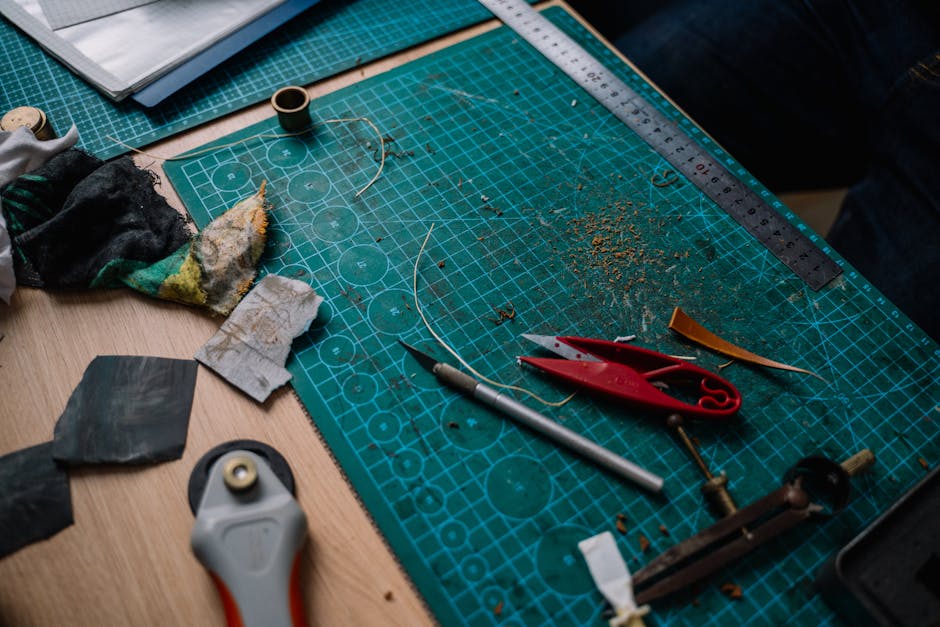
Before you can paint your first Warhammer miniature, you need to build it — and before you can build it, you need the right tools. The good news is that the essential hobby toolkit is surprisingly small and affordable. The bad news is that there are hundreds of products marketed at hobbyists, and it’s easy to waste money on tools you don’t actually need.
This guide cuts through the noise. We’ll tell you exactly which tools are essential for every Warhammer hobbyist, which are nice-to-have upgrades, and which specific products represent the best value at each price point. Whether you’re building your first box of Space Marines or kitting out a dedicated hobby station, this is the only tool guide you’ll need.
The Essential Toolkit — What Every Hobbyist Needs
These are the non-negotiable tools that you need from day one. Without any of these, you’ll struggle to assemble and prepare your models properly.
1. Sprue Cutters (Flush Cutters)
Sprue cutters are the single most important tool in your kit. They’re used to cleanly remove model components from the plastic sprues (frames) they come attached to. Using regular scissors, nail clippers, or (heaven forbid) twisting parts off by hand will damage your models, leave ugly marks, and potentially break delicate components.
What to look for: Single-flush or double-flush cutting edges, spring-loaded handles for comfort during extended sessions, and a fine tip that can reach into tight spots on the sprue. “Flush” means one side of the blade is flat, producing a cleaner cut closer to the part.
Our Recommendations
- Best Overall: Citadel Fine Detail Cutters (~$30–$35) — Games Workshop’s own cutters are genuinely excellent. Ultra-thin blades get into tight spots, and the flush-cut edge leaves minimal cleanup work. They’re pricey but worth it if budget allows.
- Best Value: Tamiya Sharp Pointed Side Cutter (~$18–$25) — A hobby industry staple. Slightly larger profile than the Citadel cutters but equally sharp and well-made. Excellent durability.
- Budget Pick: Xuron 410 (~$10–$12) — Surprisingly good for the price. The blades aren’t quite as fine as the premium options, but they’re more than adequate for beginners. These are what many hobby stores recommend as starter cutters.
Pro tip: Make your cuts in two steps. First, cut the part from the sprue leaving a small nub of plastic. Then make a second, closer cut to remove the nub. This prevents stress marks on the part that occur when you try to cut flush in a single cut.
2. Hobby Knife (X-Acto or Equivalent)
A sharp hobby knife is essential for cleaning up mould lines, trimming sprue nubs, cutting greenstuff, and dozens of other tasks. You’ll reach for your hobby knife almost as often as your cutters.
Our Recommendations
- Best Overall: X-Acto No. 1 with #11 Blades (~$8 for handle, ~$8 for 15-blade refill pack) — The industry standard. The #11 blade is perfect for miniature work — pointed enough for detail cleanup, strong enough for trimming. Buy the aluminium handle version for better grip and balance.
- Alternative: Citadel Mouldline Remover (~$20–$25) — Not technically a knife, but a purpose-built tool for removing mould lines. It’s safer than a knife blade (harder to cut yourself) and does a slightly better job on flat surfaces. Many experienced hobbyists use both.
Safety note: Always cut away from yourself. Always use a cutting mat (see below). Replace blades frequently — a dull blade is actually more dangerous than a sharp one because you apply more pressure and are more likely to slip. New hobbyists underestimate how sharp these blades are. Respect the blade.
3. Plastic Glue (Polystyrene Cement)
Plastic glue is specifically designed for assembling Games Workshop plastic kits. Unlike super glue, plastic glue actually melts the plastic surfaces together, creating a chemical weld that’s stronger than the surrounding plastic. Once cured, the bond is essentially permanent.
Our Recommendations
- Best Overall: Tamiya Extra Thin Cement (~$7–$9) — The hobbyist’s holy grail of plastic glue. The ultra-thin formula wicks into joints by capillary action — hold the parts together, touch the brush applicator to the seam, and the glue flows in perfectly. Minimal mess, strong bond, fast setting. This is genuinely the best plastic glue on the market.
- Runner-Up: Citadel Plastic Glue (~$8–$10) — Games Workshop’s own formula works well and has a precision applicator tip. Slightly thicker than Tamiya, which some beginners find easier to control. Perfectly good choice.
- Budget: Revell Contacta Professional (~$5–$7) — Needle applicator and thin formula similar to Tamiya. Excellent value.
Important: Plastic glue ONLY works on polystyrene plastic. It will NOT bond resin, metal, or plastic-to-non-plastic joints. For those, you need super glue (see below).
4. Super Glue (Cyanoacrylate / CA Glue)
Super glue is necessary for bonding resin parts, metal components, basing materials to bases, and any joint where plastic glue won’t work. It’s also useful when you want a non-permanent bond (super glue joints can be broken with enough force, which is handy if you need to repose a model later).
Our Recommendations
- Best Overall: Gorilla Glue Gel Super Glue (~$6–$8) — The gel formula is crucial for hobby work. Liquid super glue runs everywhere and bonds your fingers together. Gel stays where you put it, gives you a few seconds of repositioning time, and works on every material you’ll encounter in the hobby. The impact-resistant formula also handles the occasional dropped model better than brittle CA glues.
- Best for Precision: Bob Smith Industries (BSI) Insta-Cure+ (~$8–$10) — A medium-viscosity CA glue with a fine applicator tip. Preferred by many experienced hobbyists for its precision and reliable bond strength.
- Also useful: Super Glue Accelerator (e.g., BSI Insta-Set) (~$7) — Spray this on a super glue joint and it cures instantly. Invaluable when you’re holding parts together and don’t want to wait. Practically essential for pinning and magnetizing.
5. Files and Mould Line Removers
Every plastic model has mould lines — thin ridges of plastic that form where the two halves of the injection mould meet. Removing them is the difference between a model that looks mass-produced and one that looks professional. Yes, it’s tedious. Yes, it’s worth doing.
Our Recommendations
- Best Files: Needle File Set (~$8–$15 for a set of 6–10) — A set of small needle files in various shapes (flat, half-round, round, triangular) covers all your needs. Look for a set with at least fine (#2) cut. The flat file gets the most use. No need to spend more than $15.
- Best Mould Line Remover: Citadel Mouldline Remover (~$20–$25) — The curved blade design lets you scrape mould lines off curved surfaces without accidentally carving into the detail. More intuitive than using a knife for beginners.
- Budget Alternative: The back of a hobby knife blade works perfectly well for mould line removal. Many experienced hobbyists never use anything else.
6. Cutting Mat
A self-healing cutting mat protects your work surface from knife cuts, provides a clean work area, and includes a grid pattern that’s useful for measuring and alignment. Don’t skip this — hobby knives will destroy tables, desks, and relationships.
Our Recommendations
- Best Overall: Any A3-size (12″×18″) self-healing cutting mat from a reputable brand. Look for at least 3mm thickness. Brands like Olfa, Fiskars, and even Amazon Basics make perfectly good ones for $10–$20.
- A3 size is ideal — large enough to work comfortably but not so large it dominates your desk. A4 is a bit cramped once you have sprues, tools, and models spread out.
7. Pin Vice (Hand Drill)
A pin vice is a small hand drill used for drilling holes in models — essential for pinning heavy parts (reinforcing glue joints with metal wire), magnetizing models, and drilling out gun barrels (which makes Space Marines look dramatically better with five minutes of work).
Our Recommendations
- Best Overall: Army Painter Pin Vice (~$12–$15) — Comes with multiple drill bit sizes and a comfortable grip. The most commonly recommended option in the hobby.
- Alternative: Any precision pin vice from a hardware or craft store (~$8–$12) — As long as it accepts small drill bits (0.5mm–2mm range), it’ll work fine. The tool itself is simple — you’re paying for the chuck mechanism and drill bits.
Nice-to-Have Tools — Upgrade Your Kit
These tools aren’t essential for getting started, but they’ll make your hobby life significantly easier as you progress. Add them as needed.
Greenstuff (Kneadite Epoxy Putty)
A two-part epoxy putty used for gap filling, sculpting custom details, converting models, and repairing damage. Mix the blue and yellow strips together until you get a uniform green colour, then sculpt it onto your model. It cures in about 4–6 hours.
Recommendation: Kneadite Blue/Yellow (~$10–$15 for a strip) — This is the original and best. Games Workshop sells it rebranded as “Green Stuff” at a markup. Buy the generic version from hobby suppliers — it’s the same product.
Rare Earth Magnets
Small neodymium magnets (typically 3mm × 1mm or 5mm × 2mm) let you magnetize weapon options on your models so you can swap loadouts without buying multiple kits. Essentially essential for competitive players who need to adapt to changing rules.
Recommendation: Buy in bulk from online magnet suppliers — hobby-branded magnets are the same product at 3–5x the price. A pack of 100 small magnets costs $5–$10 and will last for ages.
Hobby Tweezers
Fine-tipped tweezers are invaluable for placing small parts (heads, accessories, decals), holding parts while glue sets, and placing flock and basing materials. Angled tweezers are generally more useful than straight ones for hobby work.
Recommendation: Any fine-tipped angled tweezers (~$5–$8) — Electronics-grade tweezers from Amazon work perfectly. Anti-static is a bonus but not necessary for hobby work.
Silicone-Tipped Sculpting Tools (Colour Shapers)
Silicone-tipped tools are fantastic for smoothing greenstuff, shaping putty, and texturing surfaces. If you do any conversion work or gap filling, these are game-changers.
Recommendation: Colour Shapers Size 0 or 2 (~$10–$15 for a set of 5) — The firm tip is most versatile. Get a variety of shapes.
Painting Handle / Holder
A painting handle clamps onto your model’s base so you can hold and rotate it comfortably while painting without touching the model with your fingers (which transfers oils and can rub off paint).
Recommendation: Citadel Painting Handle (~$8–$10) or Redgrass Games RGG 360 (~$20–$25) — The Citadel handle is basic but works. The RGG 360 is much more comfortable with its rotation feature and is worth the upgrade if you paint regularly.
Budget vs Premium — How to Prioritize Your Spending
If you’re on a tight budget, here’s how we’d prioritize spending across your tool kit:
Starter Budget (~$50–$60)
| Tool | Recommendation | Approx. Cost |
|---|---|---|
| Sprue Cutters | Xuron 410 | $10 |
| Hobby Knife | X-Acto #1 + blades | $12 |
| Plastic Glue | Tamiya Extra Thin | $8 |
| Super Glue | Gorilla Gel | $6 |
| Files | Needle file set | $8 |
| Cutting Mat | A3 self-healing | $12 |
| Total | ~$56 |
Premium Budget (~$100–$120)
| Tool | Recommendation | Approx. Cost |
|---|---|---|
| Sprue Cutters | Citadel Fine Detail Cutters | $32 |
| Hobby Knife | X-Acto #1 + blades | $12 |
| Mould Line Remover | Citadel Mouldline Remover | $22 |
| Plastic Glue | Tamiya Extra Thin | $8 |
| Super Glue + Accelerator | BSI Insta-Cure+ & Insta-Set | $16 |
| Files | Needle file set | $10 |
| Cutting Mat | A3 self-healing | $12 |
| Pin Vice | Army Painter | $13 |
| Total | ~$115 |
Tools You DON’T Need (Despite What Marketing Says)
- Citadel Assembly Stand: It’s a plastic stand for holding sprues. You don’t need it — your cutting mat works fine.
- Dedicated “hobby” scissors: Regular sprue cutters handle everything. Scissors are for paper, not plastic models.
- Expensive tool cases/organizers: A tackle box from the hardware store works just as well for a quarter of the price.
- Power tools (Dremel etc.): Not needed for standard kit building. A pin vice handles all the drilling you’ll do on individual models.
Reader Questions Answered
Since publishing this guide on Best Hobby Tools for Warhammer, we have received numerous questions from readers. Here are the most common queries and our detailed responses.How often is this guide updated? We review and update this content quarterly or whenever significant new products, rules changes, or community developments make updates necessary. The last review date is noted at the top of the article, so you can always check how current the information is.Can you recommend options for complete beginners? Absolutely. If you are brand new to the hobby, start with the entry-level options discussed in this guide. You do not need the most expensive or advanced choices to get excellent results. Focus on building fundamental skills and upgrading your tools and materials as your experience grows and you better understand your personal preferences.How do your recommendations compare to what competitive players use? Our recommendations balance quality, value, and accessibility. Competitive players often have very specific preferences shaped by years of experience, but the options we highlight perform excellently for the vast majority of hobbyists. Where competitive or tournament-level considerations differ significantly from general recommendations, we have noted this in the relevant sections above.Do you accept products for review? We purchase all products independently to ensure unbiased assessments. Our recommendations are based entirely on our testing experience and community feedback, with no manufacturer influence on our conclusions.
Our Testing Method
Every product and recommendation in this guide has been evaluated through hands-on testing over a minimum of four weeks of regular use. We assess durability, ease of use, value for money, and performance across different skill levels from beginner to advanced. Where applicable, we test products on multiple model types including infantry, vehicles, and large monsters to ensure our findings apply broadly.We also incorporate feedback from the wider Warhammer community, including painting groups, tournament players, and hobby forums. This combination of personal testing and community consensus ensures our recommendations reflect real-world performance rather than marketing claims or first-impression reviews. Products that perform well initially but deteriorate with extended use are noted accordingly, as longevity is a critical factor that short-term reviews often miss.
Updates and Changes
This guide on Best Hobby Tools for Warhammer is a living document that we actively maintain. Since its original publication, we have made several refinements based on new product releases, price changes, and reader feedback. Any significant changes are documented here so returning readers can quickly identify what has been updated.We monitor manufacturer announcements, community discussions, and retail availability to keep our recommendations current. If a recommended product is discontinued or a superior alternative becomes available, we update the guide promptly. Bookmark this page and check back periodically — our goal is to ensure this remains the most accurate and helpful resource available on this topic for the Warhammer community.
Frequently Asked Questions
Can I just use regular household tools?
To some extent, yes. A sharp craft knife, nail clippers (in a pinch for sprue cutting), and generic super glue will technically get models assembled. But purpose-built hobby tools produce noticeably better results with less effort. Sprue cutters in particular make a huge difference — nail clippers crush and deform the plastic rather than cutting it cleanly. Invest the $10 in proper cutters at minimum.
Is Tamiya Extra Thin really that much better than other plastic glues?
In our experience, yes. The capillary action application method is genuinely superior — you hold parts together, touch the brush to the join, and the glue wicks in perfectly. Other thick plastic glues require you to apply glue to the surface, then press parts together, often squeezing excess glue onto visible surfaces. Once you try Tamiya Extra Thin, you won’t go back.
How often should I replace my hobby knife blades?
More often than you think. A fresh blade glides through plastic effortlessly; a dull blade requires pressure that leads to slips and uneven cuts. Replace the blade every 2–3 building sessions, or immediately if you notice it catching or requiring extra force. Blades are cheap ($0.50 each in bulk) — your time, fingers, and models are not.
Do I need different tools for Citadel plastic vs resin models?
Mostly the same tools, with two key differences: (1) Resin must be washed in warm soapy water before assembly to remove release agent residue, or glue and paint won’t adhere properly. (2) Plastic glue doesn’t work on resin — you must use super glue for all resin assembly. Also, resin dust from filing or cutting is harmful to inhale, so wear a dust mask when cleaning up resin models.
What’s the best way to store my hobby tools?
A simple pencil case or zippered pouch works for basic tools. If your collection grows, a small toolbox or tackle box with compartments keeps everything organized. The key is keeping bladed tools (hobby knives, cutters) stored safely where they won’t damage other tools or, more importantly, your fingers when you reach in.
Should I buy a Games Workshop hobby starter set?
Games Workshop’s starter sets (like the “Citadel Essentials” tool kit) are convenient bundles but typically cost more than buying equivalent tools individually. The included tools are decent quality. If convenience matters more than saving $10–$15, they’re a fine choice. If you want the best tools at the best price, buy individually following our recommendations above.
Now that your toolkit is sorted, head over to our how to paint guide to learn the fundamentals, or check out our airbrush buyer’s guide if you’re ready to level up your painting setup. For complete beginner guidance, see our how to start collecting guide.