
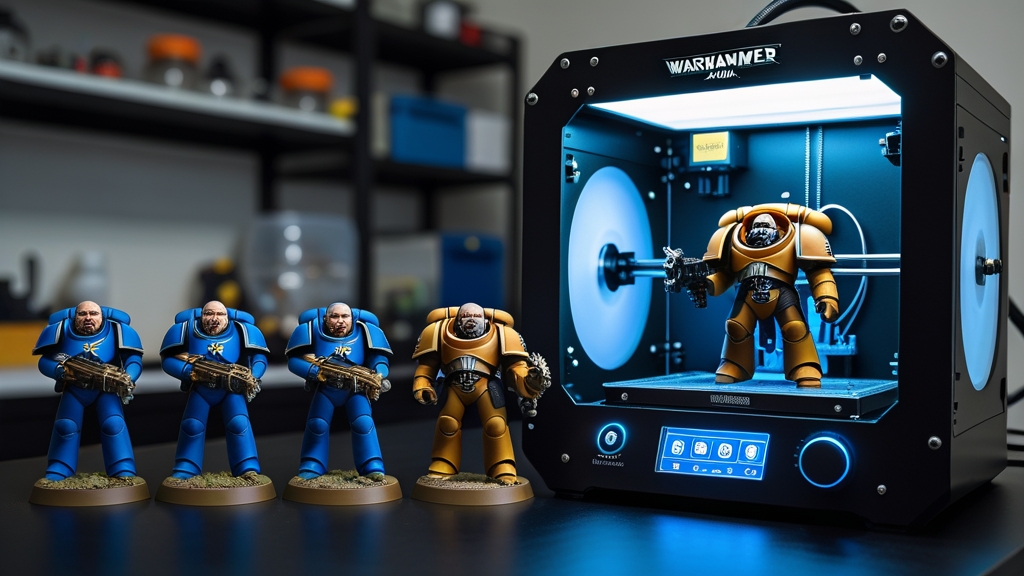
Is 3D Printing Warhammer Models Legal? — Rules & Ethics
3D printing models for personal use exists in a legal grey area. Games Workshop’s intellectual property protects their specific designs, but generic sci-fi or fantasy models that do not copy GW’s exact designs are legal. Most tournaments require official GW models, and selling 3D printed copies of GW designs is clearly illegal.
What Does the Law Actually Say About 3D Printing Miniatures?
Understanding the legal landscape around 3D printing Warhammer models requires separating several distinct legal concepts. The law in this area is genuinely complex, and definitive answers depend on your jurisdiction and the specific circumstances.
Copyright Law
Games Workshop holds copyright on their specific model designs, artwork, and written content. Scanning a GW model and printing an exact replica is copyright infringement. Creating and distributing STL files that are clearly copies of GW designs is also infringement. This applies regardless of whether you sell the prints or keep them for personal use — though enforcement typically focuses on commercial distribution rather than private use.
Trademark Law
GW holds trademarks on names like Space Marines, Warhammer, and many faction and unit names. Using these trademarked names to sell or distribute 3D printed models would constitute trademark infringement. This is why many 3D model designers use alternative names — battle brothers instead of Space Marines, for example.
Design Patents and Registered Designs
GW registers certain designs, particularly distinctive visual elements like the Space Marine silhouette. These registrations provide additional legal protection beyond copyright, making it harder to create close-enough alternatives that technically differ from the original.
The Grey Area
The grey area exists because intellectual property law protects specific creative expressions, not general concepts. GW owns the specific design of an Intercessor Space Marine, but they do not own the concept of a power-armoured soldier with a rifle. A 3D printed model that is clearly its own original design — even if it serves the same gaming purpose — sits in genuinely uncertain legal territory. Courts have not fully resolved where the line falls for miniature wargaming specifically.
What Is Games Workshop’s Official Stance on 3D Printing?
Games Workshop has been increasingly active in protecting their intellectual property from 3D printing threats. Their key positions and actions include the following.
GW has issued DMCA takedown notices to STL designers on platforms like MyMiniFactory, Cults3D, and Thingiverse when designs are deemed too close to GW originals. They have sent cease and desist letters to notable STL designers and shops selling printed models. Their terms of sale and competition rules require official GW models for organised play.
However, GW has not pursued legal action against individual hobbyists printing models for personal use. Their enforcement efforts focus on creators and sellers of STL files and printed models that copy GW designs, not on individual hobbyists with a printer at home.
What Can You Legally 3D Print for Warhammer?
Several categories of 3D printing are clearly legal and widely accepted in the Warhammer community.
Terrain and Scenery
3D printing terrain is almost universally accepted. Gothic ruins, industrial buildings, barricades, and battlefield scatter terrain do not infringe on GW’s IP when they are original designs (or at least not copies of specific GW terrain kits). The 3D printing community produces outstanding terrain that rivals or exceeds GW’s own offerings. Most gaming groups and even tournaments welcome 3D printed terrain.
Bases and Basing Materials
Custom bases featuring skulls, rubble, alien flora, and textured surfaces are widely available as STL files and are completely fine to use. These enhance your models without replacing GW products.
Bits and Accessories
Shoulder pads, weapons, heads, and conversion bits that are original designs are broadly acceptable. Many players use 3D printed bits to customise their GW models, adding personal touches that make their armies unique. This is effectively the same as the kitbashing tradition that GW has always encouraged.
Display and Storage
Model display stands, carrying case inserts, paint rack organisers, and other hobby accessories are perfectly fine to print and commonly shared in the community.
What Should You Not 3D Print for Warhammer?
Some categories of 3D printing are clearly problematic from both legal and community perspectives.
Exact Copies of GW Models
Scanning or recreating exact copies of GW models is copyright infringement. Beyond the legal issues, using obvious copies is generally frowned upon by the community. If your Intercessors are identical to GW’s but clearly printed on a resin printer, most opponents and tournament organisers will notice and object.
Recasts
Using 3D scanning to create molds or prints of out-of-production or current GW models is clearly illegal and ethically questionable. This category includes scanning Forge World resin kits, which are expensive and sometimes tempting targets for recasting.
Selling Printed Copies
Selling 3D printed models that copy or closely imitate GW designs is illegal and is the area where GW’s enforcement efforts are strongest. Several notable sellers have been shut down through legal action.
Can You Use 3D Printed Models in Tournaments?
Tournament rules regarding 3D printed models vary, but the general trend is clear.
Games Workshop official events require all models to be Citadel or Forge World miniatures. This is strictly enforced. Independent tournament organisers (ITOs) vary in their policies. Most major competitive events require official GW models. Some require a minimum percentage of GW components, typically 50 percent or more. A few smaller events allow third-party and 3D printed models as long as they are clearly identifiable as the units they represent.
If you intend to play competitively at tournaments, building your army from official GW models is the safest approach. If you only play casually with friends, the rules are whatever your gaming group agrees on.
How Does the Community Feel About 3D Printed Warhammer Models?
Community attitudes toward 3D printing vary significantly and the topic can be divisive.
Pro-Printing Arguments
Supporters argue that GW’s prices are excessive and that 3D printing democratises the hobby. They point out that original designs that serve as alternatives to GW models are legitimate competition rather than piracy. Printing terrain, bits, and accessories is almost universally accepted as beneficial to the hobby. Some argue that players who cannot afford full GW armies should still be able to enjoy the game.
Anti-Printing Arguments
Critics argue that GW’s investment in design and tooling deserves to be compensated through sales. They point out that if everyone printed models instead of buying them, GW would cease to exist and the game would die. Exact copies undermine the intellectual property that makes Warhammer distinctive. And the visual quality of 3D prints, while improving rapidly, often does not match injection-molded plastic.
The Middle Ground
Most hobbyists occupy a middle ground. They accept 3D printing for terrain, bits, and original alternative designs while opposing exact copies of GW models. They expect official models at competitive events but are flexible for casual play. Many use 3D printing to supplement their GW collections rather than replace them entirely.
What Are Good Sources for Legal Warhammer-Compatible STL Files?
Several designers create original models that are compatible with Warhammer without directly copying GW’s designs. These are sometimes called proxy models or alternative miniatures.
Popular platforms for finding legal STL files include MyMiniFactory, Cults3D, and Patreon creators who design original sci-fi and fantasy miniatures. Look for designers who create their own distinctive aesthetic rather than attempting to replicate GW’s exact designs. The best alternative model designers bring their own creative vision while maintaining gaming compatibility through correct base sizes and similar visual scale.
For terrain specifically, platforms like Thingiverse and Printables have enormous libraries of free terrain STL files that are entirely original designs. The terrain printing community is one of the most active and generous in the 3D printing hobby.
Is 3D Printing Replacing Games Workshop Models?
Despite fears from both GW and some community members, 3D printing has not significantly impacted GW’s business. Games Workshop continues to report record revenues and profits. Several factors explain why.
Most hobbyists prefer official models for their quality, consistency, and legitimacy. The hobby aspect of building GW kits is part of the appeal that printing does not replicate. Tournament requirements drive demand for official models among competitive players. GW’s constant release of new, highly detailed kits keeps demand strong. And the social aspect of the hobby — sharing your collection, entering painting competitions, discussing new releases — is built around official models.
3D printing serves as a supplement to rather than a replacement for the official hobby for most people who use it. It fills gaps in GW’s range, provides affordable terrain, and enables creative conversions. The two coexist more than they compete.
Summary — Is 3D Printing Warhammer Models Legal?
The legality of 3D printing Warhammer models depends entirely on what you are printing and what you do with it. Printing original designs for personal use is legal. Printing exact copies of GW models is copyright infringement regardless of intended use, though enforcement targets sellers rather than individual hobbyists. Selling any prints that copy GW designs is clearly illegal.
For practical purposes, printing terrain, bases, bits, and original alternative designs is widely accepted. Printing exact copies of GW models is legally risky and socially frowned upon. And tournaments overwhelmingly require official GW models regardless of print quality. If you want to use 3D printing in your Warhammer hobby, focus on the areas where it adds value without crossing legal or ethical lines.
Frequently Asked Questions
Why does Games Workshop send trademark notices about 3D prints?
Games Workshop protects names like Warhammer, Space Marine and its unit names as trademarks, and it challenges listings that use those names or copy its designs. That is why STL designers sell ‘battle brothers’ or ‘sci-fi knights’ rather than Space Marines. Notices and takedowns usually go to people selling files or prints on platforms such as Cults3D or MyMiniFactory, not to hobbyists printing at home.
Is 3D printing Warhammer 40k illegal?
Owning or using a 3D printer is completely legal. What can break the law is printing or sharing exact copies of Games Workshop models, which is copyright infringement whether or not you sell them, and selling them is clearly illegal. Printing terrain, bases, bits and original proxy designs for personal use is legal and widely accepted, although official events still require Citadel models.
Is a resin or filament printer better for Warhammer miniatures?
A resin printer is better for miniatures because it captures the fine detail needed at 28-32mm scale. A filament (FDM) printer is cheaper to run and better for terrain, buildings and large scenery, where tiny details matter less. Resin printing needs gloves, ventilation, and washing and curing the prints, so plan your workspace before buying one.
Can I 3D print out-of-production Warhammer models?
Legally, no. A model going out of production does not end Games Workshop’s copyright, so printing an exact copy is still infringement. The safer options are second-hand originals, or original third-party designs that fill the same role on the tabletop. Always tell your opponent when a model is a proxy.
Related Content
- How to Play Warhammer 40k — Learn how to play Warhammer 40k
- How to Make Warhammer Terrain Cheap — Make your own terrain legally and affordably
- Best 3D Printer for Miniatures — Find the best 3D printer for miniatures
- Warhammer Painting for Beginners — Start painting your miniatures