
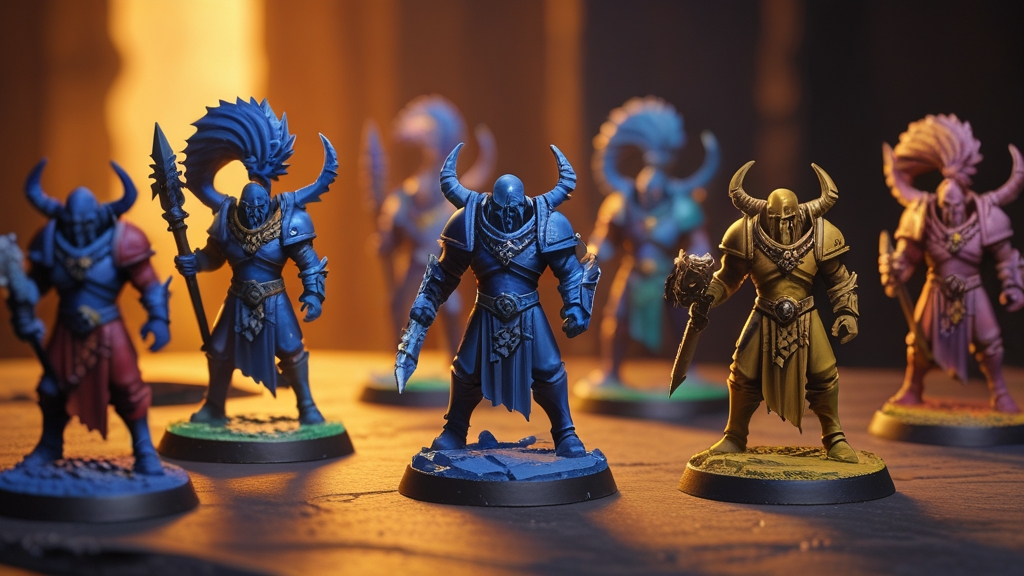
This Age of Sigmar painting guide covers the easiest factions to paint, recommended paints for each Grand Alliance, batch painting techniques for fantasy models, and basing ideas for the Mortal Realms. Whether you are painting your first Stormcast or your hundredth skeleton, this guide will help you get a painted army on the table.
Painting is one of the most rewarding aspects of the Age of Sigmar hobby — and one of the most intimidating for newcomers. The idea of painting dozens of miniatures to a standard you are proud of can feel overwhelming, especially when you see the stunning display armies at tournaments and in painting showcases online. But here is the truth that every experienced painter knows: a fully painted army at basic tabletop standard looks infinitely better than an unpainted one, and getting to that standard is far easier than most people think.
This guide is specifically tailored to Age of Sigmar painters. While many painting principles are universal (and our Warhammer painting for beginners guide covers the fundamentals), AoS has its own particular considerations — the diverse range of faction aesthetics, the fantasy basing styles that evoke the Mortal Realms, and the specific paint schemes associated with each army. We will cover all of these with practical, actionable advice that gets paint on models and models on the table.
Which Age of Sigmar Factions Are Easiest to Paint?
Some factions are dramatically easier to paint than others. If you are a painting beginner, choosing an easy-to-paint faction can be the difference between a finished army and a pile of grey plastic. Here are the easiest factions ranked:
Tier 1 — Easiest:
Nighthaunt: The easiest faction in the game to paint. Prime white or light grey, apply a contrast paint or wash in your chosen colour (Hexwraith Flame for classic green ghosts, or any other colour for alternative schemes), drybrush the raised areas, and paint the weapons. You can complete an entire Nighthaunt model in 15-20 minutes.
Ossiarch Bonereapers: Primarily bone-coloured models that respond beautifully to the classic bone painting technique — basecoat, Agrax Earthshade wash, drybrush with a lighter bone colour. Add dark accent colours for armour plates and weapons and you have a striking army.
Soulblight Gravelords (Skeletons/Zombies): Undead infantry are extremely quick to batch paint. Bone basecoat, wash, drybrush, add rusty weapon and shield details. The beauty of undead models is that imperfections and messiness actually enhance the look — they are supposed to be decrepit.
Tier 2 — Moderate:
Stormcast Eternals: Large, chunky armoured models with broad flat panels that are easy to basecoat. The standard gold scheme is achievable with Retributor Armour spray, Reikland Fleshshade wash, and minimal detail work. More challenging if you want to add detailed shield heraldry or freehand designs, but the basic scheme is very accessible.
Slaves to Darkness: Dark armour is forgiving and looks good with minimal effort. Prime black, drybrush with metallic paints, add colour accents for cloaks and shields. The dark palette hides mistakes well.
Sons of Behemat: Only a handful of models to paint, but each one is large and time-consuming. The skin and clothing are straightforward, but the sheer size means each model takes several hours despite the simple techniques required.
Tier 3 — Challenging:
Lumineth Realm-lords: Elegant, detailed models with lots of freehand-worthy surfaces and precise colour transitions. Beautiful when well-painted but demanding.
Seraphon: Lots of individual scales, feathers, and bright colour transitions that require patience and layering.
Sylvaneth: Organic tree-spirit forms with complex textures that are difficult to make look natural. Requires confident drybrushing and wash application.
What Paints Do You Need for Each Grand Alliance?
Rather than buying every paint in the range, here are the essential paints for each Grand Alliance using Citadel paints (with notes on equivalents from Vallejo, Army Painter, or other brands):
Order: Retributor Armour (gold for Stormcast and many Order heroes), Kantor Blue or Macragge Blue (blue accents common across Order), Rakarth Flesh (pale skin/cloth), White Scar (white details), Leadbelcher (metallic weapons/armour). Washes: Reikland Fleshshade (warm wash for gold/skin), Nuln Oil (dark wash for metals/shadows).
Chaos: Abaddon Black (base for dark armour), Leadbelcher (metallic trim), Khorne Red or Mephiston Red (red accents — Khorne), Death Guard Green (Nurgle), Thousand Sons Blue (Tzeentch), Screamer Pink (Slaanesh). Washes: Nuln Oil (universal dark wash), Agrax Earthshade (brown wash for organic elements).
Death: Zandri Dust or Ushabti Bone (bone), Rakarth Flesh (pale undead skin), Leadbelcher (ancient weapons), Screamer Pink or Khorne Red (vampire accents). Washes: Agrax Earthshade (essential for bone), Carroburg Crimson (blood effects on vampires).
Destruction: Waaagh! Flesh or Orruk Flesh (green Ork/Orruk skin), Mournfang Brown (leather/fur), Leadbelcher (crude weapons), Averland Sunset or Yriel Yellow (yellow accents — Bad Moons/Ironjawz). Washes: Biel-Tan Green (green wash for skin), Agrax Earthshade (universal brown wash).
How Do You Batch Paint an AoS Army?
Batch painting — painting multiple models simultaneously rather than finishing one at a time — is the most efficient way to get an AoS army painted. Here is the process:
Step 1: Assemble and prime all models in the batch (typically 5-10 models of the same unit type). Let them dry completely.
Step 2: Apply the largest colour area to all models in the batch before moving to the next colour. For example, paint all the armour on all 10 skeletons, then all the bone, then all the weapons. This “assembly line” approach is faster because you only clean your brush and change colours once per step.
Step 3: Apply washes to all models in the batch. Washes are the single most time-efficient painting step — they add shading, depth, and definition with minimal effort. Apply liberally and let them pool in recesses.
Step 4: Apply a quick drybrush highlight to all models. Drybrushing is fast and adds significant visual impact — load your brush with paint, wipe most of it off on a paper towel, then lightly drag the brush over raised surfaces to catch the edges.
Step 5: Pick out any remaining details (eyes, gems, belt buckles) and paint the bases.
Using this method, a skilled batch painter can complete 10 infantry models in 3-4 hours. Even a beginner can finish 10 models in an evening. The key is accepting “tabletop standard” rather than pursuing display quality — you can always revisit models later for upgrades.
How Do You Base Models for the Mortal Realms?
Basing — decorating the base of your models to represent the ground they fight on — is the final step that ties your army together visually. Age of Sigmar’s setting spans multiple Mortal Realms, each with a distinct aesthetic that you can reflect in your basing:
Aqshy (Realm of Fire): Cracked red/brown earth, volcanic rocks, lava effects (using Citadel texture paints like Martian Ironearth for cracking effects). Excellent for Fyreslayers, Khorne armies, and any aggressive faction.
Ghur (Realm of Beasts): Grasslands, bones, rough earth. Use standard green flock or tufts combined with scattered bones from bits boxes. Perfect for Destruction armies and Beastmen.
Ghyran (Realm of Life): Lush vegetation, bright green grass, flowers, small mushrooms. Citadel’s Stirland Mud texture paint with green grass tufts creates this look quickly. Ideal for Sylvaneth and Nurgle (ironic corruption of life).
Shyish (Realm of Death): Dark, barren earth, gravestones, skulls, dead trees. Use dark browns and greys with no vegetation. Skulls from the Citadel Skulls box scattered on bases work perfectly. The natural choice for Death alliance armies.
Hysh (Realm of Light): Clean white/marble surfaces, crystal formations, bright sand. Use white or light grey texture with pale tufts. Suits Lumineth Realm-lords and angelic armies.
The simplest basing approach for beginners: apply Astrogranite Debris texture paint (grey rocky texture), wash with Nuln Oil, drybrush with a light grey, and add a grass tuft or two. This neutral base works with any faction and any Mortal Realm, and it takes less than a minute per model.
What Are the Best Speed Painting Techniques?
If your goal is to get models painted quickly, these techniques deliver the best results per minute invested:
Contrast paints: Citadel Contrast paints (and equivalents like Speedpaints from Army Painter or Xpress Colors from Vallejo) are designed to provide a basecoat and shade in a single application over a light primer. They work by pooling in recesses and thinning over raised areas, creating automatic shading. Over a Wraithbone or Grey Seer primer, they can paint entire models in minutes. They are not suitable for every surface but excel on cloth, skin, fur, and organic textures.
Drybrushing: The fastest highlighting technique. Works on virtually any textured surface — armour, bone, fur, scales, rock. Load a brush with paint, remove almost all of it, then lightly drag across raised surfaces. A heavy drybrush over a dark primer can serve as both basecoat and highlight.
Spray primers as basecoats: Using coloured spray primers (Retributor Armour for gold armies, Corax White for light armies, Mephiston Red for blood-themed armies) eliminates the basecoating step entirely. Your primer IS your basecoat, and you only need to add detail colours, wash, and highlight.
For a deeper look at techniques, consult our guides on best paints for Warhammer and how to paint Stormcast Eternals for faction-specific walkthroughs.
Frequently Asked Questions
Do I have to follow the official colour scheme?
Absolutely not. While Games Workshop provides official colour schemes for each faction, you are free to paint your models in any colours you choose. Custom schemes are celebrated in the community, and many of the most impressive armies at tournaments feature unique colour choices. The official schemes are a helpful starting point, but they are suggestions, not requirements.
How long does it take to paint a full AoS army?
At tabletop standard using batch painting, most players can complete a 2,000-point army in 30-60 hours of painting time — spread over several weeks to a few months depending on how often you paint. Some armies (Nighthaunt, Sons of Behemat) take significantly less time, while horde armies (Skaven, large Soulblight builds) take more.
Should I paint models before or after assembly?
For most AoS models, painting after full assembly is fine and faster. Sub-assembly (painting some parts before gluing them together) is useful for models where assembled parts block access to areas you want to paint — large cavalry models, characters with shields pressed against their bodies, or models where the rider blocks the mount. Start with full assembly and only sub-assemble when you find areas impossible to reach.
What is battle ready versus parade ready?
Battle ready is the standard tournament minimum — basecoated, washed, with painted bases. It looks good at arm’s length and is achievable by any beginner. Parade ready (sometimes called “display quality”) adds layered highlights, freehand details, advanced techniques like NMM (non-metallic metal), and extra basing details. Aim for battle ready first; upgrade to parade ready later if you enjoy the painting process.
Can I use non-Citadel paints for Age of Sigmar models?
Yes. Vallejo, Army Painter, Scale75, Kimera, and many other paint brands work perfectly on Games Workshop models. Many experienced painters prefer non-Citadel brands for specific applications — Vallejo for its dropper bottles, Scale75 for its smooth coverage, Army Painter for its Speedpaints range. Use whatever paints you enjoy working with and can afford.
What primer colour should I use for Age of Sigmar models?
Match the primer to the army. A white or light primer such as Wraithbone or Grey Seer suits Contrast-heavy armies like Nighthaunt, and black suits dark armies like Slaves to Darkness. Coloured sprays like Retributor Armour can double as your basecoat. Whichever you pick, spray light, even coats in dry weather so the detail isn’t clogged.
Do Age of Sigmar models have to be painted to play?
No, not in casual games. You can play with unpainted or part-painted models whenever your opponent is happy to. Many tournaments, especially official Games Workshop events, require a fully painted army to at least battle-ready standard. Check the event pack before you sign up.
Can I use the same paints for Age of Sigmar and Warhammer 40k?
Yes. Citadel paints and other hobby brands work on both games’ models, since both are the same plastic. A bone recipe for Ossiarch Bonereapers works just as well on 40k skulls, and Retributor Armour suits Stormcast and Custodes alike. If you play both, you only need one paint collection.