
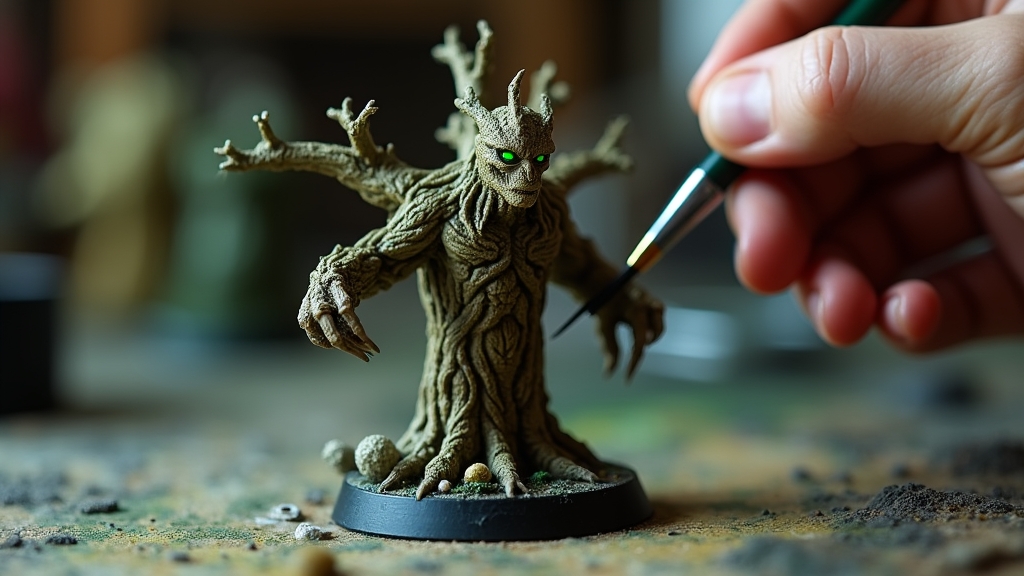
Part of our Sylvaneth hub: every Sylvaneth guide, lore page and painting tutorial in one place.
Sylvaneth are living trees, and that makes them one of the friendliest Age of Sigmar armies for new painters. Bark is full of deep texture, so washes and drybrushing do most of the work, and there’s no armour to keep neat. This guide shows you how to paint Tree-Revenants step by step, then covers the signature parts: bark, glowing spirits, leaves and the newer insect-riding Revenants. We’ll finish with alternative schemes and a fast route for beginners.
Both current boxes are covered in our Sylvaneth Spearhead guide: Bitterbark Copse (Branchwych, Treelord, Kurnoth Hunters and Tree-Revenants) and Spitewing Flight (Arch-Revenant, Gossamid Archers, Spiterider Lancers and Revenant Seekers). The techniques here work for both.
What You Need
Citadel paints are now sold under the Warhammer Colour name, but the pot names are unchanged.
| Area | Classic paints | Contrast / Speedpaint alternative |
|---|---|---|
| Primer | Wraithbone or Grey Seer spray | Same |
| Pale bark | Ushabti Bone, Agrax Earthshade, Screaming Skull drybrush | Skeleton Horde (Contrast) or Pallid Bone (Speedpaint) |
| Dark bark | Dryad Bark, Agrax Earthshade, Gorthor Brown then Baneblade Brown drybrush | Wyldwood (Contrast) or Dark Wood (Speedpaint) |
| Spirit skin and glow | Baharroth Blue, Drakenhof Nightshade, white | Aethermatic Blue (Contrast) |
| Green leaves and moss | Caliban Green, Moot Green | Dark Angels Green or Militarum Green (Contrast) |
| Autumn leaves | Khorne Red, Jokaero Orange, Averland Sunset | Blood Angels Red, Gryph-Hound Orange, Iyanden Yellow (Contrast) |
| Weapons and blades | Celestra Grey, Nihilakh Oxide | Talassar Blue (Contrast) |
| Base | Stirland Mud, Tallarn Sand drybrush, tufts and leaf litter | Same |
You’ll need a medium base brush, a small detail brush and an old, soft brush for drybrushing.
Step by Step: Tree-Revenants
1. Prime
Clean the mould lines (they hide well in bark, so don’t stress), then prime with Wraithbone for warm bark or Grey Seer for a cooler, silvery look. Tyler Mengel used Grey Seer in his official Sylvaneth Contrast tutorial for exactly that reason.
2. Basecoat the bark
Choose pale or dark bark (see the table above) and stick with it across the army.
- Pale bark: Ushabti Bone over the whole body.
- Dark bark: Dryad Bark over the whole body.
Don’t worry about neatness. Bark is the largest area, so you’ll paint the details over it.
3. Basecoat the details
- Faces and spirit areas: Baharroth Blue on the face and any exposed “heartwood” glow.
- Leaves and moss: Caliban Green, or an autumn colour (Khorne Red or Jokaero Orange).
- Blades: Celestra Grey.
- Eyes: white, ready for the glow later.
4. Shade
Give all the bark a generous wash of Agrax Earthshade and let it flow deep into the grain. Wash the faces with Drakenhof Nightshade, the blades with Nihilakh Oxide, and the leaves with Agrax Earthshade (or Athonian Camoshade for green leaves). Leave it to dry fully.
5. Drybrush and highlight
This is where Sylvaneth come alive.
- Bark: drybrush the whole model. For pale bark, use Screaming Skull, then a lighter pass of white on the very top ridges. For dark bark, use Gorthor Brown, then Baneblade Brown.
- Faces: a fine line of white mixed with Baharroth Blue on the brow, cheekbones and nose.
- Leaves: a quick edge of Moot Green for green leaves, or Averland Sunset on the tips of autumn leaves.
- Blades: a thin white edge on the cutting edge.
6. Glowing eyes
Paint the eye sockets white, then add a thin glaze of Baharroth Blue or green over them so the colour fades out around the socket. See our glowing eyes guide for the full method.
7. Base
Use Stirland Mud, drybrush it with Tallarn Sand, then add tufts, small rocks and a scatter of tiny leaves. Fallen leaves on the base make Sylvaneth look like they’ve just stepped out of the forest. Our basing guide has more ideas.
Signature Parts
Bark that looks like real wood
The best bark has several tones. After your main drybrush, try these:
- Add a little green or grey lichen with a stippled drybrush on the lower legs.
- Glaze a thin reddish-brown into some recesses for warmth.
- Pick out a few knots with a dark brown dot.
Our wood texture guide explains the drybrush layers in more depth.
The glowing spirit
Every Sylvaneth has a spirit inside the wood. Some painters give it a soft blue-white glow, and others prefer green or gold. The trick is to start with white and add colour on top, so the glow stays bright. Paint a little of the glow colour onto the bark around the source, and it will look as though the light is spilling out. Object source lighting is the advanced version of this.
Leaves
Leaves are the easiest way to show the season of your army. Green leaves suit spring and summer. Red, orange and yellow suit autumn, and pale grey or white suit winter. Paint a dark base, then highlight just the leaf tips with a brighter colour. On cloaks made of leaves, like the Arch-Revenant’s, Andy Wardle (in an official Warhammer Community article) found three thin coats of Contrast was enough with no edge highlight needed.
Spitewing riders and insect wings
The Spitewing Flight Revenants ride huge insects, which gives you a chance to add colour.
- Paint the insect bodies in a glossy contrasting colour: a dark green, a purple-black or a metallic blue all look great.
- For the wings, paint them white or pale grey, then glaze a thinned Contrast colour (mixed with Contrast Medium) towards the base of each wing. Add a few dark vein lines.
- Finish the wings with gloss varnish so they shine like real insect wings.
Treelords and big trees
A Treelord is just a large Tree-Revenant: base, wash and two drybrushes. Use a bigger, older drybrush and work fast. Our large models guide covers this.
The Official Look and Alternatives
Sylvaneth have always been shown in a wide range of bark colours, from pale bone to deep brown, often with soft blue or green spirit glows. The battletomes have described them as living in different glades, each with its own look and season, so there’s no single “correct” scheme. That freedom is one of the best things about the army. For more on the glades and their history, read our Sylvaneth lore.
Alternative 1, Winter Bark: pale grey-white bark (Grey Seer, Nuln Oil wash, drybrush white), blue spirit glow and red or white leaves. Pair it with snowy bases for a fantastic effect.
Alternative 2, Autumn Forest: warm mid-brown bark with orange, red and yellow leaves and a golden spirit glow. It’s very forgiving because every colour sits in the same warm range.
Alternative 3, Dark Wood: almost-black bark (Rhinox Hide, Nuln Oil, a light grey drybrush) with a purple or green glow and pale fungus. It makes a sinister, haunted army.
Speed-Painting Route for Beginners
To get your Spearhead box on the table quickly:
- Prime Wraithbone or Grey Seer.
- Bark: one coat of Wyldwood (Contrast) for brown bark, or Skeleton Horde for pale bark.
- Faces and glow: Aethermatic Blue.
- Leaves and moss: Dark Angels Green or Militarum Green.
- One drybrush of a light bone colour over the bark once it’s dry.
- Base with Stirland Mud and a tuft or two.
Tyler Mengel’s official Contrast Sylvaneth (Wyldwood bark, Aethermatic Blue skin, Dark Angels Green moss) took him about two hours for the whole model, and smaller infantry go faster still when you batch-paint them. Read our Contrast paints guide and speed-painting guide for more.
Common Mistakes
- Painting bark one flat colour. Without a wash and drybrush, it looks like plastic. Two drybrushes make a huge difference.
- Too much Contrast on bark. It can pool and look blotchy. Brush it in thin layers and pull out the extra.
- Glow painted over a dark colour. Glows only work over white. Paint the area white first.
- Rushing the wash. Drybrushing over wet shade gives a chalky, muddy mess. Wait until it’s fully dry.
- Forgetting the bases. Sylvaneth on plain grey bases look unfinished. Leaves and tufts take five minutes.
FAQ
What colour is Sylvaneth bark?
Anything from pale bone to almost black. The studio models use several bark tones, so pick the one you like best and keep it consistent across your army.
What primer is best for Sylvaneth?
Wraithbone for warm bark and Grey Seer for cool, silvery bark. Both work well with Contrast paints. Black primer is fine for very dark bark, but it makes glows harder.
How do I make the spirit glow?
Paint the area white, then glaze your glow colour over it and onto the surrounding bark. Keep the centre the lightest.
Can I paint Sylvaneth with just drybrushing?
Nearly. After a basecoat and a wash, two drybrushes on the bark and a few details on the face and leaves are enough for a great tabletop army.
Should I varnish Sylvaneth?
Yes. Use a matt varnish for the whole model and a gloss varnish only on insect wings, eyes and any wet or glowing areas. See our varnishing guide.
What are the Sylvaneth glades?
The Sylvaneth are divided into glades, also called wargroves, each with its own character and look. The best-known are Oakenbrow, Gnarlroot, Heartwood, Ironbark, Winterleaf, Dreadwood and Harvestboon. Ironbark suits a stony grey bark, Winterleaf a pale wintry scheme and Dreadwood a dark, sinister one, so a glade is a handy starting point if you want a lore-friendly scheme.
Should I paint Spitewing riders separately from their insects?
Yes, if the kit lets you. Painting the rider and the insect as sub-assemblies gives you much easier access to the rider’s chest, the insect’s body and the underside of the wings. Glue them together once both are finished, then touch up the join and add the gloss varnish to the wings last.