
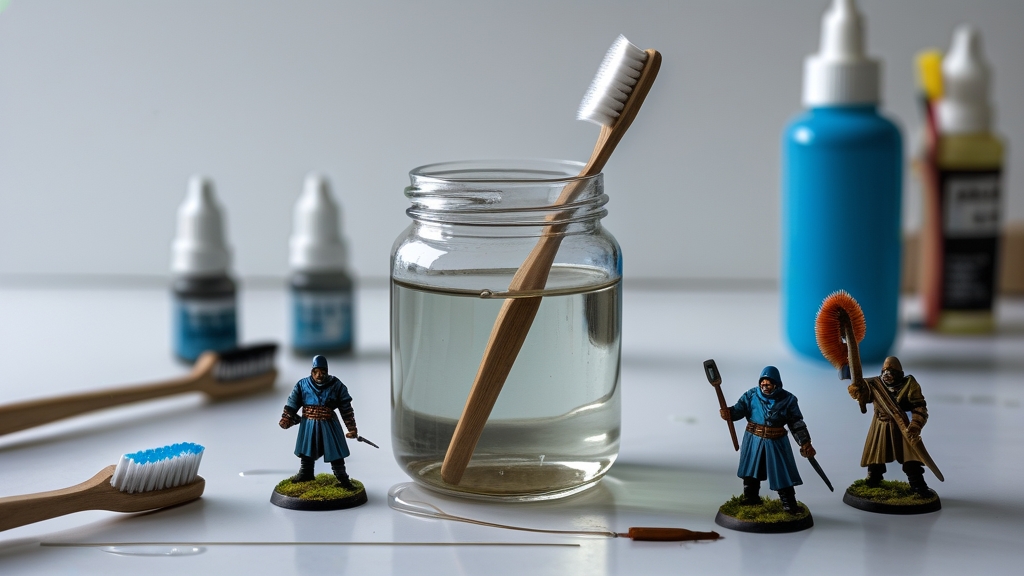
How to Strip Paint from Miniatures — Complete Guide
Soak models in isopropyl alcohol (IPA), Biostrip 20, or Simple Green for 24 hours, then scrub with an old toothbrush. This removes paint without damaging plastic models. The method you choose depends on your model’s material — plastic, resin, and metal each respond differently to stripping agents, and using the wrong product can damage your models.
What Is the Best Paint Stripper for Warhammer Miniatures?
Several stripping agents work well for removing paint from miniatures. Each has advantages and disadvantages depending on your situation, location, and model material.
Isopropyl Alcohol (IPA) — 90% or Higher
Isopropyl alcohol is the most popular stripping agent among Warhammer hobbyists worldwide. It is effective, widely available, and safe for plastic, resin, and metal models. Use 90 percent concentration or higher for best results — lower concentrations contain more water and are less effective.
IPA works by dissolving the acrylic binder in miniature paints, loosening them from the model’s surface. It typically requires 12 to 24 hours of soaking for a thorough strip, though heavily painted models may need longer. It is reusable — you can strain and reuse the same batch of IPA for multiple stripping sessions until it becomes too paint-saturated to work effectively.
The main downsides of IPA are that it is flammable, has strong fumes, and should only be used in well-ventilated areas. Wear gloves when handling it, as it dries out skin. Keep it away from open flames and heat sources.
Biostrip 20
Biostrip 20 is a water-based, non-toxic paint stripper that is particularly popular in the UK. It is one of the safest options available — no fumes, non-flammable, and safe to handle without gloves though gloves are still recommended. It works on plastic, resin, and metal without any risk of damage.
Apply Biostrip 20 directly to the model in a thick coat, or soak the model in it. Leave for 4 to 24 hours depending on the thickness of the paint. The paint softens and can be scrubbed off with an old toothbrush. Biostrip 20 is available from most DIY stores and online retailers in the UK.
Simple Green (Concentrated)
Simple Green is a popular choice in North America. It is non-toxic, biodegradable, and safe for all model materials. Use the concentrated formula rather than the diluted ready-to-use version. Models need to soak for 24 to 48 hours for best results, and heavily painted models may need several days. Simple Green is the gentlest stripping option, which means it is the least likely to cause any damage but also the slowest acting.
Methylated Spirits (Denatured Alcohol)
Methylated spirits works similarly to IPA and is readily available in hardware stores, often at a lower price. It is effective on plastic and metal models. However, it can damage certain types of resin if left too long, so use with caution on Forge World and other resin models. It has strong fumes and is flammable.
LA’s Totally Awesome (USA)
This budget cleaner, available at dollar stores across the United States, has become a favourite among American hobbyists for paint stripping. It is extremely cheap, non-toxic, and works well on all materials. Soak models for 24 hours, then scrub. It is gentle enough to leave models soaking for days without damage.
How to Strip Paint from Plastic Miniatures — Step by Step
Here is the complete process for stripping paint from plastic GW models, which make up the vast majority of modern Warhammer miniatures.
Step 1 — Prepare Your Workspace
Work in a well-ventilated area. Lay down newspaper or a plastic sheet to protect your work surface. Gather your stripping agent, a sealable container like a glass jar or plastic tub, an old toothbrush, cocktail sticks or dental picks, paper towels, and disposable gloves.
Step 2 — Submerge the Models
Place your models in the container and pour your chosen stripping agent over them until they are fully submerged. Seal the container to prevent evaporation and contain fumes. If using IPA, ensure the container is airtight due to the flammability risk.
Step 3 — Soak for 12 to 24 Hours
Leave the models to soak. For most stripping agents and paint thicknesses, 12 to 24 hours is sufficient. Heavily painted models with multiple layers, thick paint, or enamel coatings may need 48 hours or more. Checking at the 12-hour mark will tell you how the strip is progressing.
Step 4 — Scrub with a Toothbrush
Remove models one at a time from the stripping solution. Wearing gloves, scrub the model with an old toothbrush under warm running water. The paint should come away in flakes and strips. Focus on recessed areas where paint tends to cling. Use cocktail sticks or dental picks to get into deep recesses and between details.
Step 5 — Repeat if Necessary
If paint remains in recesses or stubborn areas, return the model to the stripping agent for another 12 to 24 hours and repeat the scrubbing process. Some heavily painted models may need 2 to 3 cycles to get completely clean.
Step 6 — Rinse and Dry
Once the paint is removed, rinse the model thoroughly under warm water to remove all traces of the stripping agent. Let the model air dry completely before repriming and painting. This typically takes 12 to 24 hours. Do not rush drying with a hair dryer, as rapid heating can warp thin plastic parts.
How to Strip Paint from Resin Miniatures
Resin models, including Forge World products, require more careful treatment than plastic models. Resin is softer and more chemically sensitive than polystyrene.
Safe stripping agents for resin include Biostrip 20, Simple Green, and LA’s Totally Awesome. IPA at 90 percent or higher works but monitor closely and do not soak for more than 24 hours. Avoid acetone entirely as it will dissolve resin. Avoid methylated spirits for extended soaks.
The process is the same as for plastic models, but use gentler scrubbing pressure. Resin is softer and a stiff toothbrush can scratch the surface if you press too hard. An extra-soft toothbrush or a brush specifically sold as soft-bristled is recommended for resin models.
How to Strip Paint from Metal Miniatures
Metal miniatures are the easiest to strip because metal is resistant to virtually all stripping agents. You can use any stripping agent safely, including stronger options like acetone if needed. Metal models can soak indefinitely without damage. Scrub vigorously without worry — metal will not scratch or warp under a toothbrush.
The challenge with metal models is that some have fine details that paint clings to stubbornly. Dental picks and fine wire brushes can help remove paint from deep recesses. An ultrasonic cleaner — a device that uses high-frequency vibrations to agitate the stripping solution — works exceptionally well on metal models and can be purchased for 20 to 40 pounds.
What Should You Never Use to Strip Paint from Miniatures?
Some products that might seem logical will actually damage your models.
Acetone (Nail Polish Remover)
Never use acetone on plastic or resin models. Acetone dissolves polystyrene plastic, the material GW models are made from. It will melt your models, destroying detail and potentially fusing parts together. Acetone also dissolves most resins. It is only safe on metal models, but even then, better alternatives exist.
Brake Fluid
While brake fluid was historically used for paint stripping, it is toxic, environmentally harmful, and difficult to dispose of safely. Modern alternatives like IPA and Biostrip 20 are equally effective and far safer. There is no reason to use brake fluid when better options are available.
Oven Cleaner
Some online guides recommend oven cleaner for stripping miniatures. While it can work on metal models, it can damage plastic and resin. The aggressive chemicals in oven cleaner are also a safety concern. Stick with purpose-appropriate stripping agents instead.
How to Remove Primer Specifically
Primer can be more stubborn than regular paint because it is designed to bond firmly to the model surface. For primer removal, extend your soaking time to 24 to 48 hours minimum. IPA at 90 percent or higher is generally the most effective against stubborn primer. Multiple soak-and-scrub cycles may be needed. Spray primers are typically easier to strip than brush-on primers, which tend to bond more aggressively.
What to Do After Stripping
Once your models are stripped and dry, they are ready to be reprimed and repainted. Before repriming, inspect the models for any remaining paint in recesses. Check for any damage from the stripping process, though this is rare with proper technique. Wash the models with warm soapy water and let them dry completely to remove any residual stripping agent. Then reprime as normal.
Stripped models sometimes have a slightly rougher surface than brand-new plastic. This is usually imperceptible once primed and painted, but if you notice roughness, a light sanding with fine-grit sandpaper (800 to 1200 grit) can smooth things out before repriming.
Summary — How to Strip Paint from Miniatures
For plastic models, use IPA at 90 percent or higher, Biostrip 20, or Simple Green. Soak for 12 to 24 hours, scrub with an old toothbrush, and repeat if needed. For resin, use gentler agents like Biostrip 20 or Simple Green and scrub gently. For metal, use any stripping agent and scrub vigorously. Never use acetone on plastic or resin. Rinse thoroughly and let models dry completely before repriming.
Stripping paint is a normal part of the hobby. Whether you are rescuing a badly painted model, updating an old colour scheme, or working with second-hand models, knowing how to strip paint safely and effectively is an essential skill that will save you from buying replacement models and let you give new life to old miniatures.
Frequently Asked Questions
Can you strip paint from models that are already glued together?
Yes. Polystyrene cement welds plastic parts together, so models built with plastic glue stay together in IPA, Biostrip 20 or Simple Green. Joints made with superglue can weaken during a long soak, so some parts may come loose. If you want to reposition or repair a model anyway, this can be useful. Check the joints after scrubbing and re-glue any parts that have shifted.
How do you dispose of used paint stripper?
Never pour used stripper down the sink. Let the paint sludge settle, pour off the clear liquid to reuse (IPA can be reused several times), and dispose of the sludge according to your local council’s rules for household chemicals. Keep IPA in a sealed, labelled container away from heat, because it is flammable.
Does stripping work on Contrast paints and washes?
Yes. Contrast paints, washes, shades and standard acrylics are all acrylic-based, so IPA, Biostrip 20 and Simple Green remove them in the same way. Contrast and washes often pool in recesses, so they may need an extra soak or some work with a dental pick. Matte acrylic varnish also comes off, while enamel or oil-based coatings usually need longer soaks.
Related Content
- Warhammer Painting for Beginners — Learn miniature painting from scratch
- Best Paints for Warhammer — Choose the right paints after stripping
- Best Primer for Warhammer Miniatures — Re-prime your stripped models correctly
- Best Hobby Tools for Warhammer — Get the right tools for the job